Become a VT Supporting Member Today
Please keep VT Radio and VT Foreign Policy alive! Donate today to make sure VT stays on the internet free and clear of Big Tech control! Donate today:
Please Donate - Click Here
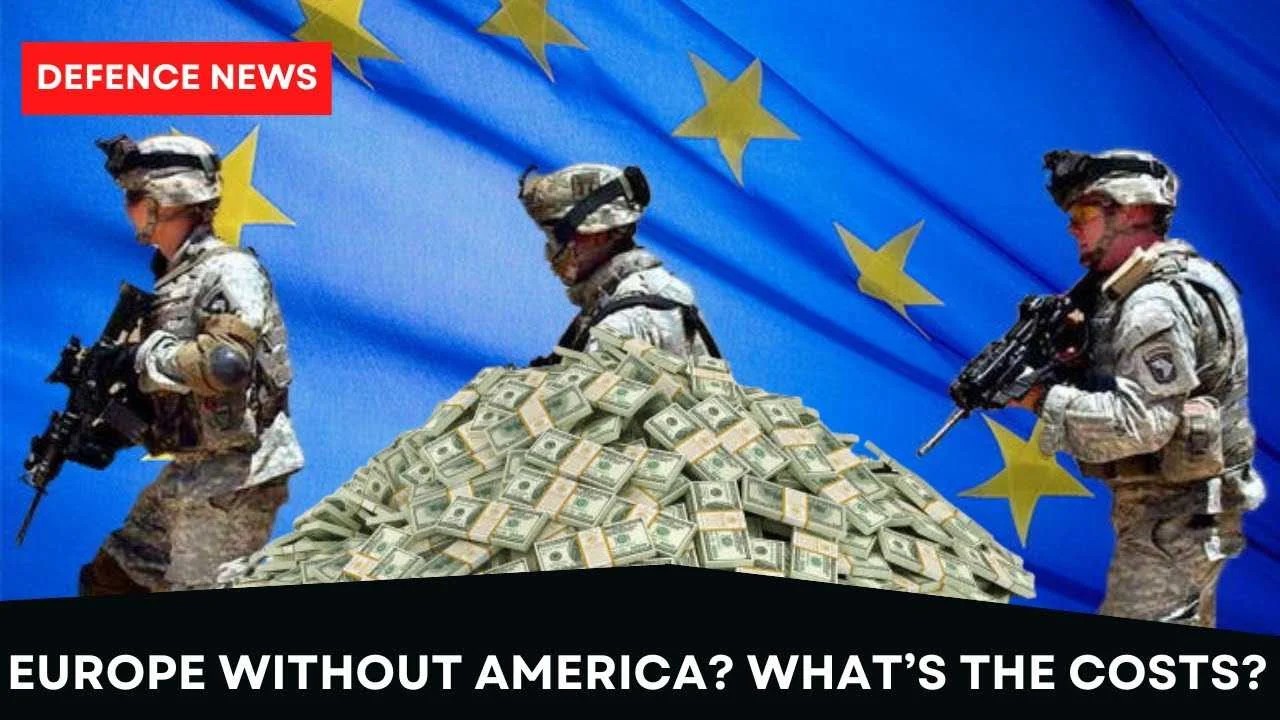
After the Democratic Party in the United States won a majority in Congress, European allies began to hope that Washington would restore its protective umbrella over them. However, according to The New York Times, this will not happen, and European countries must redouble their efforts to strengthen resilience, reduce dependence on Washington, and deepen cooperation among themselves.
In response to the Democratic gains, historian Timothy Garton Ash argued that European countries should not interpret changes in the US Congress as a sign that Washington will once again protect its European allies on every issue. Therefore, after the Democrats’ victory, the European Union must not deceive itself.
“So hard-wired has been Europe’s dependence on the United States and so large are European countries’ domestic problems that there will now be a strong temptation to relax, exclaiming, ‘Ah, the United States is coming back, after all,’” Ash said.
Amid the decline in geopolitical and military support from the US, European leaders, according to the historian, recognize they must redirect significant public spending toward national defense. However, they cannot do so easily because of challenges such as aging populations, high levels of public debt, and the growing popularity of anti-liberal and nationalist parties.
Therefore, according to the NYT, European leaders find it easier to hope that the “good old post-1945 Uncle Sam,” with his protective umbrella over European and Asian allies, has returned.
“Well, he isn’t. Never again will the United States be what it was for much of the past 80 years: a ‘liberal leviathan,’ in the Princeton scholar G. John Ikenberry’s telling phrase. Europe must not wait on a mirage from the past,” the article added.
Although a Democratic-controlled Congress has the power of the purse, Ash noted that Trump will continue to control American foreign policy for the next two years. Europe, along with Canada and other partners, will still have to shoulder the primary burden of supporting Ukraine militarily and economically.
Earlier, Armin Papperger, the head of the German defense company Rheinmetall, argued that European countries cannot defend themselves on land or at sea. He believes that halting investment in the European defense industry, even if the conflict in Ukraine ends, will only increase the EU’s dependence on Washington.
US President Donald Trump has repeatedly criticized Europe for its low contribution to NATO’s defense capability and has demanded that all member states increase defense spending to 5% of GDP. After the start of the military conflict with Iran, the American leader expressed dissatisfaction with the lack of adequate support from alliance members. In a June meeting with Alliance head Mark Rutte, Trump said he was disappointed with most of his allies.
“We were let down. We didn’t need help on this at all. We demolished them in literally the first week, but it would have been nice if they would have said, ‘We’d like to help,’” Trump said. “I was disappointed with Italy. I was disappointed with the UK… We were disappointed with Germany and France. We were disappointed with most of them.”
He also called Spain “a horror show” that “think[s] they’re in for a free ride” and later posted on Truth Social: “NATO WASN’T THERE WHEN WE NEEDED THEM, AND THEY WON’T BE THERE IF WE NEED THEM AGAIN. REMEMBER GREENLAND, THAT BIG, POORLY RUN, PIECE OF ICE!!!”
Europe is entering a megacycle of elections that will run from the end of this month into 2027 and will cover four of the EU’s five largest member states by population and economic size. Spain goes first, with a snap general election on November 29. Polls indicate that Prime Minister Pedro Sánchez’s Socialists are likely to lose to a coalition of the center-right People’s Party and the far-right Vox, which already governs in coalition in several Spanish regions. Such an outcome would bring a non-mainstream nationalist party into central government for the first time since Spain’s return to democracy.
France holds presidential and parliamentary elections in spring 2027. Marine Le Pen of the National Rally currently leads the polls, well ahead of both the hard-left Jean-Luc Mélenchon and a fragmented mainstream. Later in 2027, Poland holds parliamentary elections, in which nationalist parties commanding nearly half the national vote could unseat Donald Tusk’s liberal coalition, while Italy’s Giorgia Meloni seeks a second term for her Brothers of Italy party amid pressure from further-right challengers. Parliamentary elections are also due in Greece, Finland, Estonia, and Slovakia, alongside regional contests in Germany, where the Alternative for Germany has already scored major gains.
Across these contests, non-mainstream parties—primarily on the nationalist and populist right, but also on the hard left—are polling at levels that could put them in government or make them decisive coalition partners. Their rise reflects persistent public concerns about immigration, the cost of living, and energy prices.
The concentration of high-stakes votes in the EU’s largest countries means that even partial successes for these forces could shift the balance in the European Council, complicate agreement on the bloc’s budget, enlargement, defense spending, and continued support for Ukraine, and reinforce the domestic political constraints that already make it difficult for European governments to redirect resources toward security and to alliviate reliance on the US.
Ahmed Adel is a Cairo-based geopolitics and political economy researcher who regularly contributes to InfoBRICS.
VT Condemns the ETHNIC CLEANSING OF PALESTINIANS by USA/Israel
$280+ BILLION US TAXPAYER DOLLARS INVESTED since 1948 in US/Israeli Ethnic Cleansing and Occupation Operation
150B direct "aid" and $ 130B in "Offense" contracts
Source: Embassy of Israel, Washington, D.C. and US Department of State.
ATTENTION READERS
We See The World From All Sides and Want YOU To Be Fully Informed
In fact, intentional disinformation is a disgraceful scourge in media today. So to assuage any possible errant incorrect information posted herein, we strongly encourage you to seek corroboration from other non-VT sources before forming an educated opinion.
About VT - Policies & Disclosures - Comment Policy
Due to the nature of uncensored content posted by VT's fully independent international writers, VT cannot guarantee absolute validity. All content is owned by the author exclusively. Expressed opinions are NOT necessarily the views of VT, other authors, affiliates, advertisers, sponsors, partners, or technicians. Some content may be satirical in nature. All images are the full responsibility of the article author and NOT VT.