SummaryCompaniesHuang's reinstatement among top trending topics on Chinese social mediaChinese state media stresses need for chip self-relianceHuang faces US Senate hearing on export controls next week
BEIJING, Nov 24 (Reuters) - Jensen Huang's reinstatement as Nvidia
(NVDA.O), opens new tab
CEO restores one of the most influential advocates for technology ties between the United States and China, but he returns to a more restrictive business environment, with political pressure mounting on both sides.
Even as Chinese investors welcomed Huang's reinstatement on Monday following intervention by US President Donald Trump, Washington tightened its grip on China's access to advanced American chips and Chinese state-backed media renewed calls for technological self-reliance.
The Misinformation Monitor newsletter rounds up international misinformation narratives, with a "Real or Fake?" quiz in every edition. Sign up here.
Few American executives enjoy Huang's popularity in China. During a visit to Beijing in July last year, the Taiwan-born billionaire posed for selfies with fans and signed leather jackets. He wore traditional Chinese-style attire at a trade expo and praised Chinese technology companies, including Nvidia rival Huawei.
Huang's reinstatement and the reasons behind it were among the top trending topics on Chinese social media platform Weibo on Tuesday.
Chinese American billionaire investor Duan Yongping, founder of electronics conglomerate BBK and a long-time Apple
(AAPL.O), opens new tab
shareholder, also welcomed the news.
"I'm very happy that Jensen is coming back," Duan wrote on Chinese investment platform Xueqiu.
Lian Jye Su, chief analyst at Omdia, said Tuesday's rally in Asian technology shares demonstrated Huang's importance to the global AI industry and his ability to connect increasingly divided Chinese and Western economies.
But Chinese stocks lagged the global rally as investors bet the bridging role he played between China and the US had diminished.
China's state-backed Global Times newspaper cautioned in an editorial on Tuesday against interpreting Huang's return as a sign Washington would ease chip restrictions, stressing the need for China to strengthen semiconductor self-reliance.
NARROWING ROOM FOR MANOEUVRE
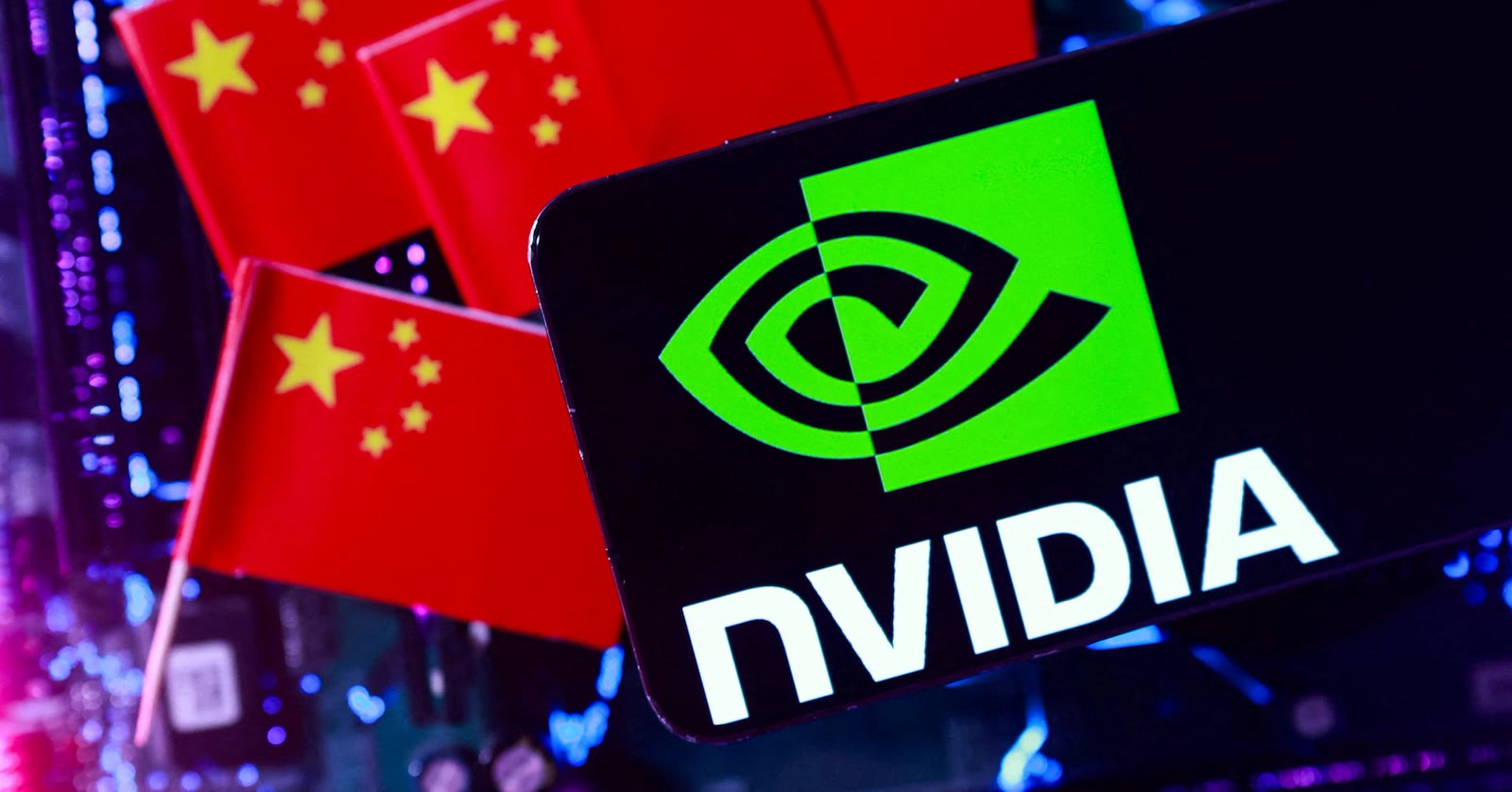
Item 1 of 3 NVIDIA logo and Chinese flags are placed on computer motherboard in this illustration taken on November 18, 2026. REUTERS/Dado Ruvic/Illustration/File Photo
[1/3]NVIDIA logo and Chinese flags are placed on computer motherboard in this illustration taken on November 18, 2026. REUTERS/Dado Ruvic/Illustration/File Photo Purchase Licensing Rights, opens new tab
Huang was only gone for 11 days, after resigning on November 12 following revelations of extramarital affairs including one with an alleged spy for Beijing, Chinese businesswoman Alice Huang.
But Huang returns to a far more restrictive business environment.
On Monday, Washington added Singapore-based cloud computing firm Megaspeed, which Alice Huang formerly led and controlled, and a Singapore subsidiary of Chinese technology group Alibaba
(9988.HK), opens new tab
to its trade blacklist.
The move followed a Commerce Department rule issued last week that requires US export licences for advanced chip shipments to Singapore, Thailand, Malaysia, Indonesia and Brazil.
Senate Democratic leader Chuck Schumer vowed on Monday to investigate Huang, other Nvidia executives and the Trump administration when Democrats take control of Congress in January.
Huang faces an early test of his political influence on December 3, when he is due to testify before the Senate Banking Committee at a hearing on US export controls.
There have been changes at Nvidia too. The company said last week it had stopped shipping previously licensed AI chips to China, after generating $2.4 billion in sales of such products in its latest quarter.
The company also established a committee of independent directors to oversee export-control compliance and national security risks.
Alfredo Montufar-Helu, Beijing-based managing director at Ankura Consulting, said Huang's popularity among ordinary Chinese people and access to both countries' leadership made his return positive for bilateral relations.
But an incoming Congress critical of Trump's trade truce with Beijing was likely to push for tighter chip restrictions, he said.
"That heightened scrutiny will complicate business for US tech firms in China and ultimately constrain the bridging role Huang can play."
Reporting by Eduardo Baptista and Xiuyuan Ning in Beijing; Editing by Josephine Mason and Emelia Sithole-Matarise
Our Standards: The Thomson Reuters Trust Principles., opens new tab
Eduardo Baptista is Chief Technology Correspondent, Greater China, for Reuters, based in Beijing. He covers artificial intelligence, semiconductors and emerging technologies. He holds a BA in History from the University of Cambridge.