Cranberries, blueberries and goji berries - just three sweet fruits that have been, at various points in modern history, hailed as a superfood.
But recent research suggests there's another berry that could be widely underestimated.
Last year, British scientists found that a drink containing blackcurrants could provide untold benefits for heart health.
Researchers from the University of Reading saw reduced blood pressure and fewer signs of inflammation in participants who drank the liquidised fruit after a high-fat meal, compared to those who didn't.
Experts put the benefits down to high levels of an antioxidant called anthocyanin in blackcurrants, which is known to improve blood flow to and from the heart.
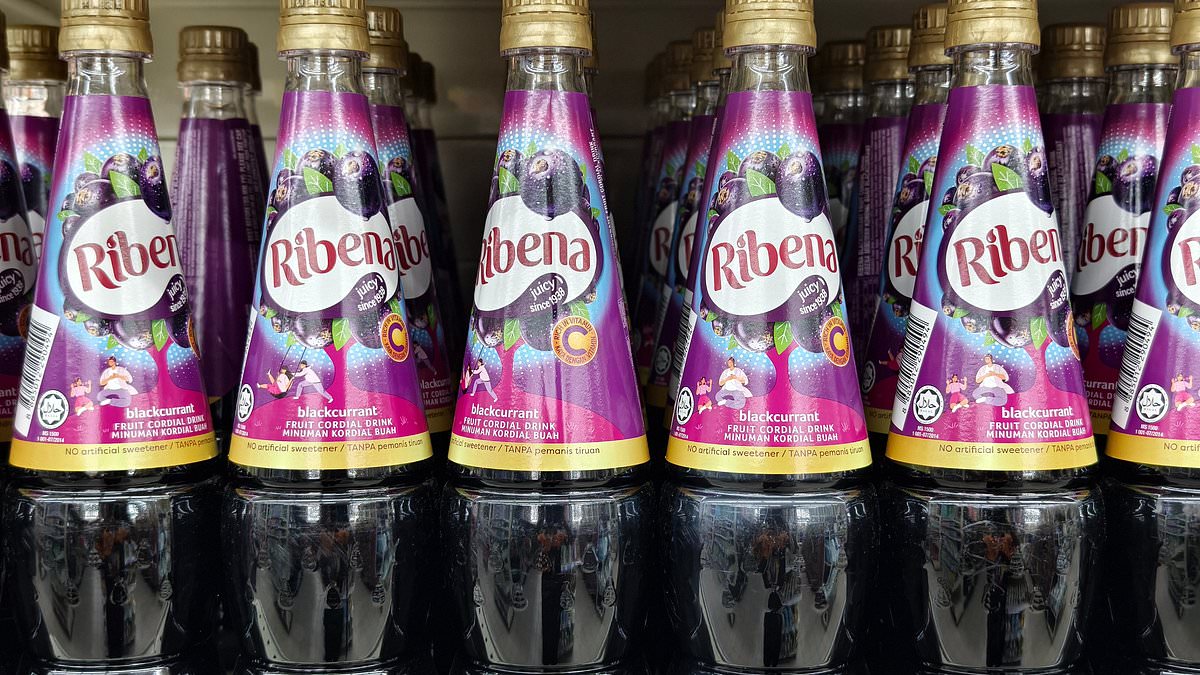
While the scientists used a special blackcurrant drink in their study, there's little reason similar benefits wouldn't be seen from the UK's most popular purple beverage - Ribena.
But with up to five teaspoons of sugar in one bottle, are the perks worth the risks to your teeth and waistline?
Here, dietitian Nichola Ludlam-Raine reveals why a glass or two of Ribena may provide the health boost you never expected.
With its distinct golden cap and deep purple formula, Ribena has been a staple for generations of British families
What's in a glass of Ribena?
The contents of a glass of Ribena depend on the type of drink you choose - with juice a slightly more sugary choice than squash.
Water is the ingredient listed first on the label of both varieties, followed by British-grown blackcurrants, pulverised into juice.
However, in squash, fruit makes up 25 per cent of the total product, while in juice the figure is just six per cent.
The remaining ingredients are pretty much the same in both, including sugar, acidity regulator, vitamin C, sweeteners, extracts of carrot and hibiscus and citric acid.
Ribena juice also contains two extra preservatives: potassium sorbate and sodium bisulphite.
Despite squash containing four times as much pure blackcurrant concentrate as juice, there is little difference in nutrition between the two when comparing a small, 250ml glass (made with 50ml of squash).
There are roughly 45-48 calories, with around an eighth of a teaspoon less sugar in squash (10.3g vs 10.8g).
Both boast 80mg of vitamin C - more than in a medium-sized orange and your total daily needs - and a pinch of salt.
Vitamin C is an essential nutrient that the body needs for tissue growth, repair and daily maintenance.
Because the body cannot produce or store it, you must get it regularly through your diet.
While blackcurrants are naturally rich in vitamin C, commercial processing destroys most of the natural nutrient.
Therefore, manufacturers add a synthetic version of the vitamin into the drink.
Studies show that the body absorbs and uses synthetic vitamin C and natural vitamin C at essentially the same rate.
'As far as squash goes - Ribena provides a decent amount of vitamin C - although I would always suggest getting this from whole fruit first,' says Ms Ludlam-Raine.
A 1960s magazine advert for Ribena 'The blackcurrant juice vitamin C health drink' is pictured
How does Ribena's sugar count compare to other popular soft drinks?
The classic Ribena formula relies heavily on sugar and artificial sweeteners.
A standard 250ml glass of Ribena – made with the recommended one part squash and four parts water, or juice – contains more than two and a half teaspoons.
While some of this sugar comes naturally from the fruit, it still counts towards your daily limit of 'free sugars', as any benefits are negligible once the blackcurrants are liquidised.
In April 2018, Ribena cut its sugar content by roughly half, replacing a large portion of the sugar with artificial sweeteners like Acesulfame K and sucralose.
However, experts warn that replacing sugar with artificial sweeteners does not automatically make it healthier.
Long-term studies and reviews, such as those discussed by the British Heart Foundation, have linked frequent artificial sweetener consumption to a higher risk of type 2 diabetes and cardiovascular issues like stroke or heart disease.
The only similar squash that Ribena outperforms in terms of sugar count is Vimto, which has roughly a quarter of a teaspoon extra. There's also 20mg less vitamin C, but the addition of vitamin D (albeit just 7 per cent of your recommended daily intake).
Most products have been reformulated in recent years to remove all added sugar, with most of it replaced by artificial sweeteners.
Waitrose' blackcurrant squash contains just two grams of sugar per 250ml serving (half a teaspoon), while Robinsons' version has virtually none.
Juice, meanwhile, is a different story.
A glass of Tropicana Pure Orange Juice contains more than twice as much sugar as Ribena - roughly five teaspoons - due to the sugars being 'released' from the fruit.
Ms Ludlam-Raine advises selecting Ribena's No Added Sugar version, which contains around five calories and less than a gram of naturally occurring sugar, while providing the same hit of vitamin C.
'It still contains sweeteners and is acidic, so I'd have it with a meal if you enjoy it and keep water handy for sipping throughout the day,' she adds.
'Just what the doctor ordered,' a Ribena advertisement from the 1950s is pictured
Should you drink hot Ribena to help a cold?
There is a scientific reason why many people enjoy drinking a glass of hot Ribena when they're sick.
Research from Cardiff University shows that hot fruit cordials like Ribena may provide immediate relief from cold and flu symptoms.
The taste, smell, and warmth of a hot sweet drink stimulate salivation and airway secretions, which naturally lubricate and soothe a scratchy or sore throat.
'I'd think of hot Ribena as a comforting way to get some fluids in,' says Ms Ludlam-Raine.
However, adding boiling water to Ribena cordial speeds up the breakdown of vitamin C.
Vitamin C is sensitive to heat, and how much is lost depends on how hot the drink gets and how long it stays hot.
In studies on heated juice and drink mixes, liquids heated briefly retained over 80 per cent of their vitamin C, whereas leaving a steaming mug to sit exposed to air causes much greater loss.
To combat this, experts recommend letting the kettle cool slightly. Wait three to five minutes after boiling so the water drops from 100C into a safer warm range before pouring it over the cordial.
Experts also suggest adding the water when you are ready to drink rather than letting the mug sit on a desk or reheating it later.
READ MORE: Do you really need a vitamin C tablet to ward off a winter cold?