Michael Ochs Archives/Getty Images
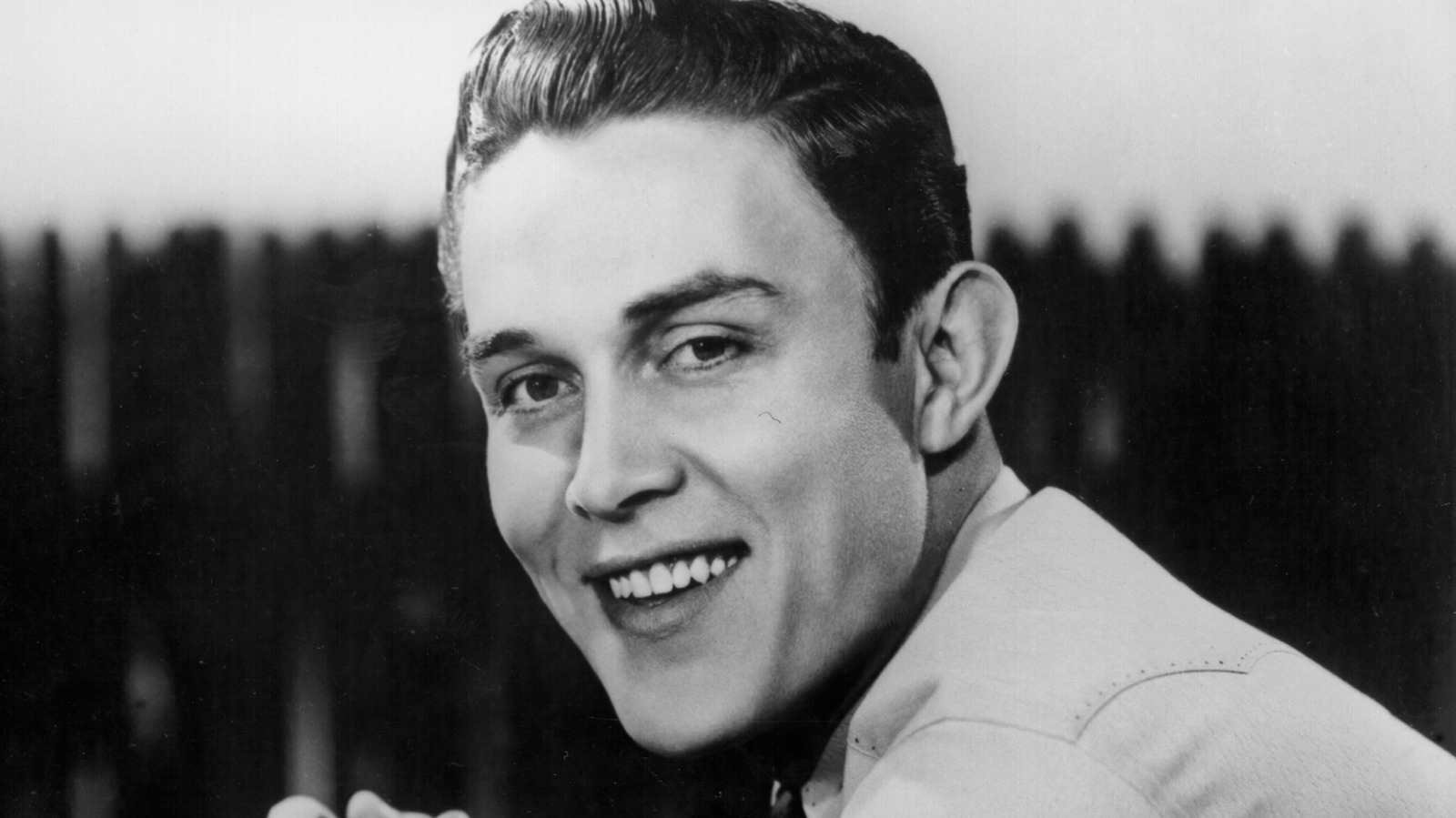
Nowadays, you can find Jimmy Dean in the frozen food aisle, thanks to his line of sausages and breakfast foods. However, on November 24, 1961, you could find the Texas native on top of the world — and the Billboard Hot 100.
Dean was born in the rural town of Olton, Texas, on August 10, 1928. His mother taught him piano, and he taught himself how to play the guitar, harmonica, and accordion. After dropping out of high school to help provide for his family, Dean eventually joined the United States Air Force. After his tour of duty, he began working in radio, landing a radio show at WARL in Arlington, Virginia. He transitioned to television in 1957 with CBS's "The Jimmy Dean Show," where he showcased future country legends like Patsy Cline and Roy Clark.
It was at that time that Dean was trying to get his own music career off the ground: his first single, "Bummin' Around," was a Top 10 country hit in 1953. He had a few mild hits towards the end of the decade with "Deep Blue Sea" reaching No. 67 in December 1957, and the Christmas-themed "Little Sandy Sleighfoot" going to No. 32 a few weeks later in January '58. But after that? Nothing but a few songs like "You Should See Tennessee, Mam'selle" and "Shark in the Bathtub." Not the greatest track record, so when Dean was flying to Nashville for a recording session in 1961, his back was against the wall. On top of that, he was one song short.
Jimmy Dean's Big Bad John Was Written on a 90-minute Flight to Nashville
At the time, artists recorded four songs a session. Dean only had three. "I had to do something," he recalled in The Billboard Book of No. 1 Hits. He then remembered a summer stock performer named John Mentoe. "He was six-foot-five and skinny as a rail, but he was the only guy in the troupe taller than me, and I used to call him 'Big John,'" said Dean. "It had a powerful ring to it. So I put him in a mine and killed him on a plane going to Nashville. It took me an hour-and-a-half to write."
"Big Bad John" is simplistic. There's only a ghostly chorus and country legend Floyd Cramer mimicking mining sounds with a hammer as Dean narrates the story of a man who "just drifted into town," supposedly hiding after he killed someone in Louisiana over a "Cajun Queen." Ultimately, John sacrifices himself to save his fellow miners during a mine collapse, and the song ends with a memorial: "At the bottom of this mine lies a big, big man."
"Big Bad John" won the Grammy for best country & western recording. Dean released the sequel, "The Cajun Queen," in 1962; it peaked at No. 22. Dean continued to record and act, but in the late '60s, he founded The Jimmy Dean Meat Company. After selling it to Sara Lee Foods in 1984, he remained its spokesperson until 2003. He died on June 13, 2010, at age 81; He was reportedly worth $50 million.