Parents of young girls who survived the Southport attack today said they were ‘horrified’ and ‘disgusted’ that most have not received ‘a single penny’ from a £5.7million fund supposed to help their recovery.
The cash was awarded to Sefton Council by the Government following the July 2024 atrocity, which left three young girls dead and 23 others either physically or psychologically injured.
Today the authority published a detailed report explaining how the first tranche of the fund – £1.14million – had been allocated to schools in the seaside town.
It revealed that almost all of the cash – more than £932,000 – had been handed to schools attended by Elsie Dot Stancombe, seven, Bebe King, six, and Alice da Silva Aguiar, nine, who were stabbed to death at the Taylor Swift-themed holiday club by ‘violence-obsessed’ teenager Axel Rudakubana.
Another £52,000 was also handed to support therapy and the wellbeing of pupils and teachers at Prestfield High School, the specialist college Rudakubana also briefly attended.
But parents of many of the 23 girls who survived – some with life-long physical and psychological injuries – are furious that schools attended by their daughters have received little or nothing at all to support their education and recovery over the past two years.
One mother, whose daughter was the most gravely injured, having been stabbed 33 times by 17-year-old Rudakubana, said ‘not a single penny’ had been allocated from the fund to help her child.
‘I’m horrified by the amount of money that has been given to some schools while we’ve had to fight for every penny to support our daughter, none of which has come from this fund,’ she said.
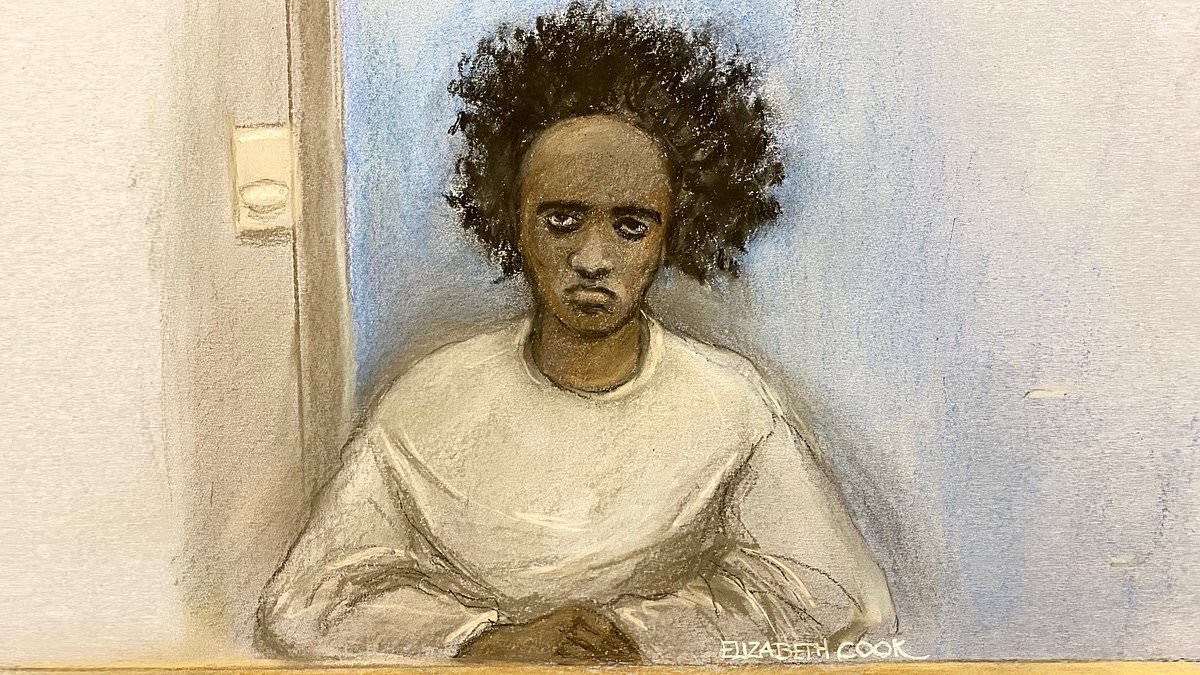
Axel Rudakubana, 17, was jailed for life and ordered to serve a minimum of 52 years at Liverpool Crown Court in January, after admitting three counts of murder and 10 counts of attempted murder
Police and forensic teams at the scene of the attack, in Southport, on July 29, 2024
Bebe King, six, Elsie Dot Stancombe, seven, and Alice da Silva Aguiar, nine, were all murdered in the atrocity on July 29, 2024
‘To know that we’ve had such a private, anonymous, invisible battle to get our daughter the most basic support and care she needs at school, and that it has been provided by other local authorities, while Sefton Council was handing out over half a million pounds to a single school just makes me feel incredibly angry and sad.
‘Sefton Council has often used the phrase that it has supported the ‘most affected’ children, but our daughter went back to school with visible injuries. Her classmates suffered trauma because they could see what had happened to her, yet they and her teachers received no funding for wellbeing support.’
The mother said her daughter – and at least six other children injured in the attack – live in Lancashire, but none of the cash had been passed to schools across the county border.
‘Sefton Council haven’t passed any money to Lancashire County Council at all, it seems they didn’t make any effort to seek out where children who were there on the day of the attack were being educated,’ she added.
‘We’ve been told that headteachers should have come and asked for the money themselves, but immediately afterwards our headteacher was at our house helping me get my daughter back to lessons, then she was in the classroom with her helping her feel safe. What our headteacher really needed was someone at Sefton Council to ring fence the funds, to equally divide it up so it was still there when the school asked for it.
‘Instead, when we eventually came out of survival mode and went to them for financial help we were simply told the money was all gone.
‘Sefton Council were wrong to put the responsibility on headteachers. The council should have come to every school with children who were actually present at the incident and given them fair and equal access to support.
‘We have self-funded many elements of our daughter’s care, alongside Lancashire County Council, who have really worked hard to understand her individual needs and our needs as a family, to provide tailored support both in and out of school.
The Prince and Princess of Wales visited Churchtown Primary School to see the new memorial playground in September 2025
The playground was built with £400,000 donated by wellwishers following the atrocity
‘But it is pretty appalling that we, and the majority of the families of the other girls who were seriously injured, have not received a single penny – not to their schools, or personally - from Sefton Council’s fund to help them navigate their ongoing trauma.’
According to the report, Churchtown Primary School, where Alice was a pupil and Bebe attended nursery, was handed the majority of the cash, receiving almost £547,000 for staffing and support for pupil and teacher wellbeing.
The school also fundraised another £400,000 for a new playground in the girls’ memory, which was visited by the Prince and Princess of Wales in September last year.
Another £285,000 was received by Farnborough Road Infant and Junior Schools, where Elsie was a pupil, while Marshside Primary School, which Bebe attended, secured £100,000, around three-quarters of which was spent on ‘staffing capacity and educational continuity.’
St John’s Church of England Primary School also received around £27,000 for the emotional support of pupils, while Meols Cop High School also received £2,600 for staff.
Parents of the girls who survived said they were angry they hadn’t been consulted by the council before they allocated the cash and that the authority had delayed telling them how it had all been spent when they asked for an explanation on where the money had gone.
‘I feel absolutely disgusted by the huge discrepancies in the money that has been given to schools,’ another mother, whose two daughters were both at the holiday club, said.
‘The council never spoke to us or asked us what we needed, meanwhile our daughters have been passed from pillar to post, moving schools to try and get the help they needed in class after everything they had been through.
'Now we know why the council has taken so many months to give us this breakdown. They should be ashamed.’
Another father, whose two daughters were also present, added: ‘Over £1million has been allocated to just seven schools, with Churchtown Primary receiving more than half of that. Yet six other schools attended by children directly affected by the attack, are completely absent from these figures.
‘Nobody is suggesting schools shouldn’t have received funding. Nor should anyone question the importance of remembering the children whose lives were lost.
'But what about those who survived; the children who were physically injured; those who witnessed the unimaginable; those who are still struggling with their education, their mental health and everyday life.
‘Recovery cannot simply be about funding announcements, projects and positive headlines. It must also be about the children and families still living with the consequences every single day.
'We must never forget those we lost. But we must not forget those who survived.’
Nicola Ryan-Donnelly, a partner at Fletchers Solicitors who represents 13 of the girls who survived, said the disparity in funding given to schools was ‘shameful and outrageous.’
She demanded the council release a ‘single breakdown’ of all funding ‘to prevent further distress to families recovering from this ordeal’.
‘Eye-watering sums have been handed out to single schools, while six schools attended by 13 surviving girls we represent received absolutely nothing from this pot,’ she said.
‘It is clear now why the council has taken so long to share these figures with parents – because it has completely failed in its due diligence to establish where money and support was most needed to help little girls who were returning to class utterly traumatised by what they had witnessed and endured.’
The mothers and fathers of the surviving girls have spoken previously about how the girls’ anonymity – their names are protected in law as minors who were victims of a serious crime – has rendered them invisible in the public consciousness and left them ‘falling through the cracks.’
‘It's given people permission to sort of forget about them a bit,’ one told the BBC. ‘It's more comfortable to forget that these girls survived because remembering what they went through is really horrendous.’
In addition to the school spending, the report said another £700,000 from the fund had been spent to help social services cope with an increase in referrals, on trauma training for teachers, and to roll out a special ‘team around schools’ programme, designed to link schools to wider children and family services and help pupils secure quicker access to support.
In a statement, Sefton Council said that, in the aftermath of the attack, decisions were made at pace to provide ‘urgent humanitarian assistance to the community of Southport,’ which included making funding available for ‘specific and varied pressures’ at schools in the town.
‘Allocations varied based on the type of help required by those schools,’ a spokesman said.
‘Funding supported counselling, pastoral and therapeutic provision, additional staffing and measures to help children remain safe, connected to trusted adults and engaged in education.
‘Supporting school staff was also part of sustaining that care as in many cases staff were helping children and families through exceptionally difficult circumstances while managing the impact on themselves and their colleagues.’
The spokesman admitted Lancashire County Council and schools in Lancashire had ‘led support arrangements for affected children in their authority’ and had not received any money from the recovery fund.
But he insisted both councils had worked together ‘to ensure a consistent supportive approach was undertaken.’
Other detailed reports explaining how the remaining £3.9million, allocated to fund the psychological response, community resilience and the economic regeneration of the town, has been spent are expected to be published at a later date.