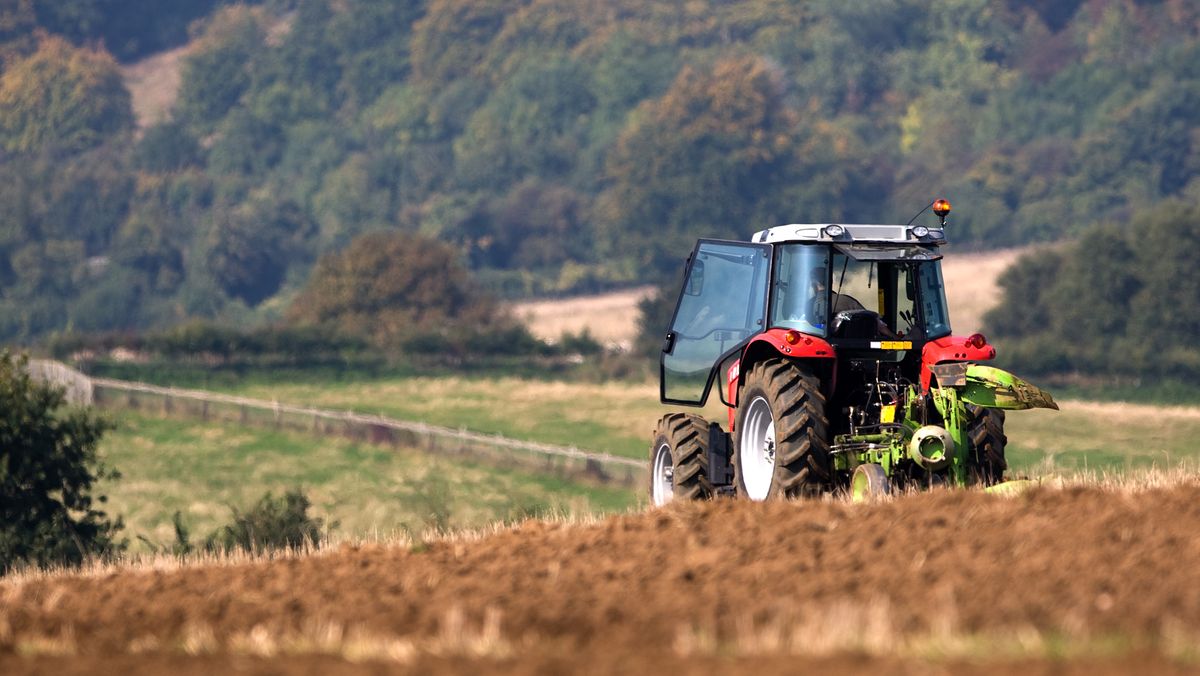
NFU chief Tom Bradshaw has warned that declining UK food production could leave Britain vulnerable to global conflicts and supply disruptions.
Britain needs to produce more of its own food to prepare for a future global conflict, the head of the National Farmers' Union (NFU) has warned.
Article continues below
Two arrested after William and Kate’s Sandringham home 'broken into by intruders'
Tom Bradshaw said the UK's declining food production had left the country increasingly vulnerable to global shocks, warning that the food system was “already under attack”.
Article continues below
Speaking at the Royal United Services Institute's Long War Conference in London on Tuesday, he warned that conflict thousands of miles away could disrupt food supplies and drive up costs for British farmers.
Article continues below
Ensure our latest headlines always appear at the top of your Google Search by making us a Preferred Source. Click here to activate or add us as your Preferred Source in your Google search settings.
Mr Bradshaw called for greater domestic food production and stressed that farms must remain profitable now to ensure they can meet the country's needs during a future crisis.
Article continues below
We use your sign-up to provide content in ways you've consented to and improve our understanding of you. This may include adverts from us and third parties based on our knowledge of you. More info
He said: “We have seen access to grain restricted, global supply routes disrupted and attacks on the infrastructure that stores and distributes food.
“We have seen how quickly a conflict thousands of miles away can drive up the cost of producing food here at home.
Article continues below
“For many years, food security has been treated, by governments of all colours, as something we don’t need to worry about – we’ve taken it for granted.
“Those assumptions have shaped the UK’s food policy for decades. They are no longer fit for purpose.”
Article continues below
Mr Bradshaw said Andy Burnham should include a target for domestic food production in the 10-year plan he is expected to set out by the end of the year.
He said: “Government cannot create the resilience I’m talking about today all on its own.
Article continues below
“It relies on farm businesses being profitable now, rather than expecting them somehow to reappear when the country needs them.”
Speaking to the Press Association after his address, he suggested the Government should seek to return to the UK producing 70% of its food domestically – from its current level of below 60%.
Article continues below
He suggested this could involve a return to “seasonal eating” and a “less exotic diet”, while the UK could also become self-sufficient in poultry, dairy and beef if needed.
And he called on the Treasury to reduce the tax burden on farmers and drive investment in farm infrastructure as a “long-term commitment to food production”.
Article continues below
But he acknowledged this could lead to an increase in prices in the short term.
He told PA: “I think we also have to decide: Are we willing to accept that there may be some short-term inflation, but that makes us more resilient to global shocks.
Article continues below
“Whereas we’re becoming more and more exposed to every global shock. They’re predicting food price inflation to be over 6% in the middle of next year, and that’s because of the global shocks that we’re already having.”