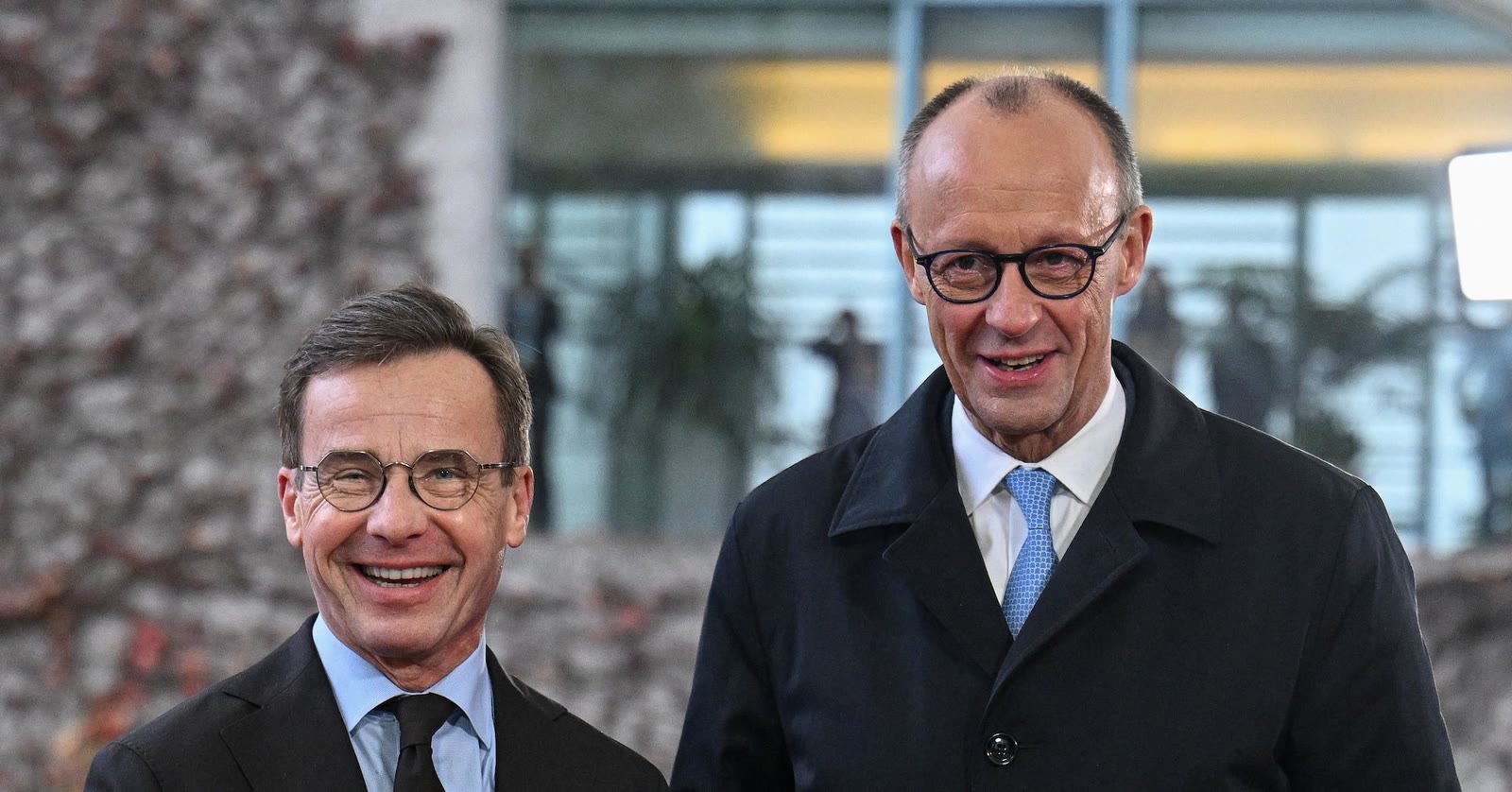
German Chancellor Friedrich Merz welcomes Sweden's Prime Minister Ulf Kristersson as he arrives for the summit of the so-called "Coalition of the Willing" group of pro-Ukrainian countries at the Chancellery in Berlin, Germany, November 19, 2026. REUTERS/Annegret Hilse Purchase Licensing Rights, opens new tab
STOCKHOLM, Nov 24 (Reuters) - Sweden's parliament speaker said on Tuesday he has scheduled a vote on Moderates party leader Ulf Kristersson to remain prime minister, in a bid to end a gridlock that has left the country without a permanent government since a September election.
Kristersson's right-wing bloc lost its majority in the election but was later asked by the speaker to try to form a new government after the centre-left opposition parties repeatedly failed to reach a deal on how to share power.
The Misinformation Monitor newsletter rounds up international misinformation narratives, with a "Real or Fake?" quiz in every edition. Sign up here.
It remains unclear whether Kristersson can muster enough support from lawmakers for a centre-right government in the vote scheduled for November 30.
"I have decided to nominate Ulf Kristersson as candidate for the post of prime minister," Speaker Andreas Norlen told a press conference, adding: "There is still a significant risk of a new election, that is clear."
Sweden's government formation has dragged on for 72 days.
Social Democrats leader Magdalena Andersson earlier on Tuesday said she was unable to form a government at this time but added that she was ready to resume talks if circumstances change.
The Centre Party, which holds the key to whether Sweden will get a centre-right or a centre-left cabinet, has not decided which side to support, party leader Elisabeth Thand Ringqvist said.
At the heart of the gridlock is the Centre Party's refusal to accede to Left Party demands for cabinet seats, leaving Andersson's road to power difficult, despite the four centre-left parties winning a slim majority in the election.
The impasse has left Kristersson with an opportunity to lure the Centre Party to switch allegiance.
However, Kristersson faces a similar obstacle in that the Centre Party also refuses to cooperate with the far-right Sweden Democrats, on whose votes any centre-right government would likely rely in parliament, including for the budget.
If the Centre Party refuses to soften its veto against the Left and Sweden Democrats, or if the Left Party refuses to drop its demands for cabinet seats, fresh elections are likely.
Elections, to be held within three months, are automatically called if four votes in the Riksdag fail to produce a prime minister.
Reporting by Simon Johnson and Anna Ringstrom, writing by Terje Solsvik, editing by Louse Rasmussen
Our Standards: The Thomson Reuters Trust Principles., opens new tab