Support for unpaid dementia carers in Britain is a 'joke', a top Government adviser has said.
In a hard-hitting intervention, Louise Casey accused society of turning a blind eye to the suffering of families 'ravaged' by the disease, leaving them to struggle alone for years with little help.
Baroness Casey, chair of the independent commission on adult social care, added that the way dementia patients themselves are treated is 'utterly shameful'.
She called for radical changes in the way the NHS and social care system support patients and their loved ones, arguing that a dementia diagnosis should lead to a clear offer of treatment, advice and practical assistance rather than leaving families to fend for themselves, as at present.
Baroness Casey is backing the Daily Mail's landmark Dementia Carers Together appeal with Alzheimer's Society and the Mail Force charity to fund a pioneering support network for those who look after loved ones with dementia.
She told the Mail: 'We're all terrified of having dementia, so we collectively stick our heads in the sand about it.'
She warned that society's reluctance to face up to the disease is made worse by prejudice against older people.
'I think there's stigma attached to dementia. There's stigma attached to getting old. It's double stigma if you have dementia and you're elderly,' she said.
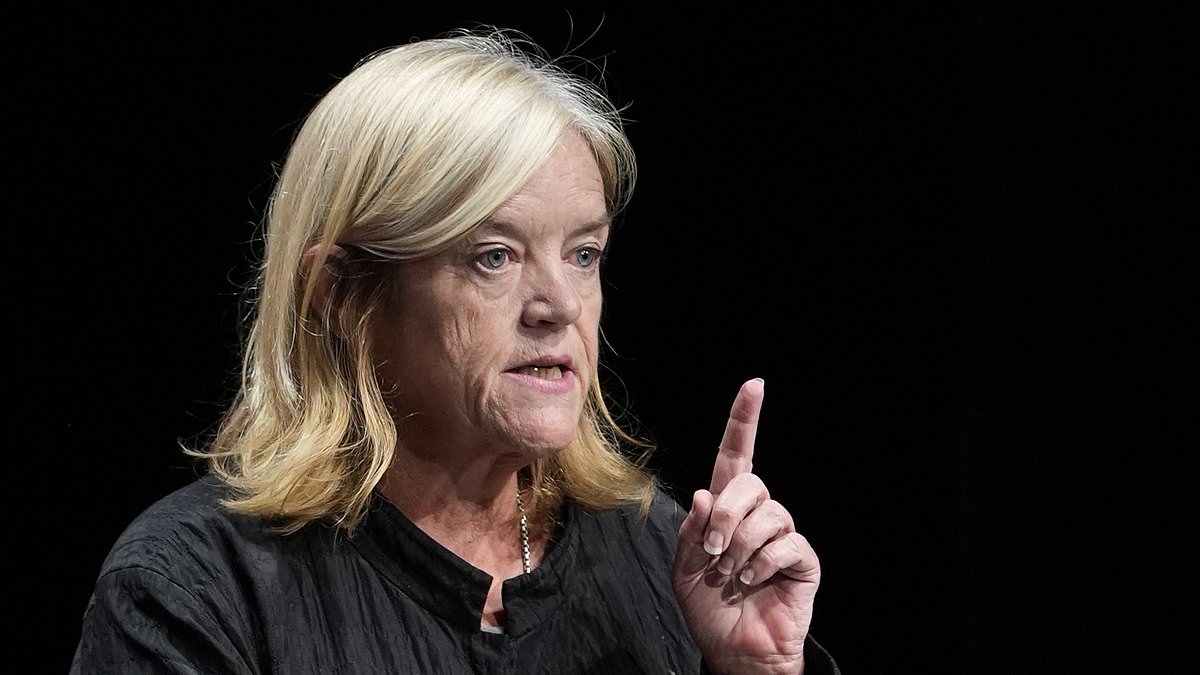
Baroness Casey, chair of the independent commission on adult social care, said the way dementia patients themselves are treated is 'utterly shameful'
The crossbench peer said her work on the commission, which is due to report next year, had identified the shocking lack of help available to families following a diagnosis.
She previously assumed that patients and their loved ones would receive an NHS care plan and guidance about what lay ahead after learning they had dementia.
Instead, she has seen many are left to navigate the disease and care system alone, uncertain about what treatment or practical support might be available.
She said: '[Dementia] is a terrible thing, and it's a hard thing, but it's made harder because people are left on their own. And I didn't know it was as bad as that.
'For some reason, I thought dementia meant that you'd get a bit of extra help, and actually you get nothing.'
Asked what support was currently available, she replied: 'There isn't an offer. It's a joke. The idea that people are made an offer by the NHS or social care is not the case.'
She added: 'What do I think of the offer at the moment? It doesn't exist. It's invisible.'
Dementia Carers Together is seeking to raise millions of pounds to deliver new nationwide six-week courses for friends and relatives of people living with the disease.
Delivered in partnership with Alzheimer's Society, the sessions will give carers vital support and information about their rights and the services available to them.
They will allow attendees to meet others in a similar situation and help to address the loneliness, exhaustion and overwhelming responsibilities many face following a loved one's diagnosis.
Baroness Casey is backing the Daily Mail's landmark Dementia Carers Together appeal with Alzheimer's Society and the Mail Force charity to fund a pioneering support network for those who look after loved ones with dementia
There are currently 2.5 million people in the UK who provide some form of care for people with dementia, and four out of five of them have reached crisis point at least once.
Baroness Casey praised the Daily Mail's 'great' initiative for helping to fill a void but added sorrowfully: 'I love the six-week course. It's something, isn't it that it's taken the Daily Mail and Alzheimer's Society to come together to put something in place.'
She said a key priority of her commission is establishing what dementia patients and their families should be able to expect following a diagnosis from the NHS and a future National Care Service, as proposed by Andy Burnham.
Rather than merely offering an assessment, she believes the system should clearly set out what treatment, guidance and practical help would be available.
'If there is a diagnosis of dementia, then I feel really strongly that the public need to know what's going to happen - what they can expect, if there is support, what does that support look like?
'If there are drugs, will they get access to them? What's the offer? Like, what can they expect from the National Health Service and from the National Care Service?'
She added: 'Not, 'You'll get an assessment.' Well, where does that leave me? I don't want somebody coming along with a clipboard assessing me unless I know what the deal is.'
Baroness Casey stressed that families who had contributed taxes and national insurance throughout their lives deserved to know what support they could rely on when dementia hits.
She said: 'The deal is, I contribute and do my best and when I fall on hard times - and dementia happens to be a hard time at the end of life - they need to know where they stand.
'And we need a clear offer for the public when it comes to dementia.'
Baroness Casey said a failure of the current system was typified by an encounter she had with a small business owner in Newcastle, who had saved all his life and whose wife developed dementia just as they prepared to enjoy early retirement.
After waiting a year for a diagnosis, he was handed a folder containing just two leaflets, rather than practical guidance about his wife's condition.
She recalled: 'Leaflet one was how to get his council tax reduced - he didn't need it, did he? He didn't want money.
'And leaflet two was how to apply for welfare benefits. They had just told him his wife had dementia and he didn't know what was going to happen next.'
Baroness Casey also criticised the means-testing of social care, arguing that families were confronted with financial assessments rather than compassionate and meaningful help.
She said carers were often left 'alone' and 'isolated', while some were 'very harsh on themselves' about what they could achieve.
She described seeing a woman with severe dementia being helped out of bed by professional carers and her daughter-in-law, whom she could no longer recognise.
Describing the heartache of the daily struggle, she said: 'She didn't know who her daughter-in-law was, and her daughter-in-law knew that, and so every day it's a fresh pain.'
Baroness Casey recalled a gerontologist telling her that some patients lived for ten to 15 years with very severe dementia and society must therefore work out 'how we make that bearable for families'.
She said the distress does not end when patients enter hospital and in some ways it may be more stressful as relatives often feel unable to leave their loved ones alone, fearing that staff would fail to recognise their needs.
Revealing the type of reforms being considered by her commission, she proposed fast-tracking dementia patients through A&E to ease their distress and the burden on relatives.
She said: 'They're left on trolleys. They don't know what's going on. Their families are too afraid to leave them. You're terrified to leave them because you know that if you're not there to support them, they're going to be overlooked.'
Describing the treatment of dementia patients as 'utterly shameful', she also stressed that specialists caring for them deserved greater recognition within the NHS, where their work lacked the prestige of specialisms like heart surgery or cancer treatment.
Baroness Casey welcomed the Mail's Dementia Carers Together initiative, saying it demonstrated the kind of help that should be available to families as soon as a diagnosis is made, giving them a clearer understanding of the disease and how to manage the challenges ahead.
'The starting point is that I'd really like a clear offer to families when there's a diagnosis of dementia - that's where your campaign with Alzheimer's Society is a great thing,' she said.
She added: 'Information is the most powerful thing that we all have, isn't it? And so, at least if we understand what's going on, we have a fighting chance working out how to get through this together.'
* The Daily Mail and Alzheimer's Society's dementia campaign was today mentioned in the House of Commons by Labour MP Linsey Farnsworth, who asked the government what action it will take to improve support for people with the disease. Social care minister Alison McGovern said the government is working to improve dementia diagnosis and care and will set out more details in an upcoming blueprint.
Dementia Carers Together
Dementia Carers Together is raising money to fund new courses across the UK to give tens of thousands of struggling unpaid dementia carers vital emotional and practical support.
For further information, visit dailymail.com/dementia
How you can donate
Online: Click here.
By Text: To donate £10, text CARER to 70115. To donate £20, text LOVE to 70115. To donate £30, text HEART to 70115. Texts will cost your donation amount plus your network charge.
By phone: Call 0300 1234577. Standard charges may apply.
By cheque: Send cheques made payable to Mail Force Charity to:
Dementia Carers Together, 42 Phoenix Court, Hawkins Road, Colchester CO2 8JY