The Pentagon published a fact sheet accusing Canada of being slow to reverse decades of defense underinvestment that weakened its military and limited its contribution to North American defense.
The Pentagon said Canada took nearly two decades to reach its former two-percent NATO spending target, leaving it dependent on U.S. and NATO capabilities.
Canadian officials said they are executing plans to reach five percent of GDP on defense by 2035, although the government has not explained how it will meet that goal.
The Pentagon accused Canada on Monday of failing to modernize its military and meet its commitments to NATO, putting Canada’s defense relationship with the United States at risk.
The U.S. Department of War published a fact sheet on Monday entitled “Canadian Defense Shortfalls” that found “underinvestment in defense has atrophied the Canadian Armed Forces (CAF) and limited Canada’s ability to contribute to the defense of North America.”
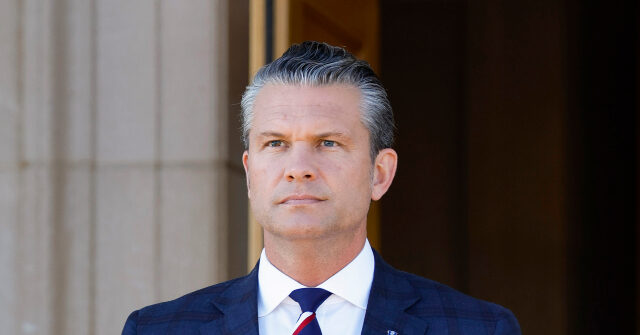
The fact sheet said Secretary of War Pete Hegseth is “laser focused on incentivizing and enabling Canada’s military modernization after decades of American taxpayers footing the bill for its homeland defense.”
The fact sheet said Canada “has yet to make the hard decisions and tradeoffs needed to put it on track to fulfill its NATO Defense Investment Pledge and become a credible partner in the defense of our shared continent.”
The Department of War said it “stands ready to get to work with the CAF to make our alliance stronger than ever, but Canada must get serious and focused.”
According to the fact sheet, Canada promised to spend two percent of its gross domestic product (GDP) on defense in 2006 and wound up needing almost two decades to reach that target in 2025, by which time the NATO commitment had been raised to five percent of GDP.
“Ottawa is touting its increased spending, but its decades of underinvestment will require years of enhanced spending to recapitalize its military,” the Pentagon said, citing dismal operational readiness levels for the Canadian air force, army, and navy.
The Pentagon noted that Canada is entirely dependent on the U.S. and NATO to provide Airborne Early Warning and Control aircraft, and its navy has just four “aging” submarines, only one of which is operational at any given time.
“Ottawa’s prioritization of parochial economic and commercial interests over military optimization introduces further uncertainty for NORAD, and will further burden our Joint Force and the American taxpayer,” the paper said.
This was likely a reference to Canadian Prime Minister Mark Carney putting Canada’s planned purchase of F-35 Joint Strike Fighters “under review” in March 2025 as his relationship with President Donald Trump deteriorated. Carney seemed interested in exploring an alternative, Sweden’s Saab Gripen fighters, which would be assembled in Canada.
“We should no longer send three-quarters of our defense capital spending to America,” Carney said in June.
Canadian Defense Ministry spokesman Simon Lafortune responded to the Pentagon paper by insisting Canada is “on track to meet NATO’s new commitment to invest 5% of GDP annually in defense by 2035 and is taking concrete steps to build the capabilities needed to meet that goal.”
Canada’s Globe and Mail countered that Carney’s administration “has not explained how it will reach that goal.” Canada’s 2026 budget only increases core defense spending by 2.2 percent, followed by a 2.6-percent annual increase for the next four years.
Canadian Defense Minister David McGuinty offered a prickly response to the Pentagon fact sheet on Tuesday, insisting that plans for his country to increase defense spending are moving forward, if not quite at the pace desired by the United States.
McGuinty said Canada planned to spend four percent of GDP on defense by 2030, well short of its five percent NATO commitment but a “significant step” up from the 1.25 percent it was spending in 2024.
“We’re making the investments we announced. We’re executing on those plans,” he said.
“Canada is a sovereign nation. I’ll be very direct. We don’t report to the United States,” he added.