Published: 23:20 GMT, 24 November 2026 | Updated: 23:22 GMT, 24 November 2026
Andy Burnham's Brexit reset will increase net immigration by up to 50,000 a year, according to official estimates.
Treasury analysis of the new 'Youth Experience Scheme' suggests European youngsters will make much more use of the new freedom to work abroad than their British counterparts.
As a result, the number of people entering the country is likely to far exceed the number leaving.
The deal, signed by the Prime Minister on Friday, will allow up to 100,000 young people a year from EU countries to work in the UK for up to three years at a time. The deal is reciprocal, with a similar number of British youngsters permitted to work in EU nations.
But the Treasury study suggests the scheme could add up to 50,000 a year to net immigration – boosting last year's annual total of 171,000 by 30 per cent.
Diplomatic sources said the UK is pushing to delay the start of the scheme until 2030 to avoid it impacting immigration statistics ahead of the next election.
Former Tory Cabinet minister Priti Patel said Labour's claims about the economic benefits of the reset deal 'rely heavily on huge increases in net migration'.
She added: 'Burnham's bad EU deal will harm British jobs as it means higher net migration. He won't come clean publicly on this, but it's buried in the small print.'
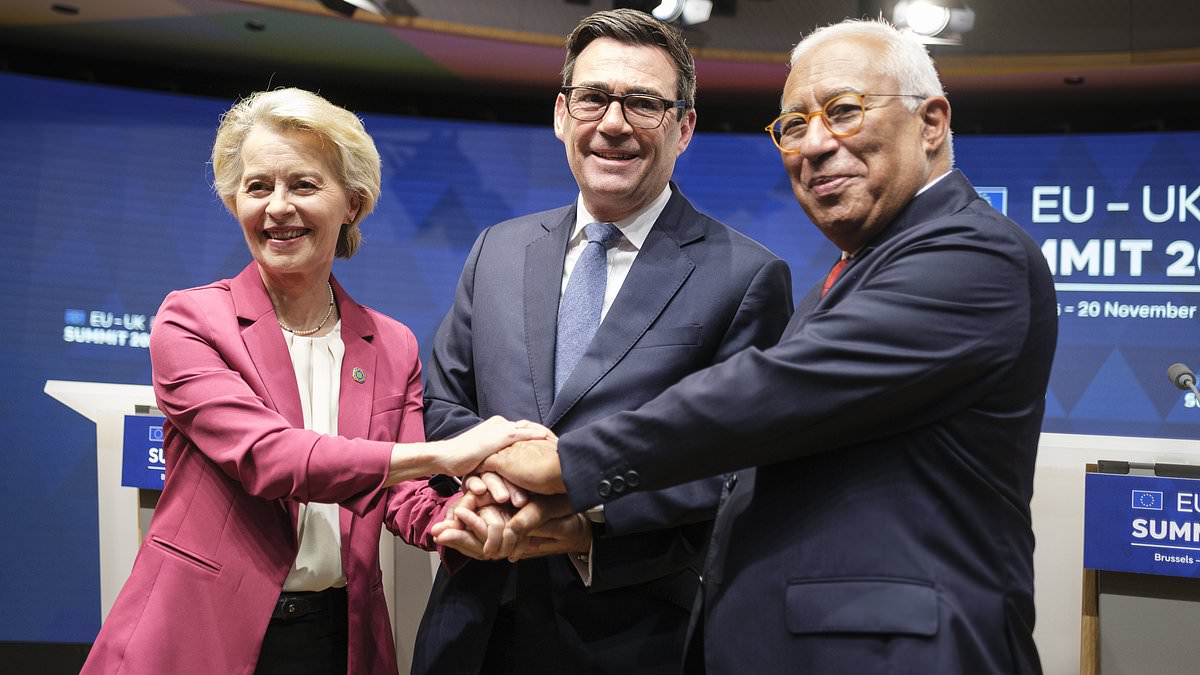
It's a deal: Andy Burnham agreed his Brexit reset with EU leaders Ursula von der Leyen and Antonio Costa on Friday
The Treasury's figures are based on net immigration flows in the final years of free movement in 2018 and 2019. Officials have downgraded the likely impact on net immigration by 25 per cent, arguing that visa fees and other costs will make it less likely that EU nationals will choose to come to the UK. But they admit the final impact remains 'uncertain'.
The analysis predicts that net immigration will rise between 20,000 and 50,000 for each of the first three years of the scheme, after which the original arrivals are due to start returning home. But the Treasury suggests it will also have a long term impact, with some EU nationals taking a permanent job in the UK or getting married and settling here. After five years it could still be adding 14,000 a year to the annual total.
The youth scheme is the biggest single factor in Mr Burnham's claim that the reset will add 0.5 per cent to GDP by 2040. It accounts for 0.2 per cent of GDP, but the Treasury concedes it will add a similar amount to the total population, meaning that GDP per head will not be increased at all.
Brussels is pushing to implement the scheme in 2028 alongside the new deal on food and farming. But EU minister Hamish Falconer told MPs it may not be possible to get the scheme up and running until 'early 2030'.
Diplomatic sources told the Mail that UK negotiators were desperate to avoid it coming in before the next election because of the likely impact on immigration figures.
The revelations came amid growing controversy about the PM's push for a much closer relationship with the EU.
Mr Burnham opened the door to holding a second referendum on EU membership this week – and said he would lay out options for a closer relationship next month.
Labour Remainers have welcomed the move, urging the PM to press on with his dream of taking Britain back into the EU.
But it has alarmed some Labour MPs in the Red Wall who fear a backlash in their Leave-voting constituencies.
Pendle and Clitheroe MP Jonathan Hinder warned it could cost Labour the next election.
Mr Hinder, chairman of the Blue Labour group of MPs, told the House magazine: 'Reopening the whole thing fully – I feel like we've stopped short of that so far, but might be on the road to it – I just think will be a disaster.'
He added: 'I don't think any of this is going to happen because as soon as you confront the reality of what rejoining the EU means – open borders, tens of billions of pounds being sent to Brussels, potentially joining the euro, not having our own trade policy – it just dissolves on contact.'