To govern, the old saying goes, is to choose. The modern British state, preferring not to choose, has found an alternative: referring, reviewing, consulting, meeting. Difficult decisions are handed down the chain to faceless bodies. These bodies are often led by ideologues who operate at arm’s length from accountability.
The paramount example of this phenomenon — of a British state unable to make decisions, and of a bureaucracy detached from improving the lives of people across this country — is Natural England. Established in 2006, Natural England was given the purview of protecting the natural environment in planning decisions. That is a worthy goal. But the organisation has little accountability, and little incentive to take any risk or offer even a “yes”. As a result, its goal has been subsumed beneath ideological ambitions, or — even worse — the repeated spectacle of bureaucrats obstructing construction and other activity simply in order to show that work was indeed done and that every risk was indeed mitigated.
The current chair, Tony Juniper, is a former Green Party parliamentary candidate and anti-nuclear activist who was appointed by a Conservative government. Natural England was supposed to be above politics, but it is filled with activists who have been garlanded with veto power over British housing and infrastructure.
Around a year ago, LFG and others started pushing for the quango’s abolition. A month ago, the Conservatives pledged to get rid of the quango once they were back in power. Then Reform did too. And now, it appears, the Labour government may be following suit. A “sprawling web” of arm’s-length bodies, said Louise Haigh, the First Secretary of State, has become a “tax” on growth. Natural England, it seems, may finally be struck from the British state.
Why is this necessary? The abolition of Natural England isn’t an attack on nature, though the organisation’s nice-sounding name may make you think otherwise. Rather, it is an attack on absurdity and unaccountability. As with any unaccountable body, the organisation’s decisions became steadily more absurd. To take a few examples: the taxpayer has had to underwrite a £100 million for the construction of a bat tunnel to save bats along HS2 — a tunnel that is actually not, it turns out, bat-proof. We are also paying more than £700 million for a “fish disco” at Hinkley Point C, a nuclear plant under interminably slow construction. The disco is meant to deter fish by broadcasting underwater sound — but, as EDF’s own figures show, only two salmon were detected within one kilometre of the intakes over a period of two years.
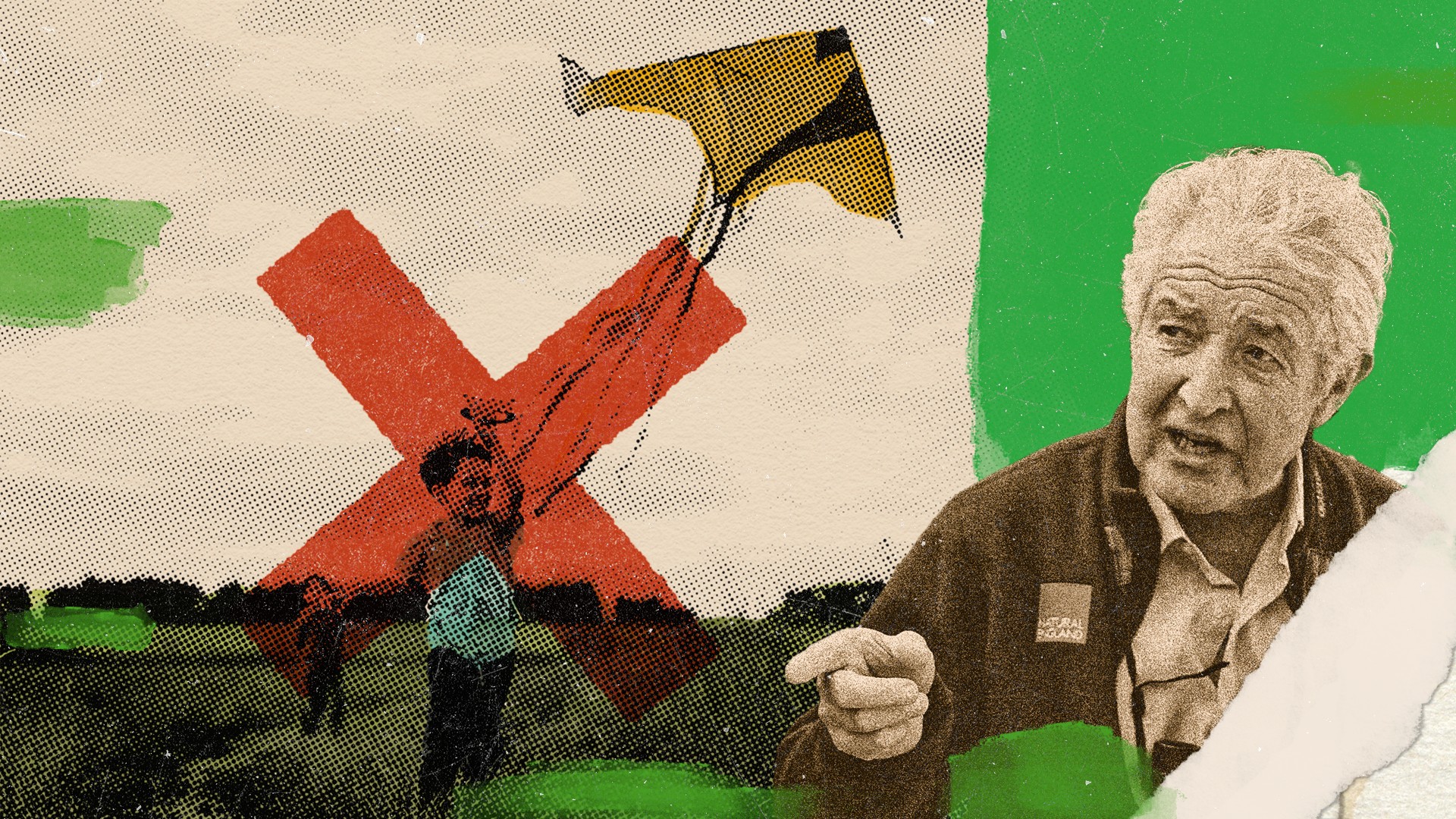
These are the well-known stories of Natural England, but its strange overreach has gone much further. In a Britain where objections rule the day, the organisation made itself a chief architect of newer, more complicated ways of saying “no”. In Royston, Hertfordshire, a nearly 30-year-old annual charity kite festival was ended after Natural England objected to it in 2024. Preposterously, it told the local Rotary Club that using 1% of local Therfield Heath, in the way the kite-fliers had for nearly three decades, would result in a “likely adverse impact” due — in part — to the “mowing regime”.
Natural England then suggested several alternative sites, all of which were unsuitable, including one in the middle of a “bowl” surrounded by hills, a placement guaranteeing no wind. The outcome? No money raised for charity, no families and kids out with kites, an annual tradition closed. The festival hasn’t returned.
This is far from the only example. In Hoylake, Merseyside, the local firework display, which was held to raise money for the RNLI, was cancelled after Natural England objected. Specifically, it objected to moving anything across the beach by vehicle, meaning that everything had to be carried across the beach by hand. With the additional requirements that the bonfire be placed further away, and made smaller, orchestrating the event became ever more onerous. It has never run again.
“Nearby, a beach is now covered in slime — because the local council has been advised that raking the beach, and using weedkiller, might be unlawful.”
Nearby, a beach is now covered in slime — because the local council has been advised that raking the beach, and using weedkiller, might be unlawful. The slime is the result of decaying beach vegetation that would previously have been cleared. 14,000 locals signed a petition asking for “amenity” space to be returned, to have their beach cleared so they could use it again. But Natural England told the council it couldn’t go ahead, and its advice continues to constrain the council from clearing the vegetation. It does so to protect the roosting land of thousands of birds — though those same birds used to roost in large numbers on the sand before Natural England’s advice changed, in 2020, so as to stop the removal of the vegetation. The swamp remains; only a slight carve-out has finally been agreed to clear some of it for lifeboats. Residents are left without a beach space. No family picnics: the slime comes first.
The list of projects that Natural England has said no to is never-ending. A theme park application was withdrawn, and a small town’s worth of housing, after the contaminated brownfield area — positioned next to the high-speed rail line in Ebbsfleet — was designated by the quango as important for wildlife including a particular species of jumping spider. After Norfolk County Council committed to build the Norwich Western Link road back in 2016, it finally applied for permission in 2024 — at which point, two days before the application was received, Natural England changed its guidance on bats, which meant the road construction would now face significant hurdles. Construction on the £274 million road was meant to begin in this year — but the thwarted council is still searching for alternative routes.
This is all to say nothing of the prospective cull of 75% of Dartmoor ponies. Earlier this year, Natural England produced new grazing guidance for farmers. The practical result of this guidance was to result in farmers having to choose between either culling their own livestock or culling Dartmoor’s ponies. Ultimately, this was going to lead to an estimated 75% of Dartmoor’s ponies being culled. Following public outcry, the organisation attempted to defend itself by arguing that it was not calling for a cull at all — technically true, because it was simply the practical, obvious outcome of their new guidance. The government simply changed the rules, giving ponies a carve-out from the new grazing rules. The ponies were saved, no thanks to Natural England.
Granted, Natural England’s power is derived from overzealous environmental regulations, some of which must also be unpicked. But its interpretations of these regulations are consistently broad and repeatedly expanding. It is for this reason that what was once legal is deemed illegal — as in the case of Royston and Hoylake — and that Natural England has been so confident in bat tunnels and fish discos.
An institution that once objected to the planning application for its own office is now finally facing accountability for its choices. We have allowed ministers to dodge difficult decisions for too long. SW1 has encouraged a politics of no trade-offs, of interminable proceduralism at the expensive of decision-making.
Growth isn’t something we can take for granted. It doesn’t happen automatically or by default. It requires humans acting on the world — trying something new, taking risks, and working day by day to achieve something. The world today is the result of generations of that attempt. Our ancestors dragged us out of the poverty and misery of natural existence — the brutality of high infant mortality and the devastation of plagues and famines. We have been gifted with industry, technology and possibility. We have the ability to grow those gifts — to grow ourselves —- but our status quo is one of decline.
Our current stock of politicians have chosen to maintain that status quo. They have created and deferred to a labyrinth of systems designed to remove them from the terrible business of governing. A network of quangos that pulls decisions down the chain; fleets of lawyers who advise against government decisions on the basis of ever-more widely construed “illegality”; a planning regime at the mercy of judicial review; and a world of government advisors who are so comfortably embedded that our last Prime Minister said he had given the “Island of Strangers” speech without really reading it.
None of this is because our politicians are optimising for votes. If they were, the country would look quite different. They don’t optimise for GDP per capita — that much is obvious. Instead, they optimise for acceptability among a particular class of people: not so much elites as much as dinner guests and immediate friends. Why was Natural England given so much power? Why was a Conservative government happy to appoint an activist to chair it? Because those circles would praise them for it: the “vibes” felt right.
Abolishing Natural England does not mean that the natural environment is unimportant. Our environment is important, but so are the people of Britain. Our politicians have a duty to them: a duty to make life easier, to give people more chances to take more risks, to get bills down, to build a world wherein people want to raise children. That means removing barriers to scaling companies, having fun, and replacing or improving the decaying infrastructure of yesteryear; it means removing unaccountable decision makers, and it means forcing politicians to look at reality square-on. MPs are elected by the British people, for the British people. They must make decisions for them, and create the conditions where their lives are likely to get better. That means trade-offs, it means difficult decisions, but it also means a path to an improved place for us all to live.
The British state is far from fixed. The country remains numbed by decades of decline. But the potential closure of Natural England brings hope that the tide may finally be turning.
Lawrence Newport is the CEO and co-founder of Looking for Growth