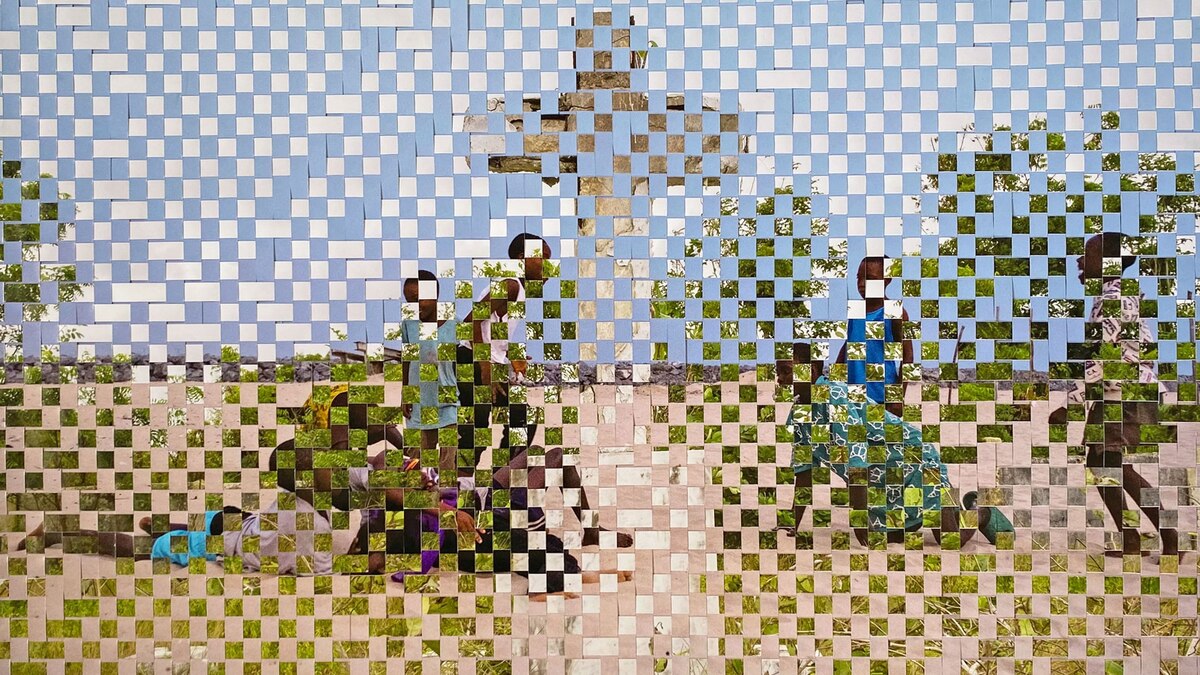
The coastal town of Badagry, Nigeria, has always been a gateway. It was a major port during the transatlantic slave trade, an entry point through which early Christian missionaries spread across western Africa, and for many years an exporter of palm oil. But it’s also long been a crossroads for Indigenous ethnic groups, including the Ogu people. Badagry has “contributed greatly to the social fabric of the entire country,” says artist Ayobami Ogungbe.
To reconcile this complex history, Ogungbe, who was born in Badagry and is Ogu, turned to his culture's traditional weaving practice. During walks through town, he captured images of colonial-era structures and scenes of daily life. He then cut those photos into strips and wove them together. This technique rewards close inspection: Only when your eyes linger on the entire composition can you pull out the distinct images that are interlaced. The method also centers a community that has withstood repeated attempts to erase its identity and ensures the history of the Ogu people isn’t forgotten, shifting the focus “from what was taken to what persists.”