They have airbags, collision-warning systems and emergency brakes – but for millions of Americans, the most basic safety feature in their car is still a step too far.
Around 33 million people in the US still refuse to wear seatbelts, with some seemingly willing to risk their lives rather than strap themselves in.
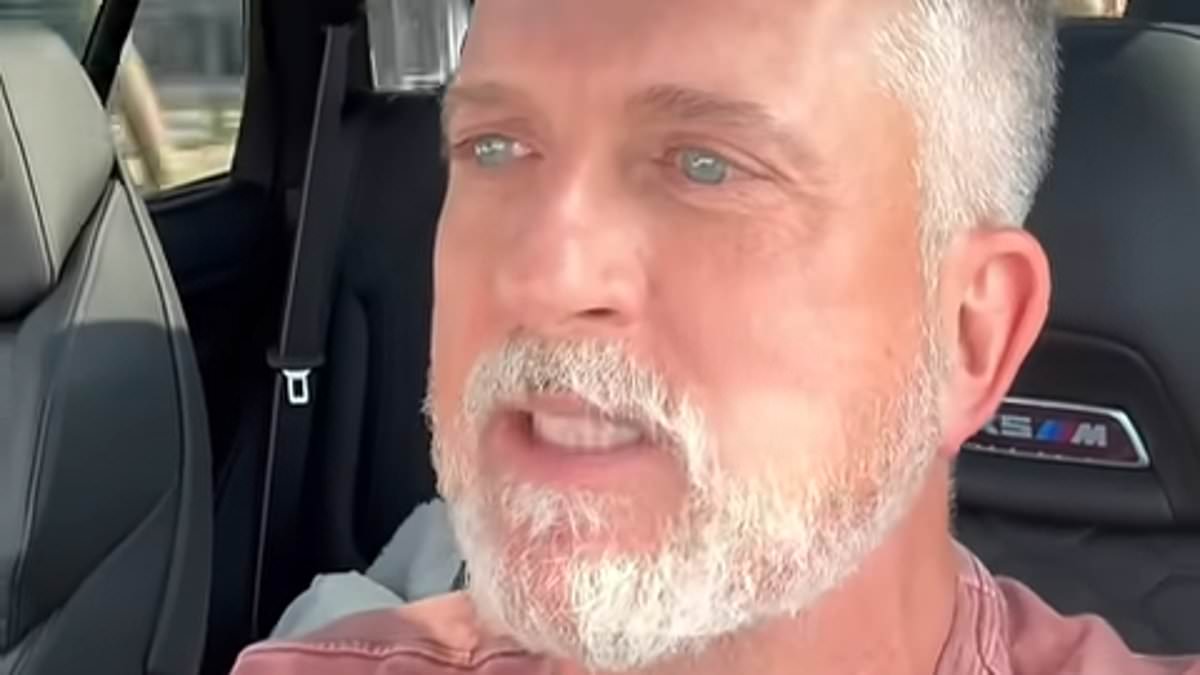
Among them is sports podcaster Bill Simmons, who recently revealed he rarely wears a seatbelt while driving – and suggested he might only bother if he was traveling at 95mph.
‘I’m not proud of it, I just don’t like seat belts,’ Simmons said on an episode of his podcast in August.
‘Listen, I know that I’ll get skewered. I’m a bad example. Sometimes I’ll put it on – if I’m going 95 on the highway, I might throw it on.’
His admission lays bare the stubborn resistance facing road-safety officials, who have spent decades trying to persuade Americans to use a device that can mean the difference between life and death.
Around 10,000 people die in US car crashes each year while not wearing seatbelts, accounting for roughly half of all vehicle-occupant fatalities.
Yet despite increasingly sophisticated cars, tougher laws and relentless safety campaigns, seatbelt use has remained stuck at around 90 per cent for more than a decade.
The stubborn refusal to use seatbelts has become one of the biggest remaining challenges for the automotive safety industry, despite decades of advances in airbags, emergency braking, cameras and crash protection
And among those who admit to going without is sports podcaster and media executive Bill Simmons, who recently confessed that he rarely buckles up while driving
That leaves the US trailing Canada and many major European countries, where usage rates typically range between 95 and 99 per cent, according to federal data.
Automakers have spent billions developing technology to protect drivers and passengers, but experts say even the most advanced systems cannot compensate for someone refusing to buckle up.
‘I’m not sure if technology is the solution, but you cannot give up on the 10 per cent,’ Thomas Broberg, Volvo Cars’ top safety engineer, said. ‘So you need to grasp for anything.’
The industry is now looking at a controversial solution that once sparked a furious backlash: systems that prevent a car from starting unless its occupants are wearing seatbelts.
America’s top automotive safety regulator, the National Highway Traffic Safety Administration (NHTSA), said in July it plans to seek public input on a proposal that could allow manufacturers to use such interlocks as an alternative to conducting complex crash tests involving unbelted drivers.
The move marks a renewed interest in technology that was abandoned decades ago after drivers complained it was unreliable and intrusive.
In 1972, regulators introduced ignition interlocks designed to prevent cars starting unless front-seat occupants were buckled up. But faulty sensors and widespread frustration prompted a revolt, and Congress subsequently prohibited regulators from requiring the systems.
Instead, manufacturers relied on warning lights, buzzers and, eventually, more persistent alerts.
Cecilia Sunnevång, vice president of research at Autoliv, a global supplier of automotive safety equipment, said she is all too familiar with the dangers
The approach helped drive seatbelt usage from barely above 12 per cent in the early 1980s to around 70 per cent by the turn of the century and roughly 90 per cent today.
But the final stretch has proved far harder, researchers say the reasons for refusing to wear a seatbelt are varied, ranging from discomfort and poor fit to simple defiance.
Some motorists deliberately disable warning systems, while passengers, particularly those in the back, are less likely to buckle up.
Cecilia Sunnevång, vice president of research at Autoliv, a global supplier of automotive safety equipment, said the dangers were well established.
‘It’s frustrating, as I know exactly what will happen to you if you don’t wear a seat belt and get into a crash,’ she said.
Seatbelts remain one of the most effective ways to protect occupants in a collision, significantly reducing the risk of fatal injury and offering substantially greater protection than airbags alone.
The push to make cars safer dates back decades, following growing concerns about vehicle design and the publication of consumer activist Ralph Nader’s Unsafe at Any Speed.
Congress passed legislation requiring seatbelts in cars beginning in 1968 and created the agency that eventually became NHTSA.
The industry is now revisiting a controversial idea from the past, seatbelt interlock systems that prevent a vehicle from starting, or restrict its ability to operate, until occupants buckle up
Over the years, automakers developed increasingly sophisticated reminders to get drivers to buckle up. Ford’s Beltminder system, introduced in 2000, combined dashboard lights with intermittent alerts and helped increase usage.
But even those systems have prompted some motorists to search online for ways to switch them off.
Now, manufacturers are exploring more advanced technology to target the remaining holdouts, including systems capable of detecting whether seatbelts are properly worn rather than simply plugged into a buckle.
New regulations scheduled to take effect in 2028 will also require warning alerts to continue for longer, making it harder for drivers to ignore them.
Still, the technology will only help those in newer vehicles, while older cars remain a particular concern for safety officials.
Enforcement is another part of the answer. Thirty-five states allow police to pull drivers over specifically for failing to wear a seatbelt, while another 14 permit citations when the violation is spotted during another traffic stop.
‘We cannot save lives without enforcing laws around impaired driving, distraction, speeding and seat-belt use,’ NHTSA Administrator Jonathan Morrison said at a law-enforcement conference in August.