SummaryVenezuela releases most comprehensive economic data in more than a decade$237.5 billion debt pile comes in well above investors' previous estimatesBonds rally as framework reinforces hopes debt restructuring remains a priorityDebt perimeter, US sanctions and pending DSA pose major hurdles
LONDON, Nov 25 (Reuters) - Venezuela emerged from a decade of economic darkness with a wealth of data this week, bolstering investor hopes that restructuring its massive $237 billion debt remains a government priority while laying bare the scale of the challenge ahead.
The macroeconomic framework, the most comprehensive snapshot of Venezuela's finances in over a decade, covered everything from GDP forecasts to anticipated oil production, putting total public debt well above the $150 billion to $200 billion most observers expected.
The Misinformation Monitor newsletter rounds up international misinformation narratives, with a "Real or Fake?" quiz in every edition. Sign up here.
The disclosure marks a crucial step in Venezuela's efforts to stem its economic crisis, rebuild its finances and eventually regain access to international capital markets after nearly a decade in default.
But the framework repeatedly stressed that tackling debt was central to economic recovery.
"In recent weeks there had been a growing impression that debt restructuring was no longer a priority as the political transition took centre stage," said Nicolas Jaquier, a portfolio manager with Ninety One.
"This document reaffirmed the government's intentions to move relatively fast on the debt restructuring front."
The real test, though, will come in a pending debt sustainability analysis, which will assess how much Caracas can afford to repay while restoring fiscal sustainability — core calculations for the losses creditors might ultimately face.
WEALTH OF DETAIL
Venezuela's economy, including its crucial oil sector, shrank dramatically over the past decade as US sanctions from 2017 largely cut the country off from international financial markets.
But bond prices surged after US forces seized President Nicolas Maduro in a January raid, ushering in a US-friendly interim government led by former Vice President Delcy Rodriguez that has welcomed international investors.
In May, Caracas announced plans to restructure its debts, hiring US firm Centerview to advise on the process while setting an ambitious four-week timeline for the release of comprehensive economic data.
Devastating twin earthquakes in June delayed the process. But Tuesday's framework ultimately contained more detail than most expected.
"The document represents a historic moment for Venezuela as it takes a major step to enter the world stage again," said Simon Quijano-Evans, head of strategy with Macro Hive.
Macro figures broadly in line with International Monetary Fund estimates, and a "relatively conservative" outlook for the oil sector also boosted investor confidence, he said.
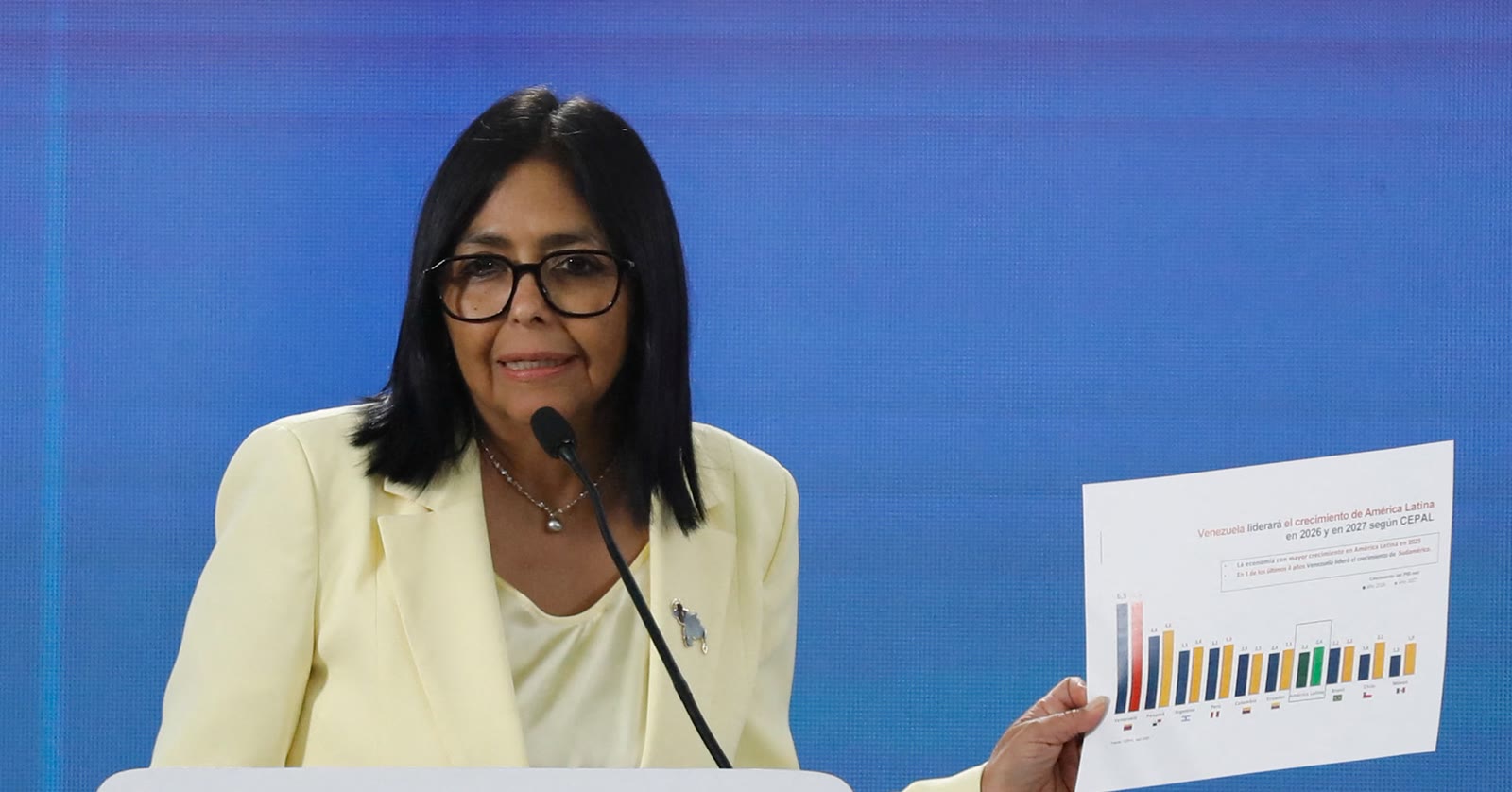
The document put total public debt at 242% of gross domestic product at end-2025, while projecting GDP to roughly double by 2031 to $200.9 billion and oil production to more than double to 2.9 million barrels per day within a decade.
It also forecast primary deficits through 2030.
After its release, Venezuela's international bonds rose by some 4 cents to trade between 41 and 51 cents on the dollar, while bonds from state-owned oil company PDVSA also rallied.
FROM SHADOWS AND FOG TO FIRM FIGURES
Crucial to investors' optimism were footnotes showing that the debt pile included "intra-public" sector obligations involving other Venezuelan entities, such as the central bank. The total also included $17 billion in PDVSA supplier arrears, which could be audited and revised lower.
These could lower the debt subject to the main restructuring and potentially reduce private creditors' losses.
When a figure of $240 billion was leaked earlier this year amid "months of shadows and fog," it seemed to many "like a number pulled out of thin air for hidden motives," said Christopher Sabatini, Chatham House's director of the Latin America Programme.
"We at least now have some clarity that should set the foundation for a more transparent, fiscally honest, trustworthy approach to helping Venezuela re-enter international capital markets — which it desperately needs,” he said.
But greater debt clarity has also underscored how difficult it will be to decide exactly which debts Venezuela will ultimately restructure.
The $237.5 billion figure is "significantly higher than previous market estimates," said Maria Paola Figueroa, head of Frontier LatAm Research at the Institute of International Finance.
"Establishing the actual perimeter of claims to be restructured will be a key challenge," Figueroa said.
She added that US sanctions remained a major obstacle because current waivers do not allow direct debt negotiations, while coordinating a diverse creditor base, particularly China, added to the challenge.
Venezuela has not said when it expects to release the full debt sustainability analysis (DSA), and Rodrigo Eyzaguirre, Latin America Practice Leader at FrontierView, an Oxford Economics company, said other key elements, including proposed coupon rates and maturity schedules, the treatment of overdue interest, and expected haircuts, were also pending.
The country also must determine which debts could be excluded from restructuring, such as debt owed between state entities or disputed debts.
While the transparency boosted confidence for now, investors still warily await the DSA — and hope for greater involvement of international bodies such as the International Monetary Fund.
"A credible IMF-supported program, and more effective fiscal and monetary reforms, are essential to restore debt sustainability and support further market gains over the medium term," Eyzaguirre said.
Reporting by Karin Strohecker and Libby George, additional reporting by Andrea Shalal and Marc Jones; Editing by Conor Humphries
Our Standards: The Thomson Reuters Trust Principles., opens new tab
Libby George is a London-based journalist on the Reuters emerging markets team. She was part of a team named as Pulitzer finalists in 2023, and who won the Selden Ring Award for International Investigative Reporting, for a series of stories revealing abuses by Nigeria’s military. After launching her career as a political journalist in Washington, D.C., she joined Reuters in 2015 covering oil, and from 2019-2023, she was senior correspondent and acting bureau chief based in Lagos, Nigeria.
Karin Strohecker is the London-based Global Chief Correspondent for Emerging Markets, leading a team that covers debt and economic issues and investment trends in developing nations around the globe. Having joined Reuters more than 20 years ago, Karin has worked in text and television in Frankfurt, Berlin and Vienna, covering major events such as IMF World Bank meetings in Washington, the World Economic Forum in Davos, OPEC meetings and the World Cup.