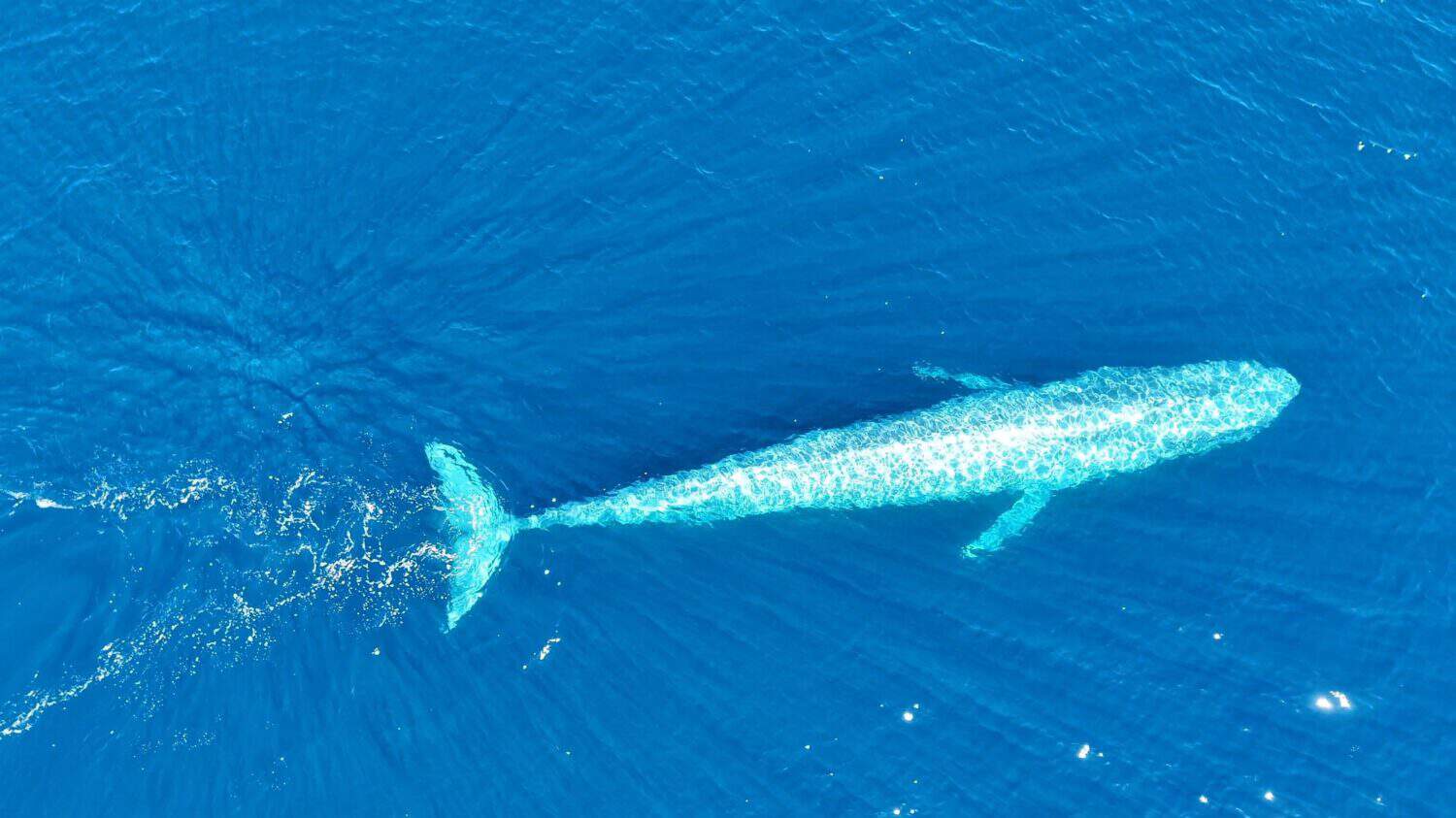
One group of blue whales breaks the rules of their species, and it's exactly what puts them in danger.Crews often never know when a collision happens. What does that blind spot cost the whales?A surprisingly small tweak to a busy shipping route could change everything. The catch is what it takes to make it happen.Whale-watching can save these giants or hurt them. The difference comes down to one thing.
Blue whales are the largest species on Earth. They’re also among the loudest animals, reaching 188 decibels underwater. And in ideal conditions, these majestic animals live at least 80 years.
Yet their conservation status is currently endangered, despite their well-known presence in our oceans. Because, as it turns out, their size works for and against them. Many blue whales don’t live to see one decade, let alone eight.
And those living near Sri Lanka find their lives cut tragically short because they share the water with their biggest threat: Humans.
Sri Lanka’s Whales Don’t Migrate, Leaving Them Vulnerable
Most blue whales migrate to cooler waters in summer to feed, then return to warm waters to breed. This cycle applies to all pods except those that live in the northern Indian Ocean. Blue whales near the Maldives, Oman, and Sri Lanka stay year-round for food.
Monsoon-driven upwelling makes these tropical waters rich in shrimp, which make up most of the local blue whales’ diet. Ever-changing, monsoon-driven currents constantly replenish this supply. As old water churns out and new water comes in, blue whales receive a steady influx of prey. When food is abundant, and the water is warm enough to reproduce, there’s no reason for the whales to leave.
Blue whales are the largest and loudest, but these traits don’t always help them survive.
©Rich Carey/Shutterstock.com
This has created the perfect permanent habitat for blue whales. They want for nothing, and if they were the only ones traveling this corridor, they’d likely be some of the longest-surviving whales in the world. Unfortunately, Sri Lanka’s blue whales must share their home with a shipping lane. More than 70,000 ships pass through these waters annually, and encounters aren’t always peaceful.
Ship-Whale Collisions Are Common and Underreported
The East–West international shipping routes along Sri Lanka are among the world’s busiest. Vessels traveling these waters transport up to two-thirds of the world’s seaborne oil and about half of the world’s cargo containers.
Many of these ships operate within 10 nautical miles of Sri Lanka’s coast. This also coincides with Sri Lanka’s blue whale habitat, which sometimes swim closer to shore depending on where their food takes them. Ships following ocean currents are also more likely to encounter passing whales, especially those docking at and leaving the country’s ports. According to the International Fund for Animal Welfare, whale watchers are often shocked at how close blue whales come to the coast.
In the wild, blue whales can live up to 90 years with no natural threats.
©tane-mahuta/iStock / Getty Images Plus via Getty Images
On average, more than 200 ships pass by Sri Lanka daily. This puts blue whales at high risk of colliding with ships, and crews often don’t even know it happened. IFAW research surveys also show that moving shipping routes 15 nautical miles farther south would cut the risk of whale-ship collisions by 95%.
95
%
lower risk of whale-ship collisions if shipping routes moved 15 nautical miles farther south
Source:
IFAW research surveys.
If nothing changes, whale fatalities will continue, but that’s not the only thing that will change.
Because many incidents go unreported, we do not have a definitive number of whale fatalities resulting from ship collisions, which makes it harder for conservation groups to step in.
As of 2026, blue whales face no natural threats. The only threats to their safety are human-caused, including ship collisions. This is the leading cause of mortality, followed by entanglement in fishing gear and climate change. Unfortunately, this has ripple effects that extend beyond blue whales’ conservation status.
Whale-watching tours could help or harm marine species, depending on their policies.
©Mircea Costina/Shutterstock.com
Many whale watching groups, such as the Whale Watching Group in Sri Lanka, are dedicated to ethical observation. They don’t promise tourists will see whales, but they do promise to remain eco-friendly, maintain distance, and keep educating people about the importance of conserving this vulnerable species. Sadly, if the blue whale population continues to decline, educational tours may become a thing of the past.
Without word of mouth, fewer people will know the plight of Sri Lanka’s blue whales. Conservation often relies on showing the world what they’re protecting, and losing that would be a devastating blow. Alternatively, some whale-watching companies do not emphasize ethical viewing. These companies are equally responsible for the species’ vulnerable status and only add to the problem rather than helping to solve it.
Today, an estimated 10,000 to 25,000 blue whales still exist in the eastern South Pacific. This is down from a global population of 140,000 to 300,000. While early whaling drastically reduced their numbers, shipping vessels are the biggest modern-day risk.
About the Author
Lianna Tedesco
Lianna is a feature writer at A-Z Animals, focusing primarily on marine life and animal behavior. She earned a degree in English Literature & Communications from St. Joseph's University, and has been writing for indie and lifestyle publications since 2018.
When she's not exploring the animal world, she's usually lost in a book, writing fiction, gardening, or exploring New England with her partner.
Thank you for reading! Have some feedback for us?
Thank you for your feedback!
We appreciate your help in improving our content.
Our editorial team will review your suggestions and make any necessary updates.
There was an error submitting your feedback. Please try again.