In what has been described as a rare joint warning, the MOD and MI5’s National Protective Security Authority (NSPA) have told firms involved in military procurement and supply or Ukraine supply chains to ‘act now’ to protect staff, sites and operations. This generalised warning is being followed-up by a series of Whitehall ‘closed-door’ briefings to leaders of key defence and infrastructure organisations. The government is also specific that the source of the threat is Russia. In their joint statement, the NPSA and MOD said: ‘Russia has increased attempts to conduct sabotage against European defence-related facilities.’ The presumption, which may or may not be backed by specific intelligence, is that UK facilities and personnel are being actively targeted.
Most popularWhy does the BBC think white men are to blame for ‘loudcasting’?
Russia has consistently threatened the UK with retaliation for supplying Ukraine. Dire threats were issued two months ago, but the announcement last week of the supply of 1,000 air defence missiles and air defence radars, along with our continued support for the €300m UK, Ukraine and Swedish package to deliver Gripen fighter jets to Ukraine, may have tipped Russia’s hand. It is perhaps for that reason that General Sir Richard Barrons, one of the principal Strategic Defence Review authors, described, to the BBC, the threats as ‘significant but not new’. He said he believed many of the firms most at risk will be ‘quite savvy’ about the risks of cyber attacks.
Cyber, however, is not the only threat. Direct attacks in the UK, linked to the Ukraine war, include an attack on a warehouse in East London in 2024, and in the July of that year, as part of a campaign across Europe at DHL depots, a parcel bomb which caught fire in Birmingham. Russia is also thought to be behind the attempted fire-bombing of one of Sir Keir Starmer’s homes in 2025.
Across Europe, we’ve seen attempted sabotage of major rail routes in Poland, and in early November what looked like an attempt to create a ‘false flag’ incident along the Polish, Lithuanian and Russian exclave borders, to provoke a Nato reaction. Russian jammers routinely disrupt military and civilian traffic: Estonia reckons 85 per cent of all flights in and out of their country suffer some form of disruption and, more recently, the Russian warship Admiral Golovko, sitting in the North Sea, 190 miles off our coast, is believed to have disrupted some 140 civilian flights.
It goes without saying that the Russians deny all of this and accuse Nato of warmongering. They also reserve a special animus against the United Kingdom.
How do we respond? We are undoubtedly in an era of ‘grey zone’ or ‘hybrid warfare’, which makes it hard for governments to react, let alone ‘get ahead of the curve’. Our concept of conflict, how we think about warfare, is still derived too much from the first and second world wars, which both started with formal declarations of war and were concluded with equally formal surrenders and peace treaties.
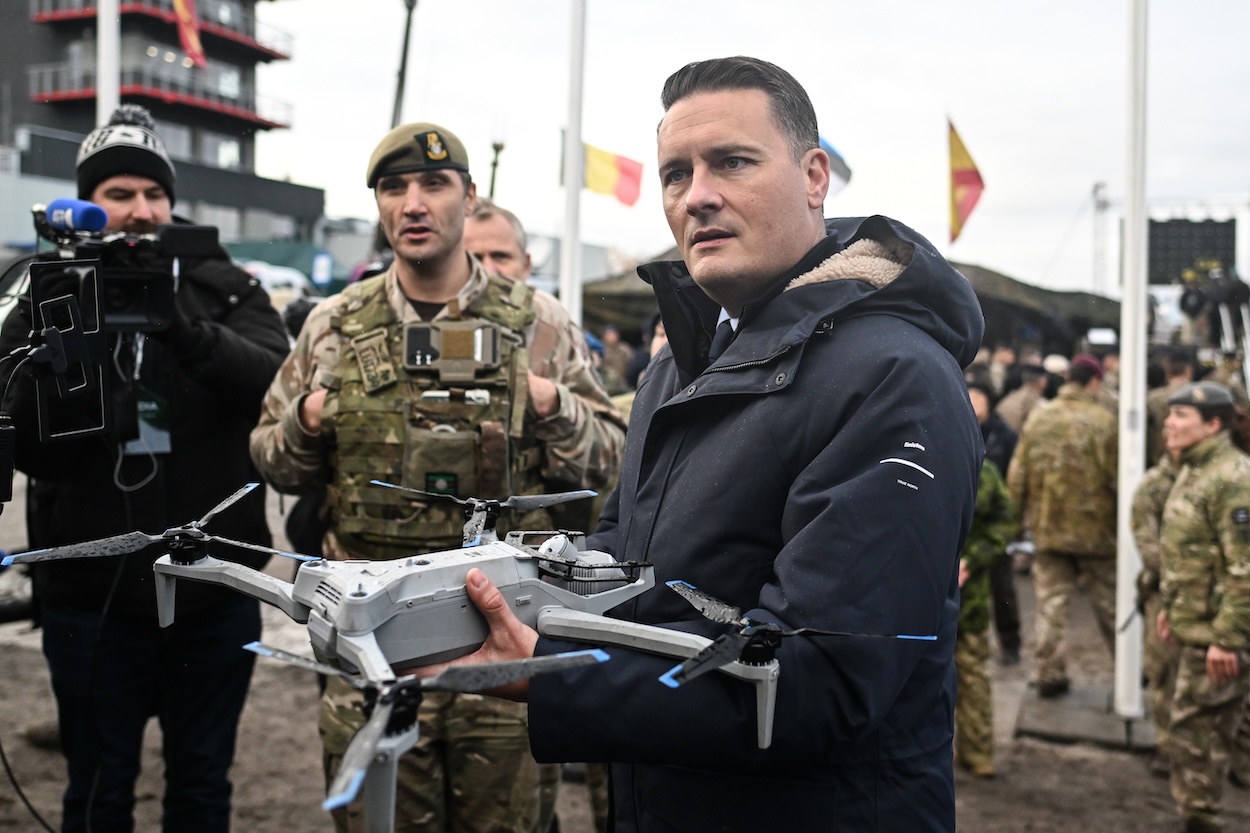
We might do better to understand what is happening to us and how we should respond if we looked beyond those wars, though the period of the ‘Phoney War’, from Sep 1939 to April 1940 holds some lessons: fighting began almost at once at sea, but air warfare was limited and there was almost no ground combat in western Europe at all. We used the time to train and stockpile, not always to best effect, but it is hard to imagine even the desperate defence of 1940 without that ‘breathing space’. Open conflict is not inevitable but it is possible: we should presume that it is and respond accordingly. Wes Streeting’s warning of ‘war within a thousand days’ is not hyperbolic.
Further back still, we have the 16th and 17th century concept of ‘no peace beyond the line’, whereby peace treaties in Europe were deemed not to apply in the Western Hemisphere, and equally acts of war in that hemisphere were not generally regarded as casus belli in Europe. ‘War within Peace’ and ‘Peace within War’ seems contradictory, but that is where we are and we need to accept this and adapt accordingly.
How do you contain the revanchist or aggressor power without provoking them?
Neither example is particularly comforting, but Churchill’s description of the ‘Phoney War’ as the ‘Twilight War’ is both apt and more accurate; it also seems to fit our current predicament better. The Phoney War ended as we know with the all-out German invasion of Europe and ‘no peace beyond the line’ was eventually eradicated as the colonial powers gradually took effective control of their possessions. The dilemma hasn’t changed though: how do you contain the revanchist or aggressor power without provoking them into a rash or violent act, before you have the resources to contain them?
That is the problem we face with Putin. We need to match his current wide range of ‘grey zone’ or ‘hybrid attacks’, while building the resources, resilience and resolve to eventually overmatch him and deter further aggression. It is not clear that, despite the warnings, we properly recognise the scale of our challenge.