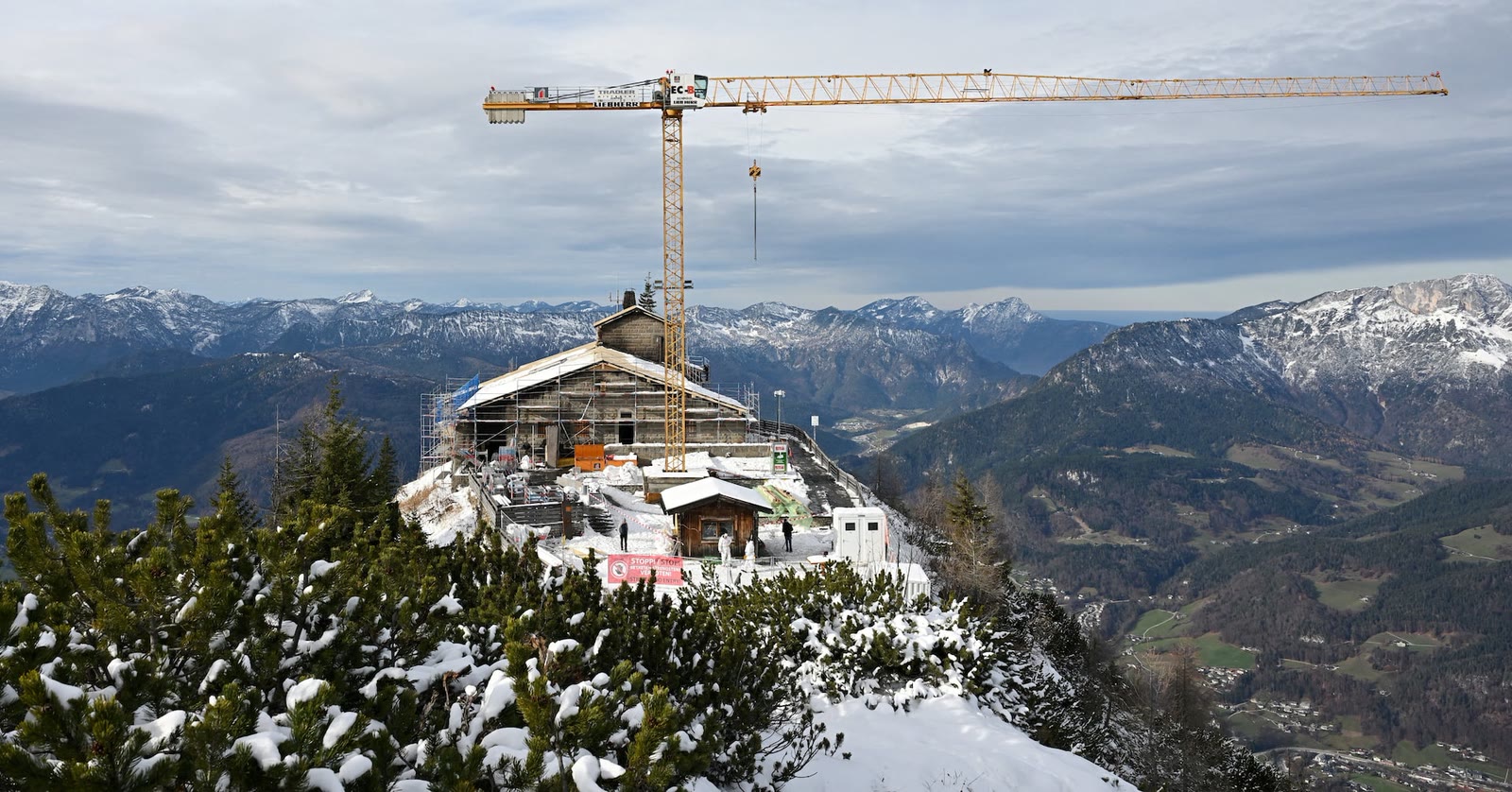
Item 1 of 3 A general view shows damages following a fire at Kehlsteinhaus, the former Nazi mountain retreat known as the Eagle's Nest, in Berchtesgaden, Germany, November 25, 2026. REUTERS/Angelika Warmuth/ File Photo
[1/3]A general view shows damages following a fire at Kehlsteinhaus, the former Nazi mountain retreat known as the Eagle's Nest, in Berchtesgaden, Germany, November 25, 2026. REUTERS/Angelika Warmuth/ File Photo Purchase Licensing Rights, opens new tab
BERCHTESGADEN, Germany, Nov 25 (Reuters) - Construction teams are working to rebuild and repair the former Nazi guest house known as "The Eagle's Nest" in southern Germany after a fire last month left it so badly damaged that its future had been uncertain, local authorities said on Wednesday.
Built in 1938 on a mountaintop overlooking the Bavarian Alps, the secluded retreat counted Adolf Hitler as its guest and is sometimes dubbed "Hitler's Tea House", although he visited only occasionally.
The Misinformation Monitor newsletter rounds up international misinformation narratives, with a "Real or Fake?" quiz in every edition. Sign up here.
The site, which previously attracted about 300,000 visitors a year, has been closed since late October, when a fire destroyed the roof and the remaining original furniture.
Police have detained a man suspected of starting the fire. He is being held in a secure psychiatric facility while the investigation continues.
Bartl Wimmer, chairman of the local tourism association responsible for operating the Eagle's Nest visitor site, told Reuters the building's blackened walls remained structurally sound enough to support a new roof and that the site had been made ready to survive the winter as the renovations continue.
A huge crane looms over the site, which is clad in scaffolding. The building's elevator leading to the basement survived the blaze, meaning workers can bring up supplies.
Some critics have said the building, which is owned by the southern German state of Bavaria, should be left in ruins to discourage neo-Nazi pilgrimages and shift attention towards the victims and crimes of the Nazis.
Wimmer said that demolishing such sites did not solve the problem because people continued to visit even when little remained.
"Having a preserved building, one that serves as a site of remembrance and is monitored precisely because it is still standing, is a far better approach," he said.
Reporting by Christina Uyanik and Ayhan Uyanik; Writing by Miranda Murray; Editing by Alison Williams
Our Standards: The Thomson Reuters Trust Principles., opens new tab