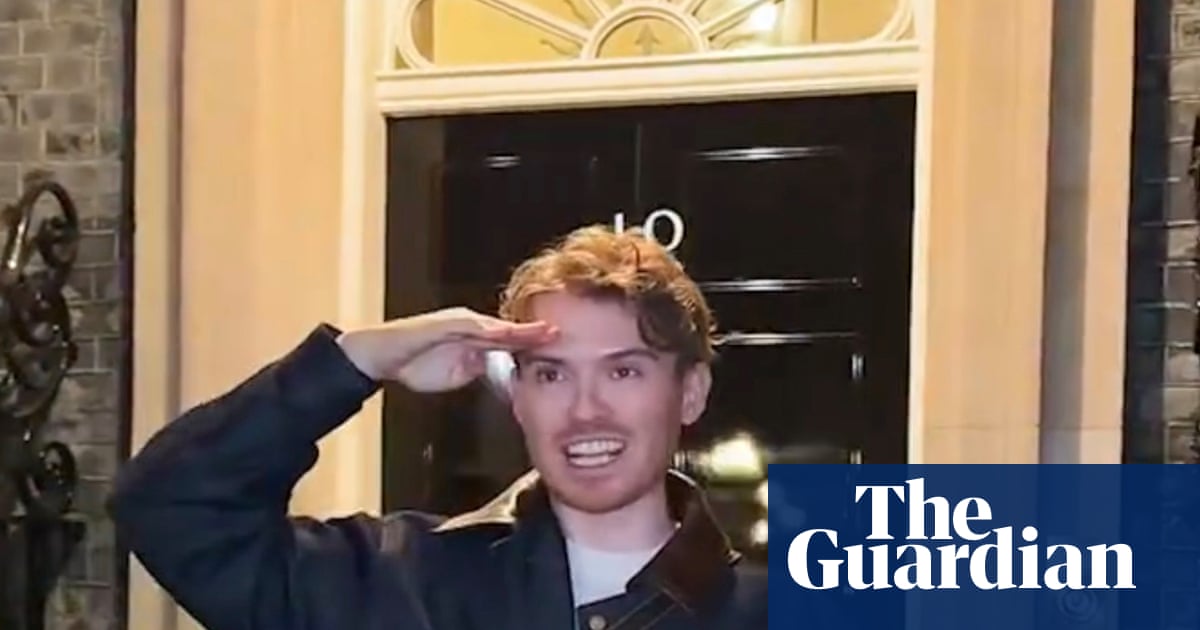
When excited content creators gathered in the opulent surrounding of 10 Downing Street earlier this month, their mingling and poses in front of a Glambot camera were interrupted by a warm welcome from the prime minister.
After showing the 60 or so gathered content creators a video of his own Instagram reel bloopers, Andy Burnham explained that he too had faced criticism for his prolific social media content. But, said the enthusiastic member of the creator ranks, he said would continue because he was trying to reach people “where they were at”.
“It was really relatable,” said Sophie Terry, better known as Sophie Tea, an artist with more than 2 million followers across Instagram and TikTok. “I was just really happy that influencers and content creators were given this moment in the establishment.” Burnham had, she said, “recognised the impact that those in the room could have for good”.
As it turned out, however, Burnham’s message was overshadowered by a slew of angry headlines about a relatively obscure TikToker mouthing the words “bomboclaat pussywagon chicken nugget” outside No 10. Instead of chalking up a series of easy communication wins, Downing Street now finds itself contending with a political storm over the role of influencers and social media in government communications.
Bridget Phillipson, the women and equalities minister, rode out to call the video “totally unacceptable”, while Kemi Badenoch accused the prime minister of “degrading” No 10 Downing Street. Max Balegde, the influencer at the heart of the storm, took down his TikTok post, sincerely apologising to anyone who had been offended but stating that it had been unproblematically live for weeks “until revolting rightwing people tried to put this disgusting narrative on it”.
Despite the furore, Burnham appeared to lean into the faintly surreal row during prime minister’s questions on Wednesday. When Badenoch referenced the influencer reception, noting that one invitee had made “disgusting and pejorative comments about women’s private parts”, Burham called the video “wrong” and “not acceptable,” and said Balegde had deleted the post and apologised. He jibed that during question time he was speaking “to people the opposite of influencers”, adding: “She sneers at TikTokers. She sneers at influencers. Young people are looking to these people for their information, and I won’t apologise for doing that.”
The row has opened a debate about the use of influencers by Downing Street, a tactic that began under Keir Starmer, who held the first Downing Street reception for content creators in July last year. It has been turbocharged under Burnham, who regularly features in his own posts explaining government policy, or discussing favourite bar snacks with the chancellor of the exchequer.
People at the event said that invited influencers were not allowed to take their own phones into No 10, but were provided with devices to take footage which was then checked and returned with the content deemed appropriate. Balegde confirmed that the video filmed outside Downing Street was taken in a brief moment on his own device as he was leaving.
Critics of the trend says influencers are in danger of being used by the political machinery of government.
The influencer Luke Hamnett speaks with Andy Burnham in Downing Street. Photograph: Luke Hamnett
But that is missing the point, said Tea, who was invited to produce a painting at the reception which will be hung in Downing Street – although she confirmed it will not be one of the female nudes she is best-known for. “I think it’s an absolutely fair comment that some would say that content creators are being used, and actually, it’s mutually exploitative,” she said. “Lots of those influencers are self-made entrepreneurs. They’ve not come from privilege, they’ve made it all themselves. No one’s going to turn down that once-in-a-lifetime opportunity.”
Another argument is that influencers, who have in the past year been invited alongside political journalists on foreign trips with the prime minister, lack the broad in-depth policy knowledge of political journalists, who are more likely to ask difficult questions and hold the government to account.
But Sophie Pender, the founder of The 93% Club, says this ignores the expertise of those who were invited and their ability to “cut through the algorithm”.
“Journalism is a vital art, which holds truth to power, and provides detailed scrutiny of a government,” she said. “We also know that in the current climate, this information doesn’t reach everybody. For a stable democracy, we need our politicians and journalists to cut through the algorithm. It’s in all our interests for content creators and journalists to work together to provide good sources of information, and good scrutiny.