As Americans travel for Thanksgiving and gather with family and friends, doctors are warning people to take precautions to prevent illness.
The Centers for Disease Control and Prevention (CDC) said in its weekly influenza surveillance report that, as of the week ending Nov. 7, seasonal flu activity is increasing in parts of the U.S. and "is higher than typically observed at this time of year."
As of Nov. 20, emergency department visits for flu, COVID-19 and RSV are low nationally but increasing, the CDC said.
Some public health specialists told ABC News there are a few simple steps people can follow to lower their risk amid the holiday.
Proper handwashing
Many diseases and conditions are spread by not properly washing hands with soap and clean, running water, according to the CDC.
The federal health agency says handwashing with soap is one of the best ways to stay healthy.
STOCK PHOTO/Adobe
"I think if we could just get people to wash their hands, it would go such a long way," Dr. Tony Moody, a professor in the department of pediatrics, division of infectious diseases at Duke University Medical Center, told ABC News.
The CDC says people should wet and lather their hands, scrub for 20 seconds, rinse and dry.
Get vaccinated, if eligible
The specialists said vaccines are the best way to protect yourself against COVID, flu and RSV, for those who are eligible. However, vaccines take about two weeks to develop full protection.
"It's a little late to get good protection between now and Thanksgiving, but anything helps," Moody said.
Babies might be able to receive quicker protection against RSV before the holiday. For babies whose mother did not receive a maternal RSV vaccine, a monoclonal antibody shot is available for infants under 8 months old and a particular vaccine type, called Nirsevimab, can be given to 8- to 19-month-olds if they are at risk for severe RSV entering their second RSV season.
Popular Reads
Monoclonal antibodies are proteins manufactured in a lab that mimic the antibodies the body naturally creates when fighting an infection.
Though given as an intramuscular injection, this shot is different than a vaccine, which activates the immune system.
A pediatrician vaccinates an infant against respiratory syncytial virus (RSV) in a doctor's office, Nov. 23, 2021.
Picture Alliance/DPA via Getty Images
Unlike vaccines, the monoclonal antibody shot provides immediate protection against RSV, lasting for five months, according to the CDC.
"We would expect that protection would not be quite instantaneous. You've got a little bit of time for the antibody to distribute, but we're talking hours [rather] than days," Moody said.
Consider masking
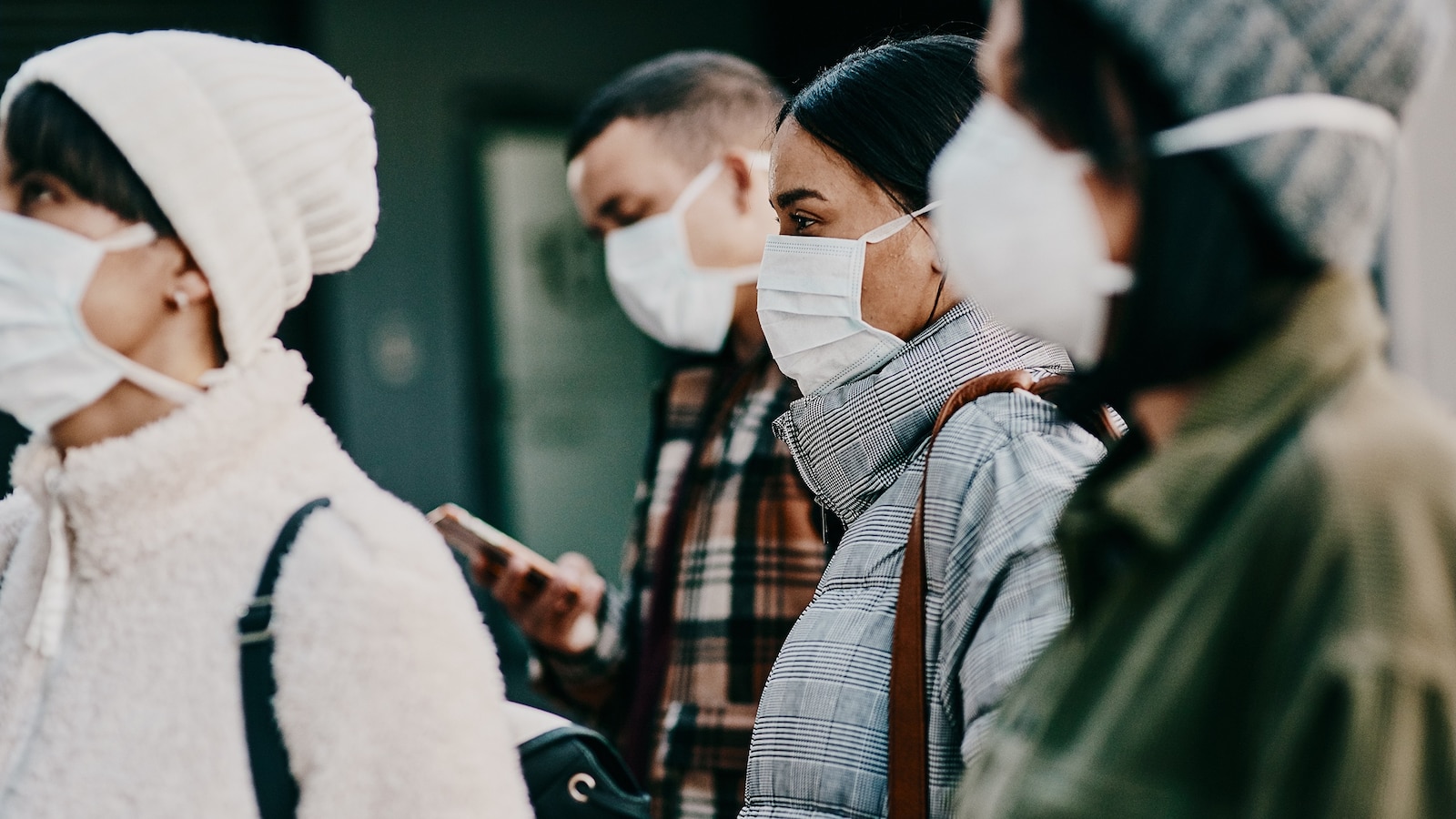
The public health specialists said masking could be a good way to lower the risk of respiratory virus transmission, especially while traveling, especially for those at higher risk of severe disease.
They recommend a well-fitting mask, such as an N-95 -- designed to filter at least 95% of airborne particles -- that fits over the nose and mouth.
Dr. Majd Alsoubani, an infectious disease physician at Tufts Medical Center, said that while traveling, she worries more about airports than planes in terms of risk.
"Planes nowadays, they are well-vented. They have very good airflow," Alsoubani said. "Usually, what the spaces that I worry most about during travel are actually airports, especially in security lines because there's a lot of crowding in those in those spaces when people try to board a plane. ... So that type of crowding increases the risk of transmission."
STOCK PHOTO/Adobe
She and Moody said that if people develop respiratory virus symptoms before the holiday, even if they're mild, it's better to stay home, if possible.
"They really should think about who they're visiting, especially if they have family members who are older, like their grandparents, or if there are infants in the family, or if there are people who have chronic medical conditions like lung disease, kidney disease, they're on immunosuppressant medication," Alsoubani said. "At that point, you think about, can you delay your visit? Can you kind of avoid seeing those more vulnerable individuals? And if you can't, potentially wear a mask because that could risk lower the risk of transmission and make sure kind of the space is vented."