David Redfern/Getty Images
The 1960s were a wild time for music and culture, when the swell of change washed over society and carried with it a mélange of the Beatles, soul music, psychedelia, the Civil Rights Movement, the Summer of Love, and even the Space Race and Woodstock — all within a single decade. But out of the entire '60s, some tentpole musical moments stand out above the rest.
Some younger folks might have a hard time understanding the importance of connection between music and culture in the '60s — heck, even through the '90s and '00s. Sadly, early 21st century popular music is characterized by easily generated and disposed social media mood tracks and a deluge of flash-in-the-pan scenes. But for folks living in the '60s, music was possibly the single most important benchmark that denoted changes across life. This is why the music of the time, which has granted boomers bragging rights over other generations, was so vibrant and quick-changing. Growing up in the '60s meant passing through each epoch — Beatlemania, the Civil Rights Movement, Woodstock — hand-in-hand with accompanying tunes, as a shared cultural experience that defined youth and young adulthood.
But certain musical moments stood out more than others. Let's take a stroll through the most groundbreaking events of the greatest decade for music in the 20th century.
The Beatles on The Ed Sullivan Show (1964)
While the entire period of Beatlemania covers about 1963 through 1966, starting in the U.K. and migrating outwards, we've got to pin the whole "discovering the Beatles" experience in the U.S. down to one TV event: the Fab Four's appearance on "The Ed Sullivan Show" on February 9, 1964, performing "I Want to Hold Your Hand" (as part of the greater British Invasion with bands that once rivaled the Beatles in popularity). It's impossible to overstate how explosive this moment was, nor how explosive the Beatles' appearance on the global pop cultural landscape was.
This event was made all the more impactful because it happened via TV, which had become ubiquitous in U.S. households by the '60s. The shrieking girls in the audience, the restrained smiles of the Beatles (except McCartney, of course, aka, "the cute one"), the energy of the performance and immediacy of the recording. This was the moment that Beatlemania hit the stratosphere, precisely at 8:12 p.m. Eastern Time — so minutely chronicled has this moment been. It's perfectly possible that Paul, John, George, and Ringo could have continued sweeping across the globe without their "Ed Sullivan Show" performance. But, no event more perfectly encapsulates the moment that the Beatles' splashed than old black-and-white footage from their debut.
As a result, the Beatles changed music forever. They bundled up numerous musical branches and influenced everything to come, overhauled music production methods, revolutionized the very role of the "rock star" in popular imagination, and sold hundreds of millions of albums in the process. They're still the highest-selling artists of all time.
Bob Dylan going electric (1965)
Before Bob Dylan plugged in his guitar at the Newport Folk Festival in 1965, folk and rock didn't mingle, no matter how both took influence from the general U.S. folk revival of the 1940s. Folk in its '60s heyday was all about confessional sensitivity, artistic truth, pure poetic soul, and went hand-in-hand with the countercultural zeitgeist. So, when Bob Dylan — the leading folk figure of the time — started playing some up-tempo electric guitar business that sounded closer to rock, lots of people took it as a betrayal. Just imagine if the Sex Pistols' Johnny Rotten put out an EDM collab album with a TikTok star and you'll get the idea.
Dylan's electrification yielded some immediate, harsh fallout amongst the audience at the Newport Folk Festival, though how much is still up to debate. People did boo, though there are tales of documentarian Murray Lerner copy-pasting extra boos throughout footage of Dylan's entire performance. Dylan, wielding a Fender and a backing band, left the stage after only three songs, the last of which was, "Maggie's Farm." Funny enough, Dylan had just released the folk rock song "Like a Rolling Stone" five days prior to the festival, but as information traveled slower back then, those in attendance might have expected just a dude with a guitar.
No matter what, Dylan's folk-rock fusion opened the floodgates for a whole new vehicle for delivering folk stylings and messages, adopted by Simon & Garfunkel, Crosby, Stills and Nash, Neil Young, the Byrds, and more. From that point on, '60s folk rock grew side-by-side with rock's various branches — psychedelia, prog, experimental — cross-pollinating and influencing into the '70s and beyond.
Aretha Franklin demands respect (1967)
There isn't a bigger, more recognizable soul song from the '60s than Franklin's "Respect" from 1967, which hit No. 1 on the Billboard Hot 100. "Respect" built on the momentum of a legion of soul singers to deliver a thesis for the Civil Rights Movement and second wave feminism: "R-E-S-P-E-C-T, find out what it means to me." Musicians like Marvin Gaye, Stevie Wonder, Nina Simone, the Temptations, Sly and the Family Stone, and the Crown of Prince of Soul himself, Otis Redding, whom Franklin covered with "Respect," helped paved the way.
Of course, soul had been brewing for years leading up to "Respect." As an evolution of '40s-birthed rhythm and blues, which itself flowed downstream from jazz and blues, soul developed in the '60s hand-in-hand within Black communities, lockstep with the Civil Rights Movement. By the early '70s, soul was already bifurcating into funk, the germs of disco, and the first inklings of hip-hop. This is how soul's emergence into the musical mainstream, and its capstone anthem, "Respect," represented such an important musical crossroads. It didn't matter that "Respect" is ostensibly about a relationship and not activist causes; the effect was much the same.
It's also not the case that Franklin sang "Respect," waved a magic wand, and everything was hunky dory on the U.S.' sociopolitical front for decades to come. The song was more of a symbolic gesture, one that folks have returned to over time and taken inspiration from. Then again, "Respect" did reach No. 1 on the Billboard Hot 100, meaning plenty of people not only heard the song, but maybe got the message, too.
The Monterey International Pop Festival (1967)
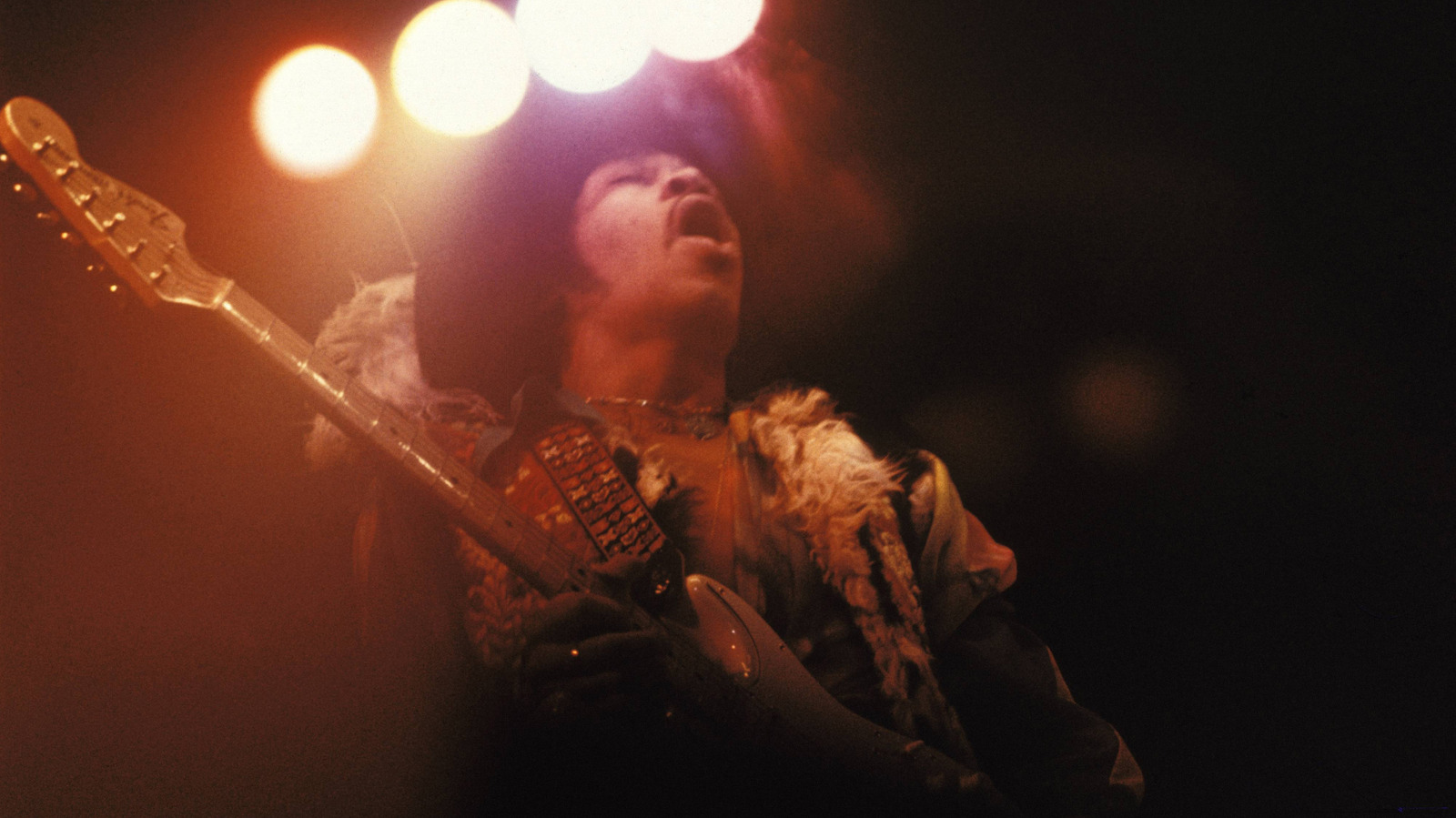
All of the '60s psychedelia, anti-war activism, and general anti-establishment sentiment first came together at the Monterey International Pop Festival from June 16 to 18, 1967. Though folks always think of Woodstock, the Monterey International Pop Festival was the original '60s music festival that set the precedent for all future culture-meets-music festivals to come, right down to Coachella, Pinkpop, or Fuji Rock. The 32 artists in attendance, including the aforementioned soul legend Otis Redding, performed, as did Janis Joplin, The Who, and perhaps most pertinently for the evolution of rock, Jimi Hendrix with his fretboard-shredding showmanship.
The Monterey International Pop Festival grew organically from the 1967's wild Summer of Love, rooted in San Francisco, particularly in its Haight-Ashbury neighborhood. Up to 100,000 people congregated there in the summer that year, wrangling the decade's various countercultural arms under one banner to more or less affirm their beliefs. The corresponding Monterey International Pop Festival — a couple hours south along the coast in Monterey, California — didn't just cement the link between music and personal values, but music and public politics. This huge shift defined the '60s in a nutshell. All earnings from the Monterey International Pop Festival even went straight to charity, presaging later live music events like 1985's Live Aid.
Woodstock (1969)
Woodstock was by far the largest and most impactful musical festival of its type across the '60s, signaling both the culmination of, and end of, the decade's peace-and-love dream. About 400,000 people showed up to the fields of Woodstock and Wallkill, New York, in August, 1969, and soaked up three days worth of music (and lots of mud, besides) from the likes of Santana, Creedence Clearwater Revival, and Crosby, Stills and Nash, who played their second show ever there.
Often-cited historical highlights from the show include The Who taking the stage at five in the morning and blowing everyone's socks off (including the event-appropriate "My Generation"), Joe Cocker's highly emotionally-charged, eight-minute long rendition of "With a Little Help From My Friends" (a beloved cover of a Beatles song), and Jimi Hendrix's shrieking, ear-splitting, and jaw-dropping take on "The Star-Spangled Banner." Some musicians turned down Woodstock, like Frank Zappa, but those who were were there took part in history.
At least, they took part in an idealized, romanticized version of history. There were mixed feelings about Woodstock at the time. Some newspapers bemoaned the hippie-dippie degeneracy of the whole thing, or sneered at how future festivals could easily be turned into society-duping, money-making machines. (Indeed, Woodstock's 1999 reprise was replete with some seriously dark happenings.) There've also been plenty of retrospective, cynical takes on Woodstock, including from The Who in the form of "Baba O'Riley" and its "teenage wasteland" assessment. Nonetheless, no one alive in 1969 could have avoided Woodstock's gravity or ubiquitous influence.