Each monarch finds the same winter groves without ever having been there. How?Certain trees do more than shade monarchs. They quietly engineer survival conditions. Explore the grove microclimates →Monarch numbers have swung wildly in recent years, and your winter sighting could matter more than you think. See the population swings →
East Coast residents may be sad to see second- and third-generation monarchs go, but winter brings new opportunities for West Coast butterfly watchers. California is a safe haven for fourth-, fifth-, and even sixth-generation monarchs. As the winter chill creeps in, many of its coastal locations become warm-weather sanctuaries. And in some of these places, entire groves of trees are full of orange-and-black wings.
Despite the generational separation between monarchs, each individual remembers exactly where to go. This instinct is essential to their survival, bringing thousands of butterflies together to endure winter. And for those who know where to look, the sight is nothing short of breathtaking.
Why Do Monarchs Overwinter In California?
As monarchs on the East Coast make the long journey of more than 3,000 miles back to Mexico, those west of the Rockies take a different route. Although shorter, it’s no less harrowing, bringing them back to the temperate California coast. If they stayed behind, they wouldn’t survive the frigid mountain temperatures. They face the same risk if they fly too far north, exposing themselves to the Pacific Northwest’s equally harsh weather.
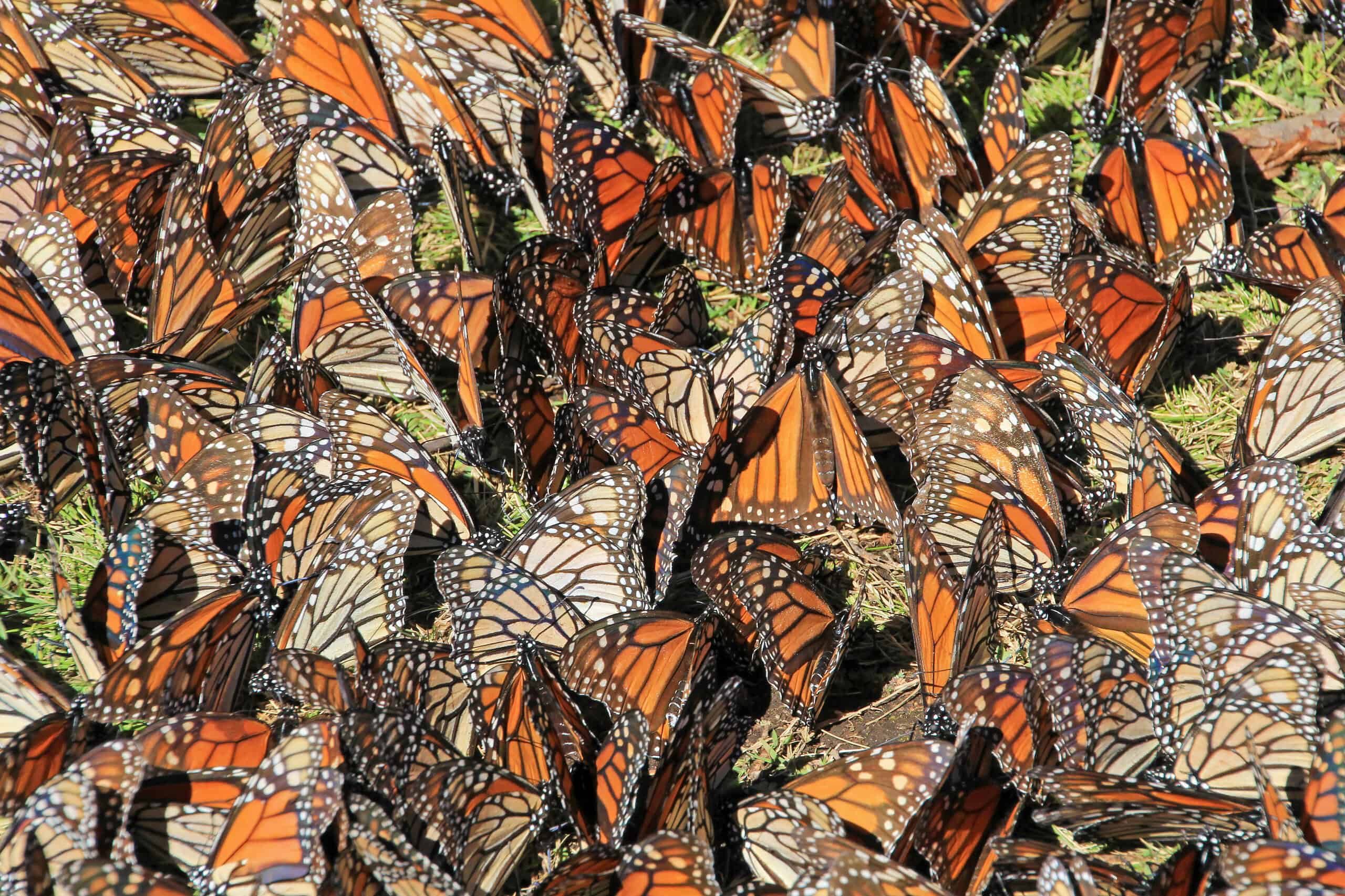
Monarch butterflies huddle together to create body warmth and retain essential moisture.
©Michael Barajas/Shutterstock.com
California’s coastal groves offer plenty of shelter. The climate stays mild and warm, with numerous groves to protect monarchs. Monterey cypress, Monterey pines, and eucalyptus all thrive in this region for the same reason that monarchs do. Their presence creates a microclimate that increases humidity and deflects Pacific winds and potential frost. As a result, monarchs have a safe place to remain in temperatures around 55 degrees Fahrenheit or just above.
Monarchs also choose these trees for their large trunks and dense foliage, both of which hides their bright wings as thousands huddle together on the bark. This generates body heat, which keeps monarchs warm as they enter reproductive diapause, or partial hibernation. Huddling also helps them maintain the moisture needed to keep their wings from drying out. For monarchs, these trees are a life-saving resource.
Where Can You See Winter Monarchs In California?
Central and Northern California’s “Super Sixth” generation of monarchs live six to eight months. That is plenty of time to observe them in winter, if you know where to look. Many monarch viewing locations are open to the public, allowing a glimpse into the life of one of our most crucial pollinators.
Where To GoWhat To KnowPismo State Beach Monarch Butterfly GroveThis is one of the most dependable areas to see overwintering monarchs. It’s known for large monarch clusters, making it one of the state’s most famous butterfly-watching spots. Entry is free, but parking fills up quickly. Lighthouse Field State BeachMonarchs huddle in the Monterey cypress and eucalyptus groves at this State Beach. It’s popular for its views, beach access, and wildlife viewing, so it can get crowded. Parking is free, and it’s also near another popular monarch-watching spot.Natural Bridges State BeachNot far from Lighthouse Field State Beach, offering a dedicated Monarch Trail. Interpretive programs are available, and visitors can watch monarchs via a dedicated observation deck. Paid parking gets you closer, but free parking is available on nearby streets. Pacific Grove Monarch SanctuaryAlso known as “Butterfly Town, USA,” this sanctuary hosts a range of butterflies, including overwintering monarchs. Parking and entry are free, but it does fill up quickly.
While these are the four prime spots to observe overwintering monarchs, others are worth an honorable mention. Andrew Molera State Park offers scenic, coastal vistas and is known to host some monarch clusters. Goleta Butterfly Grove is a popular spot for butterfly watchers in Santa Barbara, but you have to look up to see monarchs. Lastly, Torrey Pines State Natural Reserve in San Diego County is at the southern end of the monarch migration.
The Xerces Society has been tracking Western monarch migrations for 29 years. This timeline has featured many highs and lows for the species, dating back to the 1980s. Since then, populations that regularly numbered in the low millions have fallen due to habitat loss. Pesticide use and climate change also drove a 95% decline.
LC Least Concern
NT Near Threatened
Vulnerable
VU
EN Endangered
CR Critically Endangered
EW Extinct in the Wild
EX Extinct
Population trend: Decreasing
IUCN Red List status for Monarch Butterfly
Source:
IUCN Red List via A-Z Animals profile.
From 2020 through 2021, monarch counts hit an all-time low. The total count of western monarchs was down to 1,901 individuals. This unprecedented number served as a warning sign for future monarch populations. Thankfully, conservation efforts and community support helped this number grow substantially just a few years later.
Tree groves provide shelter and a specific microclimate that keeps monarchs from freezing.
©Leo Kohout/Shutterstock.com
From 2021 onward, monarchs rebounded. Their numbers surged to nearly 250,000 and passed 300,000 in 2022. Numbers dropped in 2023 to about 233,394. But 2024 crashed to 9,119, and 2025 brought the third-lowest count on record.
Western monarchs counted in winter
2023
233,394 monarchs
2025
12,260 monarchs
2024
9,119 monarchs
2020 (all-time low)
1,901 monarchs
Source:
Xerces Society.
Volunteers estimated that only 12,260 individual monarchs existed across 29 states. While not as drastically low as 2020, it was still a red flag. Today, the society relies on citizen scientists to report their findings, which help track migrating monarchs, specifically those along the Pacific Coast. And this winter, your observations could make all the difference in tracking an already vulnerable species.
About the Author
Lianna Tedesco
Lianna is a feature writer at A-Z Animals, focusing primarily on marine life and animal behavior. She earned a degree in English Literature & Communications from St. Joseph's University, and has been writing for indie and lifestyle publications since 2018.
When she's not exploring the animal world, she's usually lost in a book, writing fiction, gardening, or exploring New England with her partner.
Thank you for reading! Have some feedback for us?
Thank you for your feedback!
We appreciate your help in improving our content.
Our editorial team will review your suggestions and make any necessary updates.
There was an error submitting your feedback. Please try again.