Published: 21:50 GMT, 26 November 2026 | Updated: 21:50 GMT, 26 November 2026
Rare venomous sea snakes are washing up along the coast in Southern California sparking emergency warnings.
Scientists are urging beachgoers to keep an eye out for the reptiles and report any sightings.
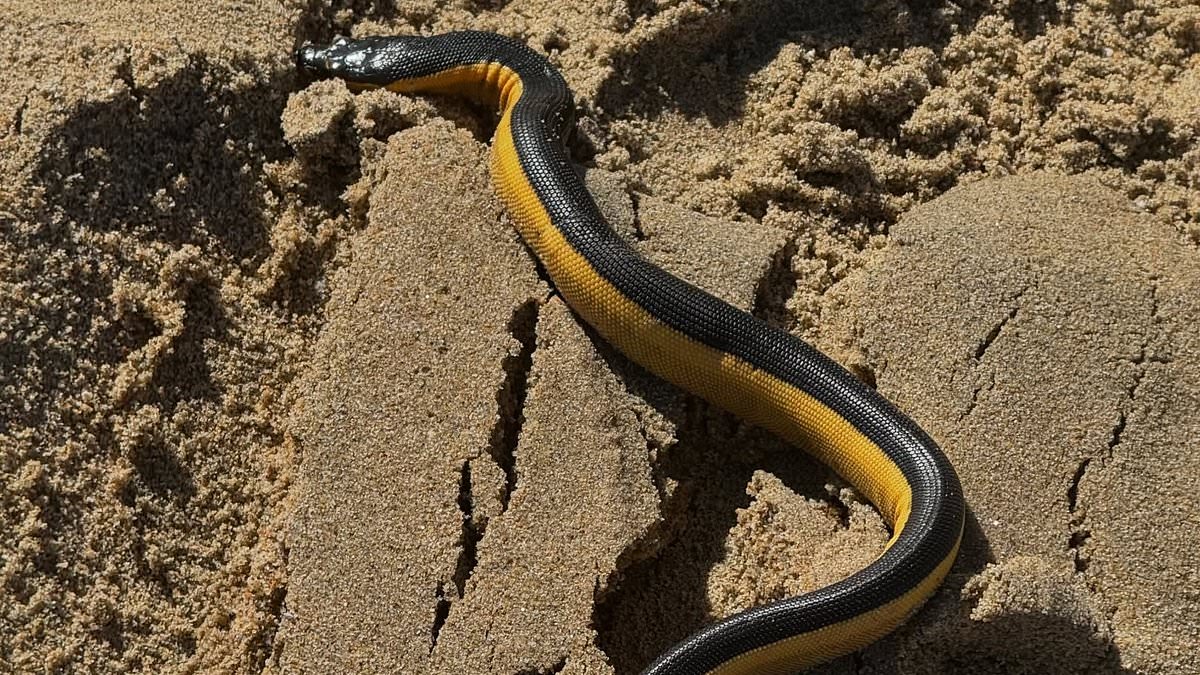
The latest discovery was a yellow-bellied sea snake that washed ashore on November 22 at Bolsa Chica State Beach in Orange County.
It was the eighth of its kind ever recorded in Southern California. Although they are not considered aggressive, their venom can cause serious illness, including muscle damage, paralysis and breathing difficulties.
Scientists have also discovered rare olive ridley sea turtle nests in Orange, Ventura and Santa Barbara counties and asked the public to exercise care around their fragile eggs.
Researchers believe unusually warm ocean temperatures linked to El Niño are bringing the animals farther north than usual.
In late November, typical ocean surface temperatures along the West Coast normally range from 55°F to 64°F.
Meanwhile, Southern California beach air temperatures are unseasonably warm sitting in the mid-80s, according to Thebeachtoday.
Scientists are urging beachgoers to keep an eye out yellow-bellied snakes washing up along the coast of Southern California
The rare venomous sea snakes are thought to be appearing on beaches due to a temperature increase from El Niño
The latest discovery was a yellow-bellied sea snake that washed ashore on November 22, at Bolsa Chica State Beach in Orange County
Warmer waters near the turtles' usual nesting grounds could also be pushing them to find new places to lay their eggs.
Natural History Museum of Los Angeles County curator Greg Pauly said the discoveries could change how scientists understand sea turtle nesting along the West Coast.
He added that yellow-bellied snakes weren't documented in California until Thanksgiving morning 1972, when one washed ashore on San Clemente State Beach during another very strong El Niño.
Scientists are asking beachgoers to check along the high-tide line and beach debris for stranded sea snakes or exposed turtle nests.
Sea turtle eggs are off-white, about the size of ping-pong balls and may appear cracked or exposed in the sand.
Yellow-bellied sea snakes are typically 1.5 to 2.5 feet long, with dark backs and bright yellow bellies.
According to the Natural History Museum of Los Angeles County, the best time to look is at least an hour and a half after high tide, when the water is receding, or during low tide.
They are asking anyone who spots a sea snake, turtle eggs or eggshells to take photos or videos from a safe distance and include nearby landmarks to help identify the location. Photos and videos can be sent to nature@nhm.org.
Scientists also cautioned the public that the animals and their eggs should not be touched.