Published: 18:15 GMT, 27 November 2026 | Updated: 18:15 GMT, 27 November 2026
Scotland's museums should hand back dinosaur fossils and rocks to the communities where they were found, a leading curator has claimed.
Dr Neil Clark joined colleagues to claim that displaying ancient remnants and mineral specimens in cities is depriving rural areas, at home and abroad, of their heritage.
The palaeontologist is a senior figure at Glasgow University’s Hunterian Museum, which controversially covered up an Egyptian mummy that had been on display for more than 200 years as a mark of respect.
And the institution has repatriated several items in recent years including the preserved body of a lizard to Jamaica as part of an effort to ‘address legacies of colonialism, slavery and empire’.
Now, writing in the journal Geology Today, Dr Clark and two fellow experts, insist that the scheme should be extended to ‘geological and Earth science specimens’.
They said: ‘Repatriation of specimens can often be a fraught process, with institutions accused of dragging out and stalling requests, and as a result, maintaining outdated colonial power structures that severed communities from their cultural heritage.
‘But museums do not own specimens; curators serve as custodians entrusted with the responsibility of ensuring that collections benefit society at large.
‘When specimens are concentrated in cities alone, it can deprive the wider community of their right to share in the curiosity and dialogue that these finds inspire.’
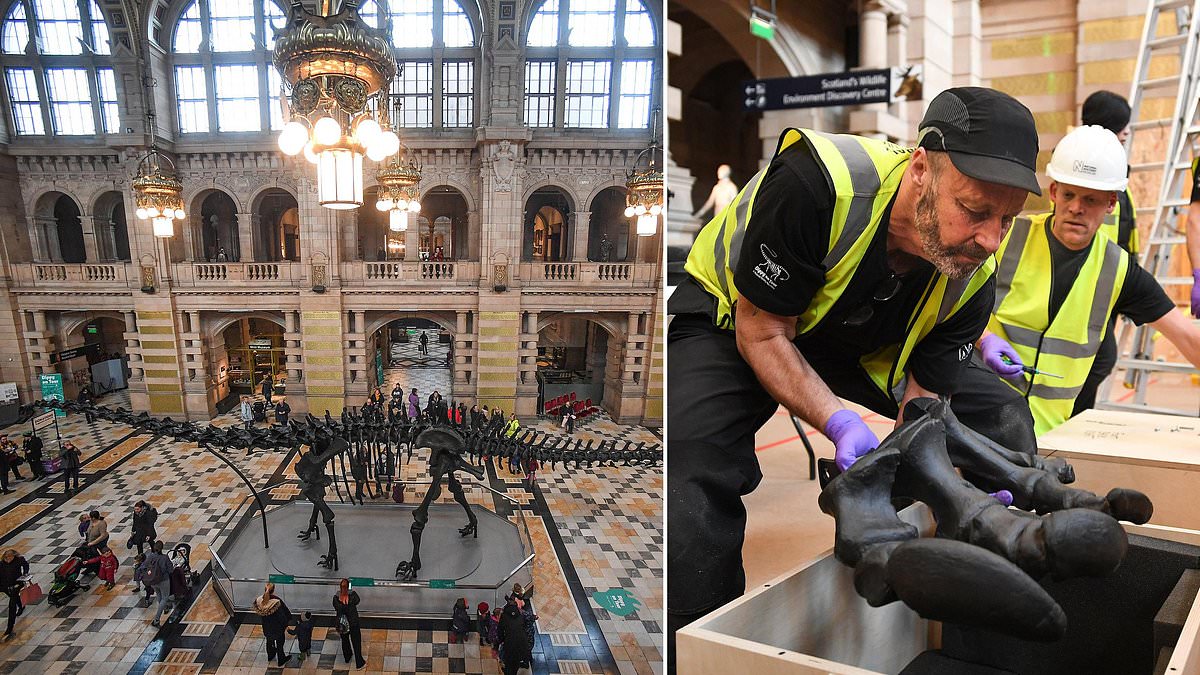
Dippy the Dinosaur was a huge tourist attraction at Kelvingrove Museum
Palaeontologist Dr Neil Clark has claimed fossils and rocks should be returned to the countries where they came from
‘It is essential that the... benefits that significant specimens bring… are shared with the local communities from where these finds derive, whether an isolated rural Scottish community, a deprived urban community or even another country.’
But Scottish Conservative culture spokesman Murdo Fraser said: ‘Apparently even the dinosaurs are now caught up in Britain’s colonial past. You really couldn’t make this stuff up.
‘Instead of finding new ways to lecture the public about historical guilt, these academics should spend more time making our museums worth visiting. Scotland’s heritage is something to be proud of, not apologise for.’
Reform MSP Jamie Langan said: ‘From sarcophagi to lizards in jars to mineral deposits, the list of what must apparently be repatriated keeps growing.
'Keep this up and the next generation will inherit nothing but empty galleries and a woke lecture on why everything had to go.’
The Hunterian recently covered over the mummified body of Lady Shep-En-Ho, saying she ‘deserves privacy in death’.
It will keep her sarcophagus on display but is considering returning the mummy to Egypt.
A team of specialists pieced together the bones of Dippy when he was displayed at Kelvingrove in 2019
The decision came after the Scottish Daily Mail revealed that council-funded arts organisation Glasgow Life is to remove Egyptian human remains from display at Kelvingrove Museum because of the absence of documented consent from the ‘deceased individual’. Dr Clark’s paper makes the case for returning fossils from Skye.
But the museum also holds dinosaur skulls and teeth found in Europe, Asia and North America, and the article states that ‘the principle can be applied to any community from which objects are sourced’.
Professor Steph Scholten, director of the Hunterian, said it ‘currently has no concrete plans to return any fossils or mineral specimens to Scottish places of origin.
‘Dr Clark’s paper contributes to an academic discussion about how museums and collections might approach questions of provenance, ownership and return,’ he said.
National Museums Scotland and Glasgow Life said they had processes in place for repatriating items but no requests for fossils or rocks have yet been made.
Dr Clark was approached for comment.