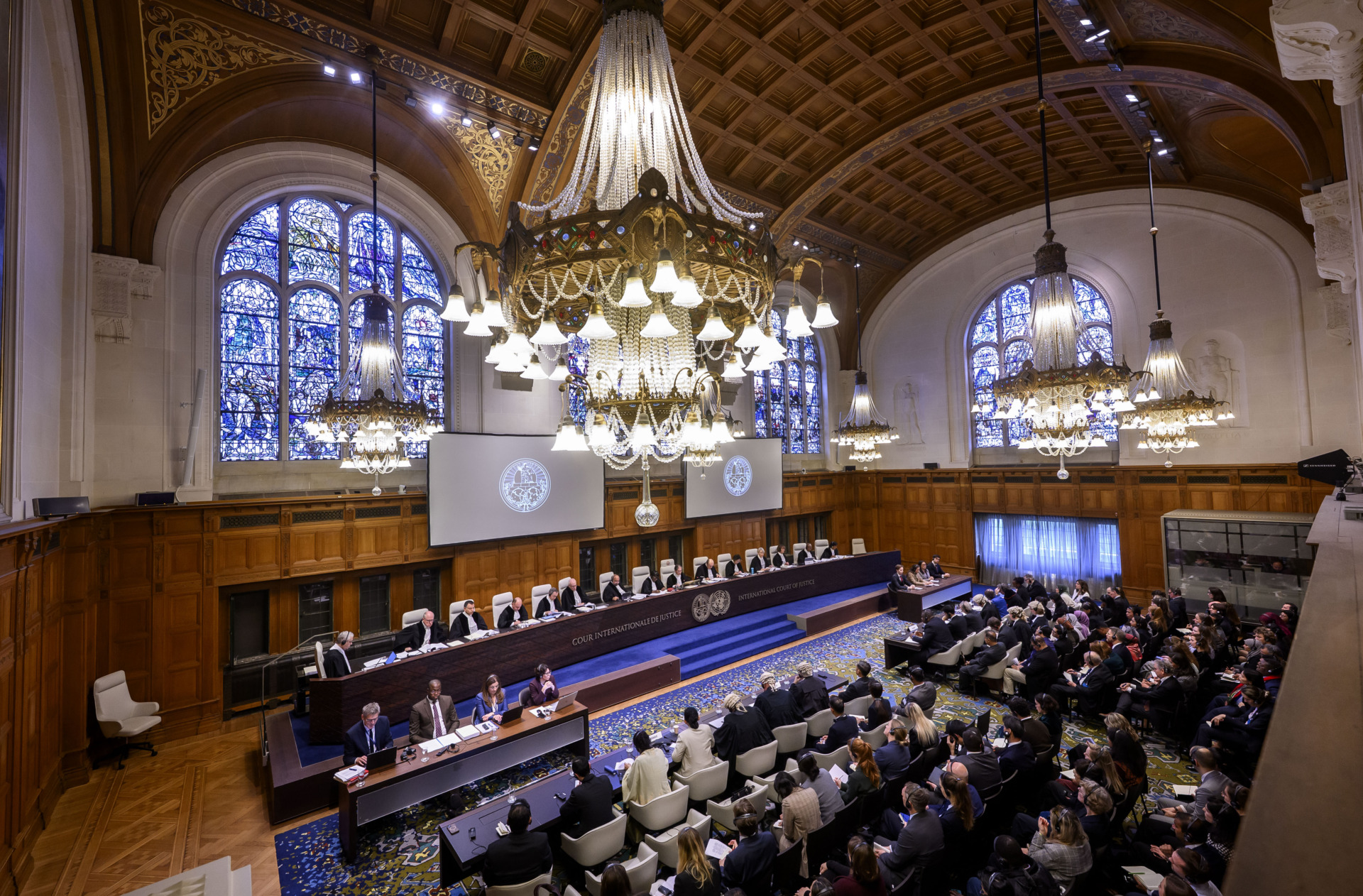
On Nov. 19, 2026 the International Court of Justice held, by nine votes to six, that Myanmar committed genocide against the Rohingya in northern Rakhine State during the “clearance operations” of 2016 and 2017. This is the first time in which the Court has found a State directly responsible for the commission of genocide. In Bosnia v. Serbia (2007), Serbia was held responsible for failing to prevent and punish the genocide at Srebrenica, and in Croatia v. Serbia (2015) the Court dismissed all genocide claims and counter-claims. The judgment is therefore an important milestone in the history of the 1948 Genocide Convention, a history that Philippe Sands, who argued the case for The Gambia, traces back to Raphael Lemkin.
The facts established by the Court are grave. It found that at least 10,000 Rohingya were killed during the “clearance operations,” that at least 1,834 were raped, that several hundred villages were burned and that more than 700,000 people fled to Bangladesh. The six dissenting judges did not dispute that many, if not most of these terrible events took place. They wrote that they had “no doubt” that Myanmar’s security forces committed serious human rights violations, and that war crimes and crimes against humanity may well have been committed. What fundamentally divided the Court was whether these acts were carried out with the requisite intent to destroy the Rohingya people, in whole or in part, as such, and how should such an intent be proven as a general evidentiary matter.
The question of the definition of special intent and the manner of proving it has implications well beyond Myanmar. Sands argues that the Court “has not weakened anything” and did no more than apply its “only reasonable inference” standard to the facts. We read the judgment differently. Although the majority repeatedly invoked the Bosnia and Croatia cases, from which the “only reasonable inference” standard may be established, the majority departed from them in several important respects. More specifically, concepts that the earlier case law appears to have settled – including the meaning of “destroy,” the direct or indirect establishment of a plan or policy to destroy, the treatment of facts suggesting an intent not to destroy and the role of alternative explanations of intent – now appear to depend to a far greater degree on a holistic assessment of multiple contextual factors. Some of these changes can be defended on their own terms. Yet, taken together, they make the application of the Genocide Convention considerably less predictable in our view. This state of uncertainty is likely to be most acute in situations of armed conflicts, where large numbers of civilians suffer extensive harm and where a large number of actors holding different intentions might be involved.
This essay comprises two parts. Its main part offers a critical reading of key aspects of the judgment’s reasoning, highlighting the legal uncertainty we believe it has generated. We then consider what this resulting uncertainty might mean for the pending case of South Africa v. Israel, which illustrates some of the broader problems created by the judgment. We begin with a brief account of the judgment and the main separate opinions, and then discuss six aspects of the Court’s reasoning, which produced or increased legal uncertainty:
1) the meaning of destruction
2) the relationship between genocide and the law of armed conflict;
3) the inference of genocidal intent;
4) the identification of the targeted part of the group;
5) the use of UN fact-finding reports; and
6) the scope of the duty to investigate.
After these remarks, we turn to offer some observations on the implications of the Myanmar judgment for South Africa’s case against Israel.
The Judgment and the Dissents
The majority comprised nine judges – President Iwasawa, Judges Charlesworth, Brant, Gómez Robledo, Cleveland, Aurescu, Tladi and Hamoud, and Judge ad hoc Pillay. Vice-President Sebutinde, Judges Tomka, Abraham, Xue and Nolte, and Judge ad hoc Kress dissented from the finding of genocide and set out their reasons in a lengthy joint opinion. Wider majorities found that Myanmar had violated its obligations to punish genocide and to adopt implementing legislation, and, by thirteen votes to two, the Court ordered Myanmar to investigate, and where warranted prosecute, all persons reasonably suspected of acts prohibited by the Convention. All in all, the judges appended to the main judgment seventeen separate opinions and declarations.
On the substantive elements of the case, the Court found that Myanmar was responsible for acts of killing, serious bodily and mental harm, and measures intended to prevent births under Article II(a), (b) and (d) of the Genocide Convention. It rejected allegations regarding the infliction of conditions of life calculated to destroy the group under Article II(c) (para. 355). The Court identified the relevant part of the group targeted by Article II measures as the 815,000 Rohingya living in northern Rakhine State before 2017 (para. 379). On the question of special intent, it did not limit itself to the “pattern of conduct” analysis of Bosnia and Croatia, holding instead that genocidal intent may be indirectly inferred “from an array of different factors” (para. 387). The majority explicitly relied on four factors: (1) the general context, including “other culpable acts systematically directed against the Rohingya;” (2) the selective targeting of the group; (3) acts that “violate the foundations” of the group, in particular sexual violence and attacks on children; and (4) the systematic nature and scale of the operations (para. 397). It then examined and rejected three alternative explanations put forward by Myanmar that could explain these factors, namely, counter-insurgency, forcible displacement, and punishment (paras. 451-467).
The joint dissent accepted that acts falling under Article II and which are attributable to Myanmar were committed, but disagreed with much of the majority’s reasoning on how to prove intent. For example, in the dissenters’ view, discrimination and derogatory speech, which the majority considered to be part of the general context, may indicate a risk that genocidal intent will eventually form, but they are not “capable of pointing in any meaningful way” to showing that it has actually formed (para. 23). Furthermore, the dissenters were of the view that (a) forcible displacement and (b) collective punishment aimed at intimidation and thereby deterrence remained reasonable alternative inferences (paras. 80-93). They concluded that while the majority nominally professed its fidelity to the holdings in Bosnia and Croatia, it had “substantially lower[ed] the standard” set by those judgments (para. 96). They described the holistic approach adopted by the majority as “in reality, so indeterminate that it borders on arbitrariness” (para. 22). Concerns about lack of legal clarity can also be found, for example, in the individual dissenting opinions of Judges Nolte and Tomka, and Judge ad hoc Kress.
The Meaning of Intent to “Destroy”
Since Bosnia, the Court has understood the intent to destroy as an intent to bring about the “physical or biological destruction” of the group. In both Bosnia and Croatia it confirmed that cultural genocide falls outside the Convention (Croatia, para. 136; Bosnia, para. 344 (“the destruction of historical, cultural and religious heritage cannot be considered to constitute the deliberate infliction of conditions of life calculated to bring about the physical destruction of the group”)). The Myanmar judgment restates this position (para. 289) but adds that destruction “is not confined to the death or biological destruction of its individual members, or even their physical harm.” Its approach to this interpretative question is contextual. Several of the acts listed in Article II, including serious mental harm and the forcible transfer of children, do not necessarily involve physical or biological destruction, and the word “physical” appears in Article II(c) but not in the chapeau (para. 292). The Court therefore concluded that the destruction referred to in the chapeau covers the “forms of destruction of the group in whole or in part that may result from the acts enumerated in Article II (a) to (e)” (para. 293).
Judge Cleveland described this interpretative position in her separate declaration as “a very narrow clarification,” and Judge Aurescu also stressed in his separate opinion that it is unconnected to the concept of cultural genocide. Paragraph 293 may well remain narrow when read on its own terms, but it is more difficult to contain its scope as such when it is read alongside other parts of the judgment. Note that the majority also held that circumstances under which a population is forcibly displaced can amount to serious mental harm under Article II(b) (para. 333), and it treated acts that “violate the foundations” of the group, such as sexual violence, as relevant to the inference of special intent to destroy (para. 416), if resulting in the extreme degradation of the victims and their communities (para. 420).
The combined effect of defining “destruction” by reference to the acts listed in Article II (Judge ad hoc Kress referred to it in para. 136 of his opinion as an “actus reus-based interpretation of destruction”), and of the majority’s holding that displacement may cause serious mental harm, is that the distinction that Bosnia and Croatia drew between group destruction and group deportation or ethnic cleansing becomes much harder to sustain. The joint dissent made a similar point, warning that the judgment broadened the concept of destruction and blurred the boundary between genocide and other international crimes (paras. 8-9). Judge Tladi’s declaration, according to which an intention to dismantle a group’s “cohesion, political unity and the elements sustaining its self-identification” should suffice, illustrates how easily the new formulation can be extended even further, moving in the direction of encompassing certain aspects of “cultural genocide.”
We continue to believe, as we argued in 2024, that the Convention protects the physical and biological existence of groups. The majority formally accepts this view, yet its reasoning injects a degree of uncertainty into this definition by offering litigants a legal basis for introducing evidence of intent concerning diverse acts entailing non-physical and non-biological harms, whether as a general context, as acts violating the “foundations” of the group or as part of the circumstances that cause serious mental harm which may affect the group’s long-term existence and functioning (see also Cleveland, para. 9, in effect, opening those avenues). In high-intensity armed conflicts, where displacement and many other events causing foreseeable serious mental harm often occur and where social and cultural institutions are often damaged in the fighting, the practical consequences of the blurring of the meaning of intent to “destroy” could be considerable.
Genocide and the Law of Armed Conflict
The Court was correct in our view, as a matter of legal doctrine, in holding that the Convention does not make the unlawfulness of the actus reus under another body of law a condition for genocide (para. 303). Genocide may be committed in peacetime, and in the Bosnia case the Court wrote that deportations could not be justified under international humanitarian law (IHL) “in the face of proof of special intent” (Bosnia, para. 334). The Myanmar judgment, however, goes further: It holds that the fact that members of a protected group “could be lawfully targeted or incidentally harmed” under IHL “does not exclude the possibility” that they were killed or harmed with genocidal intent, and that compliance with IHL, while it “may inform” the inquiry into special intent, “does not exclude conduct from the scope of the Genocide Convention” (paras. 304-305).
This holding takes on particular significance when read alongside the Court’s definition of intentional killing, which covers a perpetrator who “acted with knowledge that death was a likely consequence of the act or omission” (para. 315; see also discussion by Milanovic). Attacks on military objectives in densely populated areas are very often carried out in the knowledge that both combatants and civilians are likely to die. IHL permits such attacks if they comply with the requirements of distinction, proportionality and precautions. Yet, on the Court’s approach, the same attacks may satisfy the actus reus element of genocide, resting the entire weight of the legal analysis on the question of inferring special intent.
To be sure, we do not suggest that compliance with IHL should shield conduct from any scrutiny under the Convention. The difficulty is that the Court did not clearly explain how the two bodies of law relate to each other. Recall that in the Nuclear Weapons advisory opinion, the Court treated IHL as lex specialis when determining what constitutes an arbitrary deprivation of life in armed conflict (para. 25). This reflected an understanding that international law should be regarded as a coherent legal system that does not simultaneously permit and prohibit the same conduct. In our 2024 article we argued that killings in armed conflict should not be assumed as genocidal acts if they are lawful under IHL. This approach is supported by the ICJ’s previous systemic integration considerations, but also by logic of “the only reasonable inference” test: The requirement under IHL to establish military necessity before conducting an attack provides an alternative explanation for the attack than genocidal intent, especially if the attack is said to comply with those IHL conditions. One can also argue, as Milanovic does, that the intent to reduce civilian harm, which infuses IHL, negates the possibility of genocidal intent. Only in rare cases, where a plan to commit genocide has been independently proven and/or where it was shown that use of IHL was clearly pretextual in nature, can the presumption of legality that we believe should be attached to IHL-compliant measures be reversed.
The Court’s treatment of this difficult issue is very brief (see Heller), and it is not clear what the Court implied in remarking that IHL “may inform the identification of intent with respect to the actus reus of genocide, as well as genocidal intent” (para. 305). The upshot is that commanders and legal advisers might find themselves without clear standards by which they can assess the circumstances under which the Court – or any tribunal or other institution applying the Court’s framework – might view lawful but harmful acts of war, conducted in complex conflict circumstances, as acts falling under the Genocide Convention. As we explain below, the same problem could affect States when investigating their military operations under IHL.
Inferring Intent: The “Only Reasonable Inference” Standard
The Court reaffirmed its past holdings in Bosnia and Croatia that genocidal intent may be inferred from circumstantial evidence if it is “the only reasonable inference” that can be drawn from the evidence (para. 438). The Myanmar majority added that a respondent is not required to establish an alternative explanation to a fully conclusive standard (para. 450). On its face, this places a relatively high evidentiary burden on the applicant and a relatively light burden on the respondent, who needs only to point at an alternative explanation that is reasonably supported by the evidence. The way the standard was applied by the majority makes, however, the burden imposed on the respondent considerably heavier. Here too, the judgment introduces uncertainty for respondents seeking to rebut allegations of genocidal intent.
Relying on Bosnia and on the case law of the International Criminal Tribunal for Yugoslavia, the Court held that genocidal intent “may exist alongside other intentions, provided that such intentions are not incompatible with the existence of genocidal intent,” and that the inference drawn “should be capable of explaining all of the evidence, taken together” (para. 443) In applying this new standard, the Court required each of Myanmar’s alternative explanations to account for the relevant factual record in toto. An intent to subject the Rohingya to forcible displacement, for example, could not explain the brutality of the “clearance operations” or attacks on Rohingya when fleeing to Bangladesh. As a result, this alternative explanation of intent was rejected (paras. 454-462). As the joint dissent observed, however, the inference of genocidal intent does not explain every element of the record either, beginning with the fact that most of the Rohingya of northern Rakhine State were able to flee unhindered (para. 86; see also dissenting opinion by Nolte at para. 25). Hence, it seems as if the requirement that an inference account for “the totality of the evidence” (para. 443) was applied to the alternative explanation with a rigor that was not applied to the inference of genocidal intent.
The approach taken by the majority also sits uneasily with the way in which large-scale campaigns of violence usually unfold. Military campaigns, including campaigns of ethnic cleansing, are rarely the product of one single purpose uniformly pursued by everyone involved in the operation. Different centrally planned measures may reflect , at times, different intentions (e.g., some measures of collective punishment alongside some measures of humanitarian relief). Furthermore, some military units might exceed the orders given to them, some commanders go rogue and pursue idiosyncratic policies and some crimes are committed opportunistically by individual soldiers. Judge Nolte drew attention to this when he wrote that “Myanmar’s security forces,” the phrase on which the majority’s findings rest, may refer either to the State’s central decision-making organs or to particular units acting in particular circumstances (para. 89 of his opinion). Soldiers who act on their own initiative, contrary to the instructions given to them, engage the State’s international responsibility for their conduct, but their intent is not necessarily identical to the intent formulated by the central organs of the State (para. 84 of his opinion).
The majority’s approach, which infers intent from an array of factors, without first establishing a pattern of conduct (para. 387), leaves little room for this distinction between centralized and decentralized intent, and ignores the tension discussed by Judge Tomka and Judge ad hoc Kress between the collectivist and individualistic manner of establishing genocidal intent. The general expectation that genocide by a State will reflect some central plan or policy, which was fundamental to the Croatia and Bosnia judgments, has been downplayed by the majority judgment. Instead, the majority’s holistic approach uses a single inference in order to explain diverse measures, some of which might reflect an official centralized plan or policy, while others the decisions of low-level soldiers in the field or civilians involved in the “clearance operations.” This methodology allowed the Court to regard a pattern of displacements, accompanied by several on-the-ground massacres (which clearly go beyond the intent to displace), as indications of a single, unified intent to destroy the Rohingya.
Two further elements of the reasoning point in the same direction. In Croatia, the fact that available opportunities to destroy the group were not exploited weighed against an inference of intent (Croatia, para. 437). By contrast, in the Myanmar judgment, the Court acknowledged that opportunities had gone unused but attributed this to “geographic and other constraints,” without specifying what these other constraints were (para. 435). The dissenters argued, with some force, that this in effect imposed on Myanmar the burden to disprove the hypothesis that refraining from using opportunities to harm was compatible with the genocidal intent the State possessed (para. 79).
The Court also held that an intent to punish “is likely to be accompanied by” genocidal intent and that the two “may not always be capable of meaningful separation” (para. 464). It did not clearly explain what a respondent would need to show in order to establish punishment as a genuine alternative, and it did not address considerations of deterrence at all (joint dissent, para. 90). To be sure, genocide may qualify as an act of punishment or as an act of deterrence, but not every act of punishment or deterrence is genocidal in nature. For example, certain violations of the laws of war, falling well short of genocide, might be punitive in nature (e.g., collective punishment prohibited under Article 33 of the Fourth Geneva Convention) and the crime of torture may also be designed to intimidate or deter (Convention against Torture, art. 1). It is not obvious whether and how the approach adopted by the majority would allow respondents to rely, in such cases, on hostile intentions toward the targeted group, seeking to harm it but not to destroy it, in order to refute allegations of genocidal intent.
The formal requirements of “the only reasonable inference” test remain demanding on paper, but their application now depends heavily on how the Court characterizes the circumstantial record as a whole. If intent is now to be inferred from a factual record the totality of which any single explanation other than genocide cannot comprehensively account for, there is a risk that the special intent requirement will simply be inferred from the overall gravity of the actus reus. However, this is precisely the outcome the “only reasonable inference” standard as applied to a pattern of conduct was designed to prevent.
Identifying the Targeted Part of the Group
A similar difficulty affects the Court’s treatment of the “substantial part of the group” requirement. One would expect the analysis to begin by asking which part of the group the perpetrator intended to destroy, and only then whether that part is substantial in size or significant to the continued existence of the group. The Court proceeded differently, however. It held that, in determining the size of the targeted part, “account must be taken of all members of that group who were targeted by any of the relevant material acts” (para. 379). Because some of those acts – including the serious mental harm associated with displacement – affected the entire Rohingya population of northern Rakhine State, the Court considered the targeted part to comprise all 815,000 of the group, a number large enough to make it unnecessary to consider additional geographic or qualitative criteria (para. 380). The same choice then shaped the assessment of the scale of actus reus. Although the estimated 10,000 deaths amounted to only 1.2 percent of the targeted part, the Court did not regard this as precluding genocidal intent. This is because victims of the other Article II acts – which have the potential of affecting the long-term existence of the group – should also be considered in the Court’s framework (paras. 429-430).
The upshot of this form of analysis is that the targeted group is defined by the potential reach of the actus reus before any finding has been made about special intent. This has significant implications particularly in high intensity armed conflict situations, where all or almost the entire population of one or more of the warring parties are likely to be affected by displacement, deprivation and loss. The “selective targeting” factor introduced in the Court’s holistic analysis of the circumstantial record raises the same concern regarding its application to armed conflicts (paras. 397, 410). For example, when militant groups are fighting from densely populated areas, adverse effects for the population in those areas may be a regrettable but unavoidable feature of the armed conflict, rather than evidence of selective targeting entailing an intent to destroy the relevant population group, in whole or in part, as such. Still, under the majority’s approach, civilians displaced from theatres of hostilities might be viewed as subject to selective targeting and potential victims of Article II measures, even if their displacement was designed to minimize physical harm. We doubt that the Court intended to effectively do away with the “substantial part” requirement in large scale armed conflicts; still, the judgment seems to offer little guidance on how to avoid this outcome.
UN Fact-Finding Reports
Another area of uncertainty can be found in the majority’s different treatment of legal conclusions and factual findings reached by third parties. The judgment relies heavily on the reports of the UN Fact-Finding Mission on Myanmar (FFM) and of the Independent Investigative Mechanism for Myanmar. The Court acknowledged that the FFM applied a significantly lower standard of proof than the one applied by the Court, and stated that, as a result, the Court would give no probative value to the legal assessments in the reports (paras. 100, 109). It nevertheless treated FFM reports as “a reliable source of factual evidence.” This was partly because Myanmar had not produced evidence of its own that cast doubt on those findings (para. 109), and because Myanmar’s refusal to cooperate with UN mechanisms justified a “more liberal recourse to inferences of fact” (para. 131). Judge Xue, Vice-President Sebutinde, and Judge Notle questioned whether factual findings reached on a “reasonable grounds” standard can support a conclusion that requires fully conclusive evidence (Xue, para. 47; Sebutinde, paras. 62-64; Nolte paras. 8, 43 (contrasting with prior ICJ genocide cases relying on findings of fact made at criminal trial before the ICTY)).
The combined effect of paragraphs 109 and 131 of the judgment appears to generate significant difficulties for respondent States that refuse to cooperate with UN inquiries. The factual findings of such inquiries may be treated as reliable despite their evidentiary shortcomings: The absence of a Court-like fact-finding process, the low standard of proof they follow (“reasonable grounds”), and the lack of cooperation with the investigation by the respondent State, resulting, inter alia, in lack of access by investigators to the alleged crime scene. Moreover, the refusal to cooperate may justify, according to the majority, a more liberal recourse to factual inferences against the respondent State. It is not clear from the judgment whether there would be circumstances under which refusal to cooperate with a UN inquiry could ever be deemed justified, and whether such a justification might result in a reluctance to apply a liberal recourse to factual inference against the refusing State.
The Duty to Investigate
In Bosnia, the Court held that a State can be found responsible for breaching the obligation to prevent genocide “only if genocide was actually committed” (para. 431). The Myanmar judgment explicitly departs from that position. Like the prohibition of incitement and the obligation to adopt legislation, the duty to prevent may now be breached without a finding that genocide occurred (para. 487; see also joint opinion of Judge Cleveland and Judge ad hoc Kress). Consequently, States that provide military or political support to a party to an armed conflict may now be exposed to new ICJ claims alleging failure to prevent genocide based on risk assessment alone. The practical effects of this change in jurisprudence remain to be seen. We note that Judge Nolte warned that this change is likely to weaken rather than strengthen the duty to prevent in practice (para. 79), and that Judge Tomka expressed concern about the politicization of the Court (para. 22). Judge Abraham also wrote critically about the lack of necessity for introducing the change (para. 41).
The Court’s treatment of the duty to investigate raises another related question. The duty arises as soon as there are “reasonable grounds to suspect” that acts prohibited by the Convention have been committed, and the investigation must include an assessment of genocidal intent (para. 515). In Myanmar’s case, the Court found that the duty arose no later than September 2018, the month in which the FFM published its detailed findings (para. 552). The Court also held that prosecuting crimes that do not contain all the elements of genocide does not discharge the obligation to punish (para. 520).
The judgment leaves the precise contents of the duty to investigate unclear. Military justice systems generally examine the compliance of military operations with IHL. Yet, according to the judgment, such an examination may not be considered sufficient. This is because even conduct that is found to be lawful under IHL may still need to also be examined for the existence of genocidal intent (and even successful convictions of war crimes would not meet the burden of investigating, prosecuting and punishing genocide (para 520)). It is not clear what such an investigation of genocide would involve; which State organ would be competent to conduct it; and how a State is expected, realistically speaking, to investigate the specific intent of its own top politcal and military decision-making organs. Since the duty to investigate does not depend on proof of genocide, and the threshold for triggering it is relatively low, these questions might arise in military justice systems long before any international court rules on whether genocide was likely or actually committed.
Uncertainty Illustrated: South Africa v. Israel
Given the groundbreaking aspects of the Myanmar judgment, it is likely to impact significantly the Court’s approach to future genocide cases, including South Africa v. Israel – a case, which has some comparable features (e.g., an alleged counter-terrorism campaign resulting in massive harm to civilians and civilian infrastructure). The Myanmar judgment does not of course determine the outcome of that case, which will turn on its own facts and will be heard, in due course, by a different composition of the Court (four new judges, who did not sit on the Myanmar case, will join the Court in 2027, and up to five more in 2030; since the last round of written pleadings is expected in mid-2029, the case might be finalized only in or after 2030). We note, however, that Sands suggests that, had the minority’s approach prevailed, South Africa’s case would likely have hit “a brick wall.”
Under the majority’s framework, South Africa will not need to identify a plan or policy to commit genocide. At the same time, statements by officials and other contextual factors may carry considerable weight, and compliance with IHL will not in itself suffice to serve as a legal defence for Israel against the genocide claim. Israel’s explanation that its operations were directed at defeating Hamas and returning the hostages will be measured against the factual record in its “totality,” including the scale of destruction in Gaza, the restrictions on humanitarian aid, statements by Israeli officials and the conduct of soldiers and units that departed from the orders issued to them.
The destruction of universities, cemeteries, cultural sites, and housing in Gaza, which under Bosnia would have been set aside as relating to cultural genocide, may now be reintroduced into the factual record as general context, as evidence of acts violating the “foundations” of the group or as sources of serious mental harm. On the Court’s approach to the targeted part of the group, the entire population of Gaza, more than two million people, are likely to be treated as the targeted group and every displaced person might be regarded as affected by Article II actus reus. Mental harm as a result of displacement, accompanying acts of violence, can also satisfy the actus reus of genocide (para. 333) and go toward establishing genocidal intent (paras. 407-409, 415, 436), according to the Court.
Another relevant factor would be the treatment of the finding of the UN Commission of Inquiry (COI), which concluded in September 2025 that Israel had committed genocide in Gaza. Like Myanmar, Israel did not cooperate with the investigation, citing concerns of bias. While the Commission’s legal conclusion that genocide was committed – rendered under a “reasonable grounds” standard – carries no weight under paragraph 100 of the judgment, its factual findings may nonetheless be relied upon by the Court, especially if corroborated by other pieces of evidence. Israel’s refusal to cooperate with the Commission may be held against it, under paragraph 131 of the judgment. The same COI report may also be said to mark the point by which Israel’s duty to investigate had arisen – notwithstanding its total rejection of the findings. Note that Israel has criminalized genocide since 1950, so the legal framework that Myanmar lacked in 2016-2017 has been in place in Israel, but it remains to be seen whether investigations conducted by the military justice system under IHL, and not under the 1950 Law, will be regarded as sufficient by the Court (this is doubtful under the terms set in para. 520).
To be sure, the factual differences between the Myanmar and Gaza cases remain substantial. Myanmar invoked a threat from an armed group that, on the evidence before the Court, possessed between 40 and 70 firearms (para. 173). By contrast, the attack of October 7, 2023, in which some 1,200 people were killed and about 250 taken hostage, was followed by a lengthy war against a well-organized and well-equipped armed force of several tens of thousands of fighters supported by another foreign State (Iran) and operating from within and beneath civilian areas. Israel has also taken significant harm mitigation measures: It has issued warnings and evacuation orders, designated humanitarian zones, facilitated humanitarian aid and vaccination campaigns, and negotiated ceasefires and the release of hostages (the efficiency and sufficiency of many of these measures had been questioned, however, by many observers). Note that the Court itself distinguished the Bosnia and Croatia cases from the Myanmar case on the ground that the evidence in those earlier cases showed a practice of transferring and evacuating the civilian population, whereas Myanmar had made no such efforts (paras. 458-459). The record of Israel’s war in Gaza also does not contain anything comparable to the systematic sexual violence and measures to restrict births that featured in the Myanmar case.
How much weight will these differences carry is hard to predict under the new holistic assessment methodology espoused by the majority. In 2024, we observed, for example, that Israel was “clearly capable of inflicting much more harm.” Under Croatia, this would have weighed significantly against an inference of intent, whereas under the Myanmar judgment the failure to use every available opportunity “does not preclude” such an inference (para. 435). At the same time, the holistic approach need not work in one direction only. If the inference of genocidal intent must itself account for all of the evidence, the measures taken by Israel to reduce civilian harm form part of the totality of the record that South Africa will have to explain along with the existence of a genocidal intent. Still, the separation of the duty to prevent from the commission of genocide may also allow the Court to find a breach of the obligations to prevent, including with respect to preventing incitement, without finding that Israel committed genocide.
In sum, South Africa’s case against Israel illustrates the broader difficulty of the Court’s new approach. Its outcome will depend less on a settled interpretation of the Genocide Convention than on how the Court chooses to read a vast and contested record and form a general impression about it. The same predicament is likely to arise in other future cases involving high-intensity armed conflicts, especially those fought in densely populated areas.
Concluding Thoughts
For the Rohingya, the judgment offers an authoritative acknowledgment of the suffering and injustices they experienced. It also gives the Genocide Convention a practical force that many believed the Court’s earlier case law denied. These achievements have come, however, at the price of a less settled international law of genocide and greater reliance on judicial discretion. The meaning of destruction, the identification of the targeted group, the relationship between genocide and IHL, the standard for inferring intent, the weight of UN fact-finding, and the duty to investigate now turn to a far greater degree on contextual holistic assessments whose outcome is difficult to anticipate. The separate opinions of Judges Charlesworth and Tladi suggest that some members of the Court are also prepared to lower the formal standards associated with proving genocide (see also Milanovic).
Arguably, part of what gives the crime of genocide its distinctive legal and moral weight is the strictness of its definition and the demanding standard required to establish it. Hence, we agree with the minority’s position that the Court’s new approach makes it harder to distinguish crimes like ethnic cleansing, crimes against humanity and war crimes from genocide, and submit that blurring the distinction will not necessarily strengthen the protection the Convention affords. To the contrary, it may weaken over time the authority of the Court’s findings. The criticisms and concerns raised in the legal community’s initial reaction to Myanmar majority opinion’s reasoning as well the weaknesses identified by esteemed judges in dissent offer a caution. For Israel, and for any other State that fights asymmetric armed conflict in densely populated areas, the Myanmar judgment means that the legal assessment of the extensive harms inflicted will turn not only on what happened on the ground, but also on how international courts will decide to read the factual record as a whole, a question that is considerably harder to answer after November 19 than before.