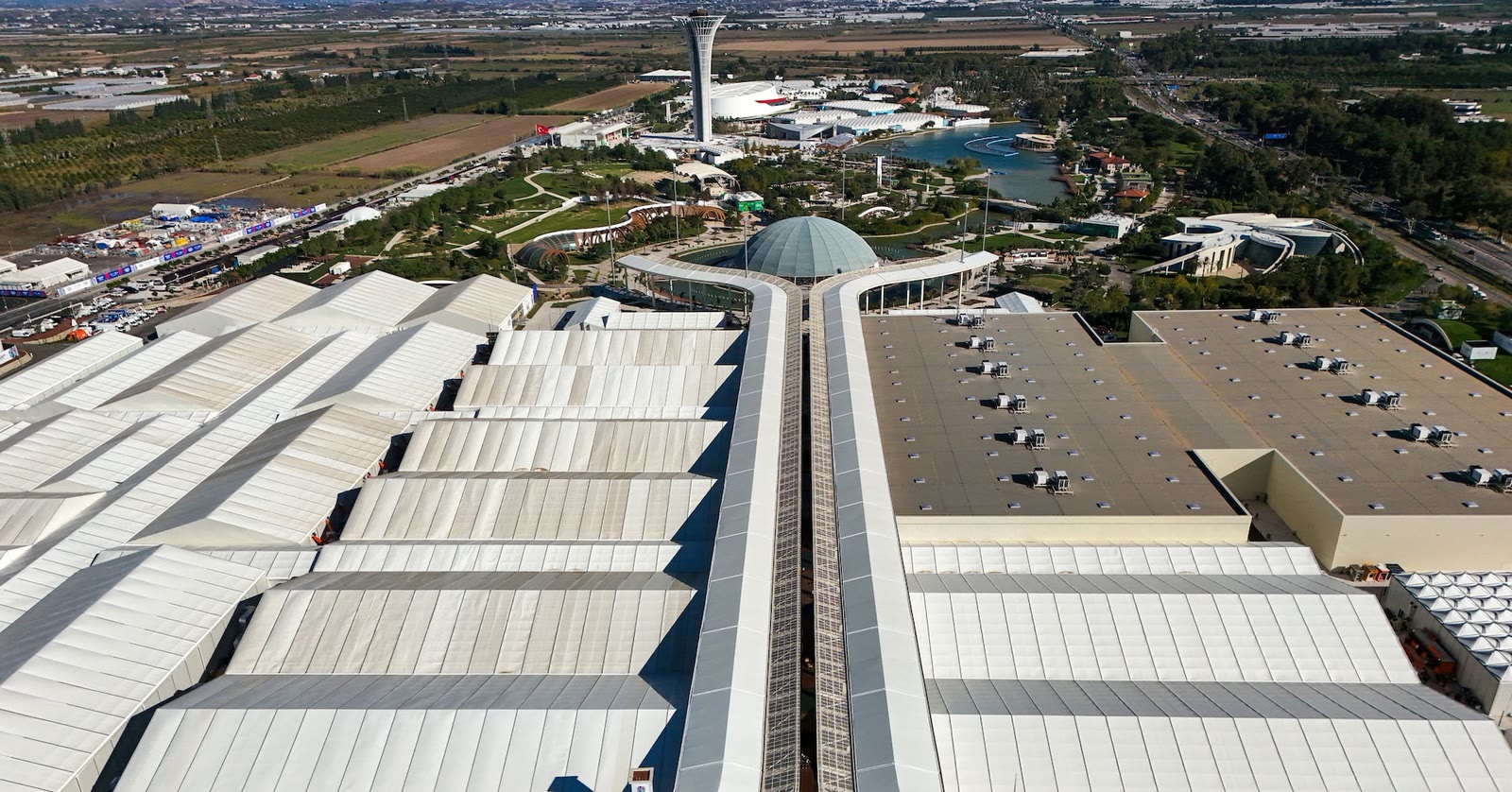
Item 1 of 2 A drone view shows the venue ahead of the United Nations climate change conference, known as COP31, in Antalya, Turkey, November 7, 2026. REUTERS/Murad Sezer
[1/2]A drone view shows the venue ahead of the United Nations climate change conference, known as COP31, in Antalya, Turkey, November 7, 2026. REUTERS/Murad Sezer Purchase Licensing Rights, opens new tab
SummaryTurkey is seeking to broaden support for its electrification goalCritics say the goal needs to specify increased use of renewable powerTurkey is depends on coal for its electricity
ANTALYA, Turkey, Nov 10 (Reuters) - COP31 host Turkey will on Tuesday urge countries to place a goal to expand the share of electricity in global energy use at the centre of the conference's final agreement despite criticism the plan could do little to cut emissions.
Even before the two-week UN conference began on Monday in the Turkish Mediterranean city of Antalya, Turkey had announced it wanted governments to sign
a pledge, opens new tab
to electrify 35% of the global economy by 2035, up from around a fifth today.
The Misinformation Monitor newsletter rounds up international misinformation narratives, with a "Real or Fake?" quiz in every edition. Sign up here.
It is now seeking broader support for incorporating that goal into the outcome of the talks, according to a person familiar with the matter.
A spokesperson for Turkey’s COP31 President Murat Kurum did not respond to a request for comment.
The target is meant to help reduce planet-warming emissions by speeding the global shift away from fossil fuel-powered vehicles, furnaces, boilers, cookstoves, and other greenhouse gas-emitting equipment.
But climate advocates, and some Turkish villagers who live near one of the country’s coal mines, have criticised the pledge because it does not require that the additional electricity come from low-carbon sources.
"If the grid is not clean, electrification does not remove emissions: it moves them from the exhaust pipe to the power plant smokestack," said Alexis Normand, CEO of Greenly, a Paris-based carbon accounting company.
TURKEY AND AUSTRALIA RELY ON COAL
The debate puts a spotlight on the energy systems of the two countries overseeing COP31. Turkey, the summit host, and Australia, which is leading the negotiations, both rely on fossil fuels for electricity.
Coal generated about a third of Turkey's electricity last year and over 40% of Australia's, according to government data.
Australia's COP31 team, which is led by Climate Change and Energy Minister Chris Bowen, did not provide comment in response to a Reuters request.
Among those calling generally for a clearer roadmap away from fossil fuel use are South Pacific island nations that are especially vulnerable to sea level rise.
Portugal, which has one of the highest shares of renewable energy among European countries, on Monday said it would advocate linking the eletrification goal to low-carbon fuel.
"Our proposal is not simply electrification, but clean electrification. That means electricity from renewable sources rather than fossil fuels," Portugal's Environment Minister Maria da Graca Carvalho told reporters in Lisbon.
As COP31 began on Monday, the conference's leaders called on the nearly 200 countries represented at the talks to move faster to stem global warming, citing rising temperatures and worsening climate-driven disasters.
A report by the United Nations Environment Programme published in October said the world is already set to overshoot 1.5 degrees Celsius (2.7 degrees Fahrenheit) of warming above pre-industrial times, a threshold set at the 2015 Paris climate conference, and called for steep emissions cuts to bring temperatures back down.
"Although we will hopefully get some kind of decision on green or clean electrification, if this COP does not finish with a signal of continuing the roadmap, or some process, on the transition away from fossil fuels, it will fall short," Jennifer Morgan, Germany's former climate envoy and senior fellow at the Fletcher School of Law and Diplomacy at Tufts University.
Reporting by Simon Jessop, Tuvan Gumrukcu, Ezgi Erkoyun, and William James in Atalya and Sergio Goncalves in Lisbon; Writing by Richard Valdmanis; editing by Barbara Lewis
Our Standards: The Thomson Reuters Trust Principles., opens new tab
William leads the UK Breaking News team, making sure Reuters is first to report key developments in political, economic and general news. He previously spent nearly a decade in Westminster as UK Political Correspondent and before that covered financial markets during the euro zone debt crisis.
Ezgi reports on Turkey since 2014. Her stories primarily appear in the finance and economy sections of the Reuters website to provide deep understanding of Turkey's economic landscape. Previously, based in Gdansk, Poland, she covered companies listed on Turkey’s stock exchange before transferring to Istanbul bureau in Turkey. Throughout their career, Ezgi has extensively covered significant events such as the COVID-19 pandemic, Turkey's ongoing economic challenges and their toll on locals, and internationally significant court cases. Her work also includes in-depth reporting on the appointment and removal of ministers and central bankers, Turkey's transition to a presidential system, and several pivotal elections. In addition to their professional pursuits, Ezgi enjoys traveling, reading, hiking, and exploring new places, restaurants and cafes.