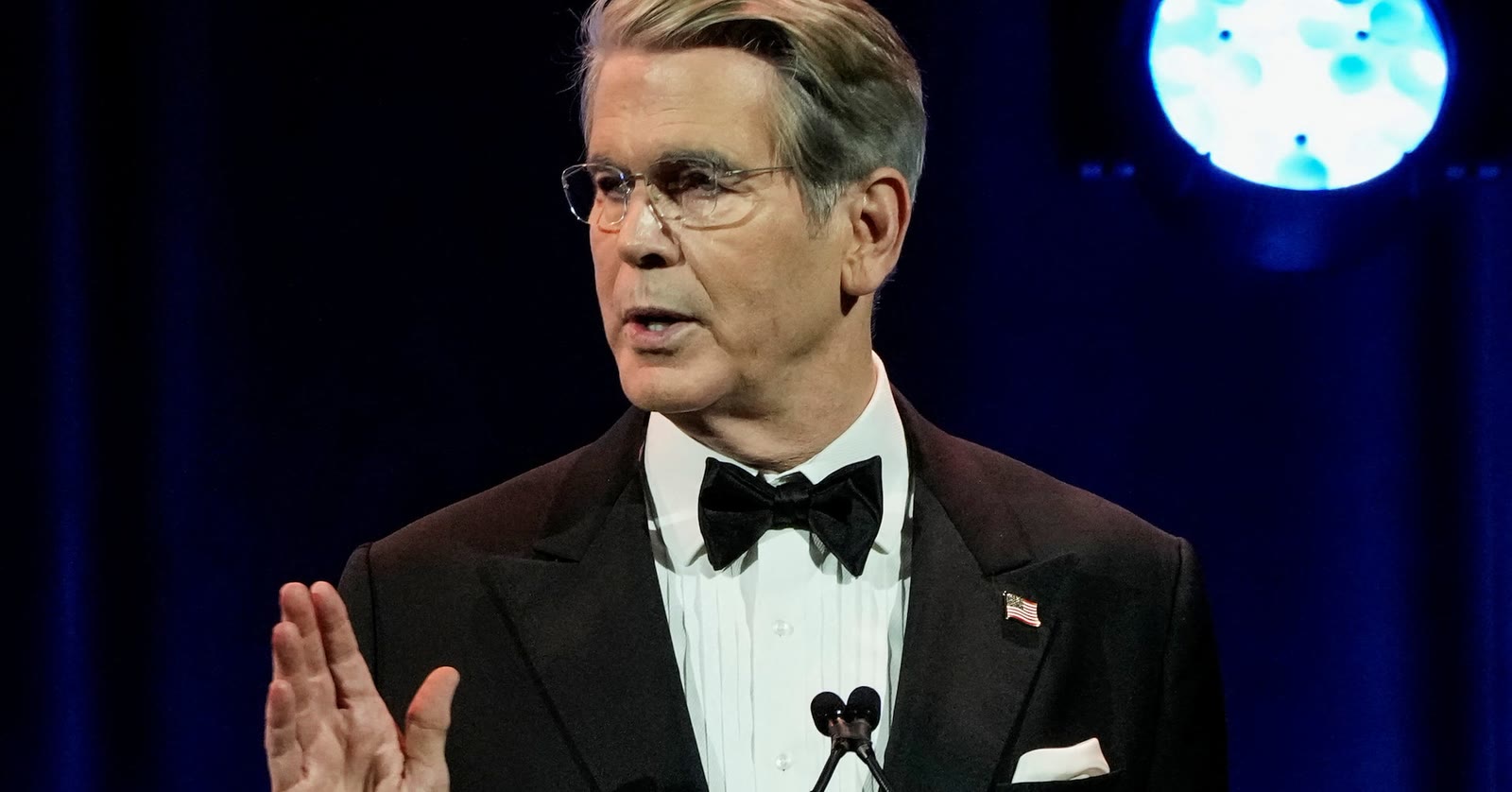
Item 1 of 2 US Treasury Secretary Scott Bessent speaks during the National Committee on US-China Relations 60th Anniversary Gala Dinner in New York City, US, November 10, 2026. REUTERS/Eduardo Munoz
[1/2]US Treasury Secretary Scott Bessent speaks during the National Committee on US-China Relations 60th Anniversary Gala Dinner in New York City, US, November 10, 2026. REUTERS/Eduardo Munoz Purchase Licensing Rights, opens new tab
WASHINGTON, Nov 13 (Reuters) - US Treasury Secretary Scott Bessent said on Friday that he would not be cowed by Iranian threats against his life, after recently moving from his Washington, DC, residence to a US military base.
"Why am I going to be afraid when our, the brave military personnel in the Gulf, President (Donald) Trump, constantly receive death threats?" Bessent said in an interview on CNBC.
The Misinformation Monitor newsletter rounds up international misinformation narratives, with a "Real or Fake?" quiz in every edition. Sign up here.
Iran has denied plotting to attack officials and people on US soil.
But Bessent added that Iran was acting "like a dangerous cornered animal. So I follow Secret Service instructions and have moved from my home to a military base."
Bessent said he had to move in part because the Wall Street Journal published an aerial photo of his Georgetown home in January 2025.
"Highly irresponsible and dangerous, and things like that have to stop," he said.
A senior intelligence official in the Trump administration warned in a memo seen by Reuters late last month that Iranian plots against US personnel and American citizens had reached an advanced stage.
Bessent has led the US sanctions and economic pressure campaign against Iran, dubbed Operation Economic Outcast, since August to try to push Tehran to end attacks on shipping and reopen the Strait of Hormuz.
The crucial waterway has been largely closed since the US and Israel attacked Iran on February 28.
The economic pressure campaign, which coincides with a US naval blockade of Iranian ports, has included sanctions on Middle Eastern bank branches and other financial services firms facilitating transactions with Iran.
Reporting by Doina Chiacu and Katharine Jackson; Editing by Andrew Cawthorne
Our Standards: The Thomson Reuters Trust Principles., opens new tab