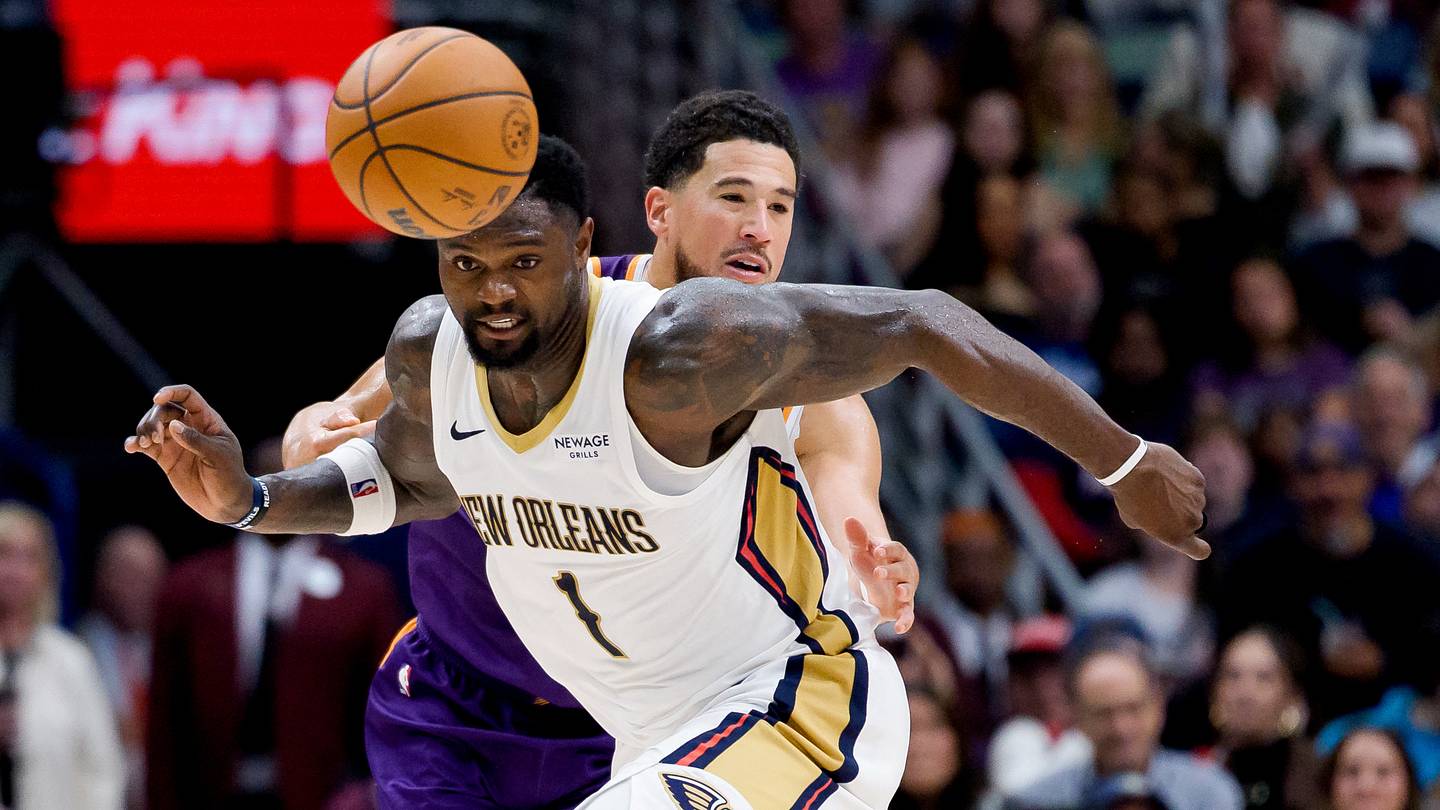
Zion Williamson attempted just one shot in the fourth quarter of the New Orleans Pelicans' 105-104 victory over the Los Angeles Clippers on Friday night, yet he helped create some of the team's most important baskets.
Williamson finished with 25 points on 11-of-15 shooting, seven rebounds, five assists, a steal, and a blocked shot. It was his first game with at least 20 points, seven rebounds, and five assists this season. The Pelicans are 27-20 in 47 career games in which Williamson has reached those marks.
While much of the discussion surrounding Zion centers on how many shots he should be taking, an examination of his 294 career regular-season appearances offers greater insight into his value and the challenges New Orleans faces in building a contender around him.
Scoring more hasn't translated into winning more
The Pelicans are 137-157 in games Williamson has played. What's particularly revealing is how little his scoring production changes between wins and losses.
Williamson averages just 0.3 more points in wins while attempting fewer shots. The more substantial differences are in his shooting efficiency, playmaking, and ball security.
Williamson's career averages in wins and losses
Stat
Wins (137)
Losses (157)
Points
23.9
23.6
FGA
15.1
15.6
FG%
61.5%
57.0%
Rebounds
6.5
6.2
Assists
4.5
3.5
Steals
1.1
1.0
Blocks
0.7
0.5
Turnovers
2.4
2.8
AST/TO ratio
1.88
1.24
New Orleans is 25-23 when Williamson attempts at least 20 shots and 17-12 when he attempts fewer than 10. The Pelicans are also just 64-74 when he scores at least 25 points and 28-30 when he reaches 30.
Who's on the floor with Zion and the circumstances of individual games influence the results. When teammates aren't producing, Williamson may assume a greater scoring burden.
However, the numbers offer little reason to believe that an offense increasingly dominated by Williamson's scoring would substantially improve the Pelicans' fortunes.
The value of a more versatile Williamson
Williamson's playmaking demonstrates a much clearer relationship with winning than his scoring totals. The differences are obvious.
Pelicans' career record by Williamson's assists
Assists
Record
Win %
0-4
73-115
38.8
5-7
45-34
57.0
8+
19-8
70.4
The Pelicans have won more than 60% of their games when Williamson records at least five assists. They're also 59-43 when he produces at least two assists per turnover, compared to 23-48 when he commits more turnovers than he records assists.
While assists depend partly on teammates making shots, Williamson's ability to draw multiple defenders remains one of the Pelicans' best avenues for creating quality scoring opportunities.
Williamson averaged 5.3 assists in 2024-25 and 5.0 the previous season. He's averaging just 2.8 this season, reaching five assists only twice in 18 appearances.
Head coach Jamahl Mosley should be taking greater advantage of Williamson's playmaking ability. That skill is even more valuable given the team's lack of an established alternative to Jeremiah Fears at point guard.
There are opportunities for Williamson to contribute more elsewhere, too. New Orleans is 25-18 when he collects at least 10 rebounds and 18-13 when he records three or more steals.
His 1.7 steals per game this season represent a career high, though his rebounding production has declined. Williamson is averaging 6.7 rebounds in victories this season compared to 4.8 in defeats.
The Pelicans have generally been more successful when Williamson is efficiently contributing across multiple areas rather than carrying a disproportionate share of the scoring responsibilities.
The limitations of building around Williamson
Perhaps the most difficult conclusion for the Pelicans to accept is that Zion may already be close to the player he's ultimately going to be.
He's an exceptionally efficient scorer, a capable facilitator, and an athlete who can make meaningful contributions defensively. He's demonstrated All-Star-caliber ability without consistently having the transformative impact expected of the NBA's premier franchise players.
At 26, Williamson still has room to improve. However, after nearly 300 regular-season appearances, the Pelicans can no longer afford to base their roster construction on the expectation that he'll eventually become a fundamentally different caliber of player.
New Orleans bears a lot of responsibility for how Zion's career has unfolded. The organization hasn't surrounded him with enough complementary talent, and its shortcomings have often magnified his limitations rather than accentuated his strengths.
The Pelicans now have to develop players like Fears and Derik Queen while navigating existing financial commitments, limited draft capital, and a roster with significant deficiencies. Building the type of supporting cast that Williamson appears to require could be even more difficult than it was earlier in his career.
Williamson may be better suited to being an important piece of a great team than the player responsible for making a team great. That's still a valuable player, but it's a distinction that has enormous implications for how the Pelicans allocate their resources.
Eight seasons into Zion's tenure, New Orleans has seen enough evidence to understand what he brings to a basketball team.
What the Pelicans have yet to demonstrate is that they can build a team good enough to succeed with the player Williamson is, rather than the superstar they once expected him to become.
Given the organization's current circumstances, continuing to build around him may no longer represent its best path forward.
Add us as a preferred source on Google
Follow