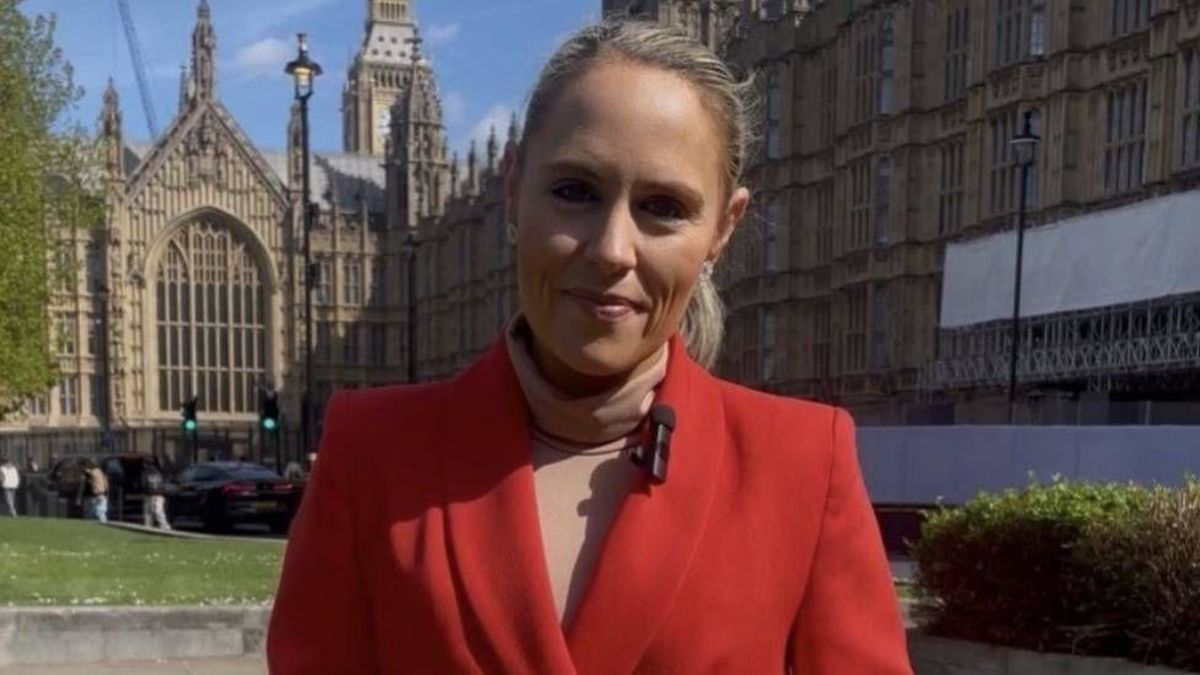
A woman says she felt "absolutely terrible" after asking for a man to be removed from her taxi because she thought he was drunk, only to be told later he had been spiked.
Eve Ryan, 26, said the man, her friend's new boyfriend, began speaking incoherently when he got into the taxi after a night out in Stoke.
She said she asked the driver to escort him out because she felt uncomfortable, but later learnt he had been taken to hospital.
The Twitch streamer from Cheshire is supporting a new campaign by charity Stamp Out Spiking to help people recognise possible warning signs during the festive party season.
Ryan said that, as far as she knew, the man had consumed just one alcoholic drink, although she had not seen him for about half an hour.
He got into the taxi and stared at her before speaking "absolute gibberish", she said.
"I felt absolutely terrible because I just kicked him out of my taxi because he appeared very, very drunk," she said.
"I didn't know the signs to look out for in that moment."
Ryan said the incident had not been reported to police, something she did not think of at the time.
She recalled another night out in Dublin when a male co-worker began behaving unusually. She later learnt he had also been taken to hospital after reportedly being spiked.
"It's not always girls who are being targeted," she said. "It really is anybody."
'I just lost control of my body'
Kirstie Logan-Townshend, who has joined the charity's board, said she too had been mistaken for being drunk when she collapsed during her birthday celebrations in London in 2016.
She said she became dizzy about 15 minutes after taking a sip of a white wine spritzer, before falling, hitting her head "quite badly" and losing consciousness.
Kirstie Logan-Townshend said she collapsed during her birthday celebrations in 2016 [Kirstie Logan-Townshend]
She said a paramedic who attended suspected she had been spiked, but her colleagues dismissed the possibility, saying she "must be drunk".
She was taken to hospital alone, where she said tests confirmed the presence of GHB, a sedative drug, in her system.
Logan-Townshend, who now lives in Swansea, said the substance had interacted with medication she was taking for rheumatoid arthritis, leaving her in hospital for several days.
She said the experience had made her wary of drinks bought for her at bars.
"I can account for my friends, but I don't know who's at the bar," she said.
Spotting the warning signs
Stamp Out Spiking's founder, Dawn Dines, said the I Got Spiked campaign was designed to reach young people through an interactive film and live streams on the gaming platform Twitch.
The film places viewers inside a fictional night out, with decisions about what the characters should do next put to an audience vote.
"We know that simply telling people about the dangers of spiking isn't always enough," she said.
Dines said potential warning signs included confusion, slurred speech, loss of balance, nausea and sudden drowsiness. She also warned that adding alcohol to someone's drink without their permission was a form of spiking.
A Cardiff University study published in 2025 found that 74% of respondents who said they had been spiked had not reported it to police. The researchers acknowledged limitations in the survey's sample.
A new offence covering spiking was included in the Crime and Policing Act 2026 but has not yet come into force. The government says it expects the offence to take effect in spring 2027.
The Home Office advises anyone who believes they or a friend may have been spiked to seek medical help if they feel unwell, tell venue staff and report the incident to police as soon as possible.
What to do if someone is spiked
The signs of spiking include confusion, loss of co-ordination, slurred speech and unconsciousness. Never leave someone alone if they show any of these symptoms.
Seek immediate medical help.
Call 999 if someone is seriously unwell or unconscious, and use the recovery position or CPR if necessary. In less urgent cases, contact NHS 111.
Always report suspected spiking to police.
Listen to the best of BBC Radio Manchester on Sounds and follow BBC Manchester on Facebook, X, and Instagram. You can also send story ideas via Whatsapp to 0808 100 2230.
Related stories