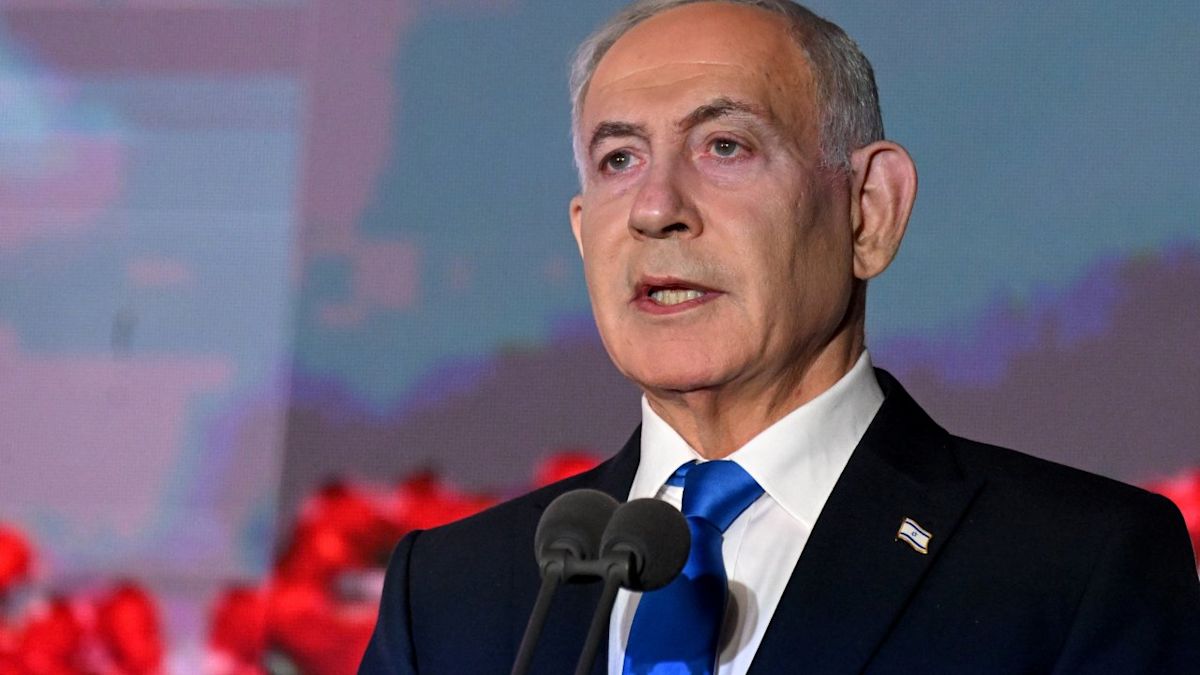
Highly-anticipated talks between current Israeli Prime Minister Benjamin Netanyahu and opposition leader Gadi Eisenkot, which could have led to the formation of a large unity government led by the two prominent Israeli politicians, appear to have produced not major breakthroughs.
Israeli television network i24 reported on Sunday that the two tried to bridge "significant differences" during the talks, which took place earlier that same day at the Israel Defense Forces headquarters in Tel Aviv. However, a follow-up meeting between the two was not planned.
"Prime Minister Benjamin Netanyahu and Yashar Chair Gadi Eisenkot met this morning. The meeting began with a security briefing. The two then turned to discuss the formation of a national unity government. The discussion was businesslike, with both sides seeking to bridge the substantial differences between them," Netanyahu's Likud and Eisenkot's Yashar parties said in a joint statement about the discussions.
On Saturday, Netanyahu proposed a deal which would see him and Eisenkot holding the prime ministership on a rotational basis.
However, Eisenkot reportedly said in Sunday's talks that Likud and its allies would be welcome to join an Eisenkot-led government after its formation, which likely means that the suggestion to alternate the prime ministerial role is now off the table.
Ynet News also reported that Netanyahu had asked Eisenkot during the talks to accept the former's request to delay Eisenkot's accession to the rotating premiership until after Netanyahu had dealt with a supposedly "sensitive security incident."
After Israeli parliamentary elections in October produced inconclusive results which saw neither Eisenkot's nor Netanyahu's blocs gain the number of seats necessary to form a majority government, Eisenkot was eventually asked by Israeli President Isaac Herzog to form a government after the former IDF Chief of Staff received more nominations from Knesset (parliament) members than Netanyahu.
If he does not ask for a two week extension, Eisenkot has to form a government by December 6. Eisenkot's attempts to establish a governing coalition, however, have been complicated by seemingly irreconcilable differences with Netanyahu, the Arab-majority parties and the ultra-Orthodox (Haredi) parties.
However, Mahmoud Abbas, the leader of the Arab-majority Ra'am party, declared Hamas a terrorist organization for the first time on Saturday. Declaring Hamas as such was one of the governing principles which Eisenkot said all of his potential coalition partners had to agree to in order to be part of an Eisenkot-led administration.
The possibility of a Ra'am-Eisenkot alliance therefore seems to be on the table, despite Eisenkot initially ruling out governing with Arab-majority parties.
Netanyahu has served, non-consecutively, as prime minister for longer than any other Israeli politician.