Green card applicants face two important changes in December, with a revised travel document application becoming mandatory and higher fees taking effect for the EB-5 immigrant investor program.
U.S. Citizenship and Immigration Services (USCIS) will stop accepting older editions of Form I-131, used to apply for travel documents including Advance Parole, on December 21. Meanwhile, a new EB-5 fee schedule that takes effect November 30 will make several investor petitions substantially more expensive, with December marking the first full month under the higher rates.
New Form I-131 Becomes Mandatory
USCIS will require applicants to use the revised edition of Form I-131, Application for Travel Documents, Parole Documents, and Arrival/Departure Records, starting December 21.
The agency announced the revised form on November 19, specifying an edition date of 04/22/26. Until December 20, USCIS will continue accepting both the new edition and the previous 01/20/25 edition. From December 21, only the 04/22/26 edition will be accepted.
USCIS has warned that it will reject applications submitted electronically or postmarked on or after December 21 if they use an earlier edition. Applicants should therefore check the form before filing, particularly if they have already completed an application using an older version.
Applicants can find the edition date at the bottom of the form and its instructions. For paper filings, the edition date and page numbers should be visible on every page, and all pages must come from the same edition. USCIS says it may reject a form if pages are missing or come from different editions.
USCIS provides the revised Form I-131 and its filing instructions on its official website.
The change is particularly relevant to people with pending Form I-485 applications to adjust their status to lawful permanent residence.
These applicants may use Form I-131 to request advance parole, which allows them to seek parole back into the United States after traveling abroad while their green card applications remain pending.
Advance Parole is not a visa and does not guarantee reentry into the United States. Travelers must still pass inspection by U.S. Customs and Border Protection (CBP) officers, who make the final admission decision at the port of entry.
Applicants should also consider the possible consequences of unlawful presence before traveling. In August, the Board of Immigration Appeals ruled in Matter of Delcarmen-Lara that travel with advance parole counts as a departure for certain unlawful-presence rules. The decision overturned the board's earlier ruling in Matter of Arrabally and Yerrabelly.
USCIS warns that people who have accrued more than 180 days of unlawful presence may trigger a three- or 10-year inadmissibility period by leaving the country, even with advance parole. Generally, the three-year period applies after more than 180 days but less than one year of unlawful presence, while the 10-year period applies after one year or more.
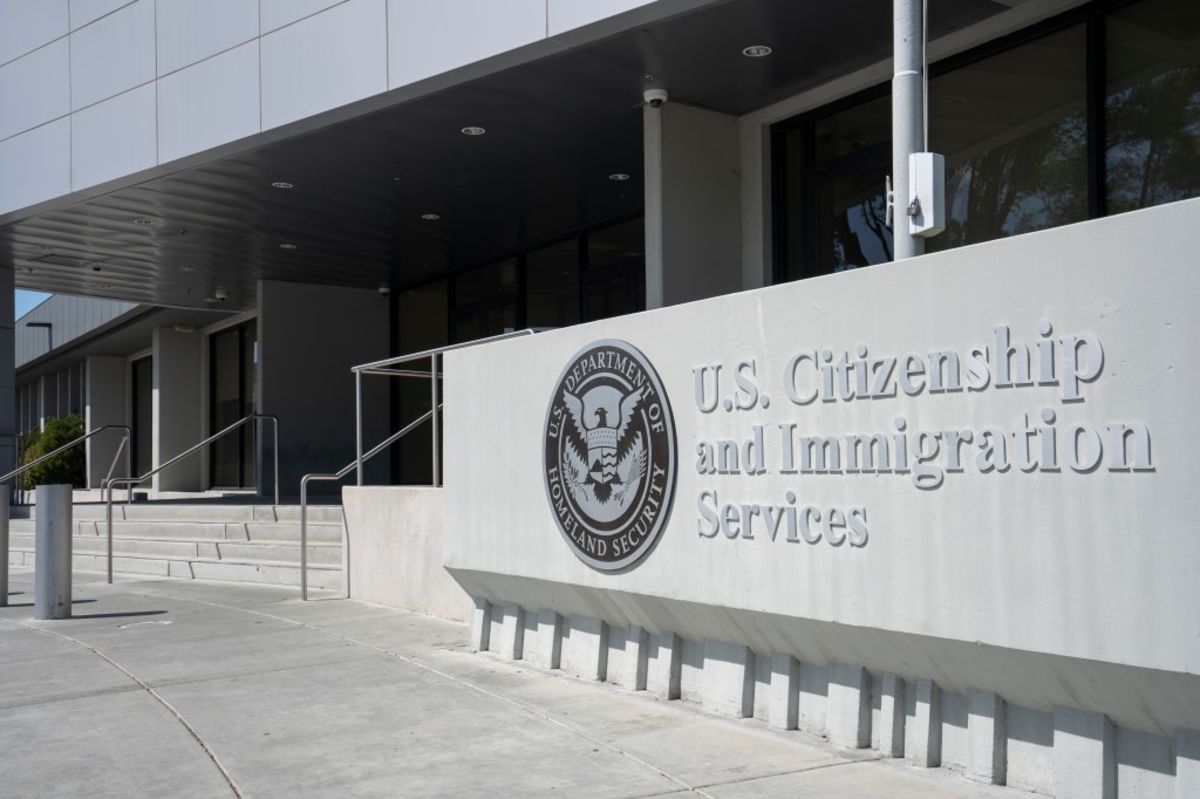
Exterior view of the United States Citizenship and Immigration Services (USCIS) San Jose Field Office in Santa Clara, California.
Higher EB-5 Fees Take Effect
EB-5 immigrant investors will face higher government filing fees beginning November 30, under a final rule published by the Department of Homeland Security (DHS) in the Federal Register on September 30.
The filing fee for Form I-526, used by standalone immigrant investors, will rise from $3,675 to $7,615.
An initial Form I-526E, used by investors participating in the regional center program, will cost $7,850, plus a separate $1,100 EB-5 Integrity Fund fee. The $75 EB-5 Technology Fee is already included in both the I-526 and initial I-526E filing fees.
The fee for Form I-829, which investors use to apply to remove the conditions on their permanent resident status, will increase from $3,750 to $5,000.
The new rules also introduce Form I-527 for certain legacy investors who filed Form I-526 before the EB-5 Reform and Integrity Act of 2022 and need to amend their petitions following specified changes involving a regional center or associated entity. The filing fee is $10,330.
The standard minimum investment is currently $1.05 million, or $800,000 for qualifying investments in targeted employment areas or infrastructure projects. However, these thresholds are scheduled for their first inflation-based adjustment on January 1, 2027.
Higher government fees increase the expense of filing a petition, but they do not change the statutory minimum investment amounts.
DHS says the revised fees are intended to help USCIS recover the costs of administering the EB-5 program, including adjudication, program management, and compliance activities. Separately, the EB-5 Integrity Fund supports fraud investigations, audits, and site visits.
December will also bring a higher late-payment penalty for EB-5 regional centers that have not paid their annual Integrity Fund fee. The penalty will increase from 10 percent to 20 percent on December 1, applying to payments made through December 30.
Contact Newsweek editors for this story: Ben Kelly and Anthony Murray.
Related Articles
Start your unlimited Newsweek trial