IntelliNews summary:
The UK told the court drilling will not begin before March 21, 2027 and extraction not before March 2028, and the judges placed these assurances on record.
Argentina says the ruling is 'not the final word' and will take its case to a full arbitral tribunal under the UN Convention on the Law of the Sea.
Buenos Aires opened sanction proceedings against five more firms, taking the total to more than 65 companies, shareholders and suppliers.
The Malvinas Law stalled in Congress for lack of a quorum on November 18, and Milei's approval rating has slipped to about 35%.
____________________
The International Tribunal for the Law of the Sea (ITLOS) on November 28 declined Argentina's request for provisional measures to halt the Sea Lion oil project off the Falkland Islands, saying the claims required a determination of territorial sovereignty that it could not make under the UN Convention on the Law of the Sea (UNCLOS).
The tribunal in Hamburg voted 18 to three to reject all four provisional measures Buenos Aires had sought against London. In its order, it said Argentina's first claim required identifying which state had sovereignty over the Falkland Islands (Malvinas), a question requiring rules of international law outside UNCLOS. The tribunal did not determine sovereignty or the merits of the dispute.
The ruling is an early setback for the sovereignty campaign President Javier Milei revived in September. It leaves Navitas Petroleum and Rockhopper Exploration on course to start drilling next year, while Buenos Aires is pursuing sanctions against companies involved and a bill that its allies have so far failed to advance. Nor has the campaign done much for Milei at home, where his ratings have kept sliding as the economy stalls.
Foreign Secretary Ed Miliband and Attorney General Ellie Reeves, who argued the UK's case in Hamburg, called the outcome 'a vindication of the UK's robust legal defence and strategy' in a joint statement. 'Argentina sought to stop the Falkland Islanders making their own sovereign decisions and failed in this attempt,' they said, urging Buenos Aires to 'end its wider economic pressure against the Falkland Islands'. Reeves told the BBC it was 'a clear win for the UK government'.
'Argentina respects the court's decision and will continue to defend its rights within the framework of international law. This decision is not the final word,' the presidency said in a statement signed by Milei. 'By history and by law: the Falkland Islands are Argentine.'
Foreign Minister Pablo Quirno accused London of a 'biased interpretation' of the ruling, arguing that the court had in fact recognised the existence of an unresolved sovereignty dispute that the UK denies. 'This process is far from over,' he said. "The Argentine Republic reiterates its willingness to resume bilateral negotiations on the Question of the Malvinas Islands, as repeatedly urged by the UN.'
The government also pointed to the assurances the tribunal wrote into its order. The UK told the court that drilling will not begin before March 21, 2027, that extraction will not start before March 2028 and that no new licences will be granted while the licensing regime is suspended. The judges 'place these assurances on record' and urged both sides to move swiftly to set up the full arbitral tribunal under Annex VII of UNCLOS, which will hear the merits. Argentina launched those proceedings on September 28 and has said it will press for the same measures there 'without delay'.
Professor Marc Weller of Chatham House told the BBC that Argentina's challenge had 'provisionally, but spectacularly, fallen at its first hurdle', and that the outcome 'casts doubts on the viability of Argentina's claim' in the arbitration. Legal scholars had warned before the hearings that the case faced exactly this jurisdiction hurdle.
What is Sea Lion
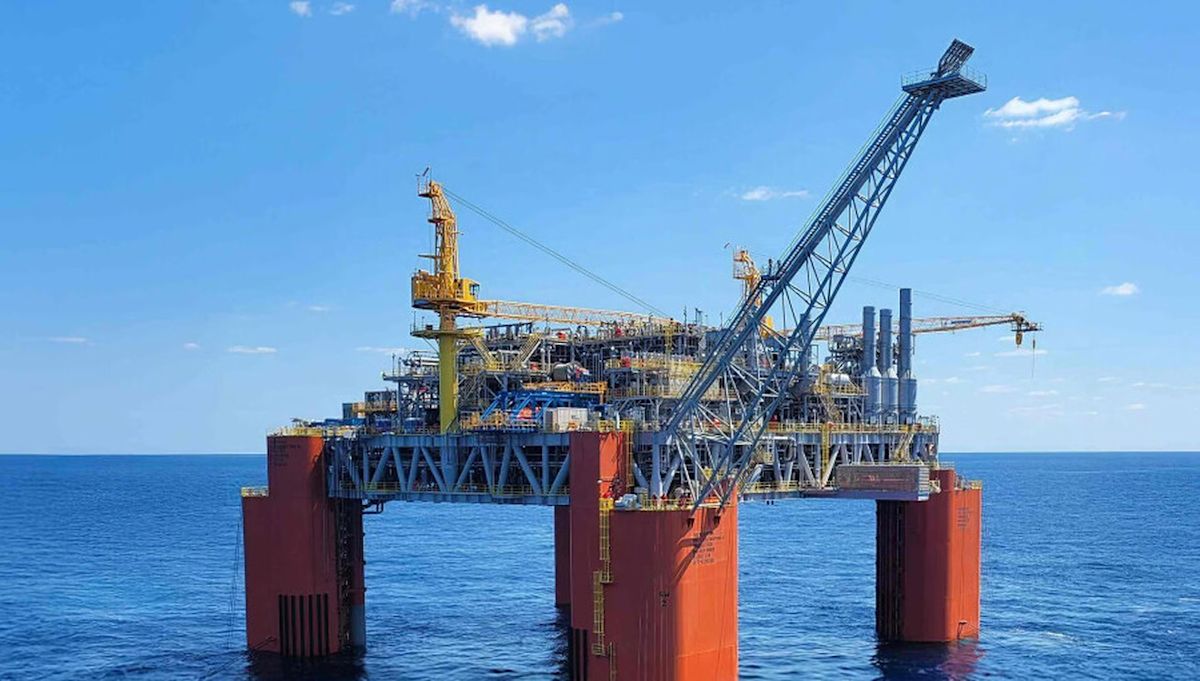
Sea Lion is the first commercial oilfield to be developed in Falklands waters. Discovered by Rockhopper in 2010 in the North Falkland Basin, it lies a little over 200 km north of the islands and is operated by Israel's Navitas, which holds 65%, with London-listed Rockhopper holding the remaining 35%. The partners took a final investment decision in December 2025, and Miliband signed off on the development on October 13.
The field holds an estimated 1.7bn barrels of oil in place, of which about 500mn barrels are classed as recoverable. The first phase will tie 11 subsea wells back to a refurbished floating production vessel, with output peaking at around 50,000 barrels per day and first oil targeted for 1Q28. For the islands' roughly 3,500 inhabitants the revenues would be transformative, and their government has already drawn up a plan for a sovereign wealth fund to hold them.
Argentine pressure has already cost the project contractors. Halliburton and SLB have both ruled out work on Sea Lion after Buenos Aires threatened criminal and civil action, and Navitas has had to replace suppliers. On the day of the ruling the government said it had opened sanction proceedings against five more firms, all Israeli financial groups, among them Migdal Mutual, Harel Mutual Funds and Ayalon Mutual Funds, taking the total to more than 65 companies, shareholders and suppliers, EFE reported.
No rally round the flag
The Falklands, which Argentina calls the Malvinas, were barely on Milei's agenda until this year. The self-styled anarcho-libertarian leader had praised Margaret Thatcher, Britain's prime minister during the 1982 war, and once acknowledged the islanders' right to self-determination. But in a national address on September 3 he declared the islands Argentine 'by history and by right', weeks after US President Donald Trump said Washington was reviewing its position on the dispute, reportedly to punish the UK for refusing to help in the US war against Iran. Milei hailed Trump's shift as a turning point in Argentina's 'sacred cause', one foreshadowed in July by a banner the national team unfurled during its World Cup match against England.
Voters backed the cause, which has historically drawn support across the political spectrum, but not the man. A Management & Fit poll taken after the September speech found that 61.1% of Argentines put Milei's new line down to political convenience, against 24.7% who saw conviction. An October survey by the University of San Andres found 53% support for barring Falklands-linked companies from Vaca Muerta, yet the government's disapproval rating stood at 60%. Milei's approval has since slipped to about 35%, from more than 40% in January, as the economy has stalled, and Argentina's borrowing costs have surged with it, the FT reported.
Nor has the move bought him votes in Congress. The National Sovereignty Defence Law, known as the Malvinas Law, which would raise prison terms for unauthorised exploration around the islands to 12-15 years, collapsed on November 18 when the ruling party failed to muster a quorum in the Chamber of Deputies, falling three short of the 129 needed as allied blocs held out over unrelated demands. Within hours of the ruling the government put the bill on the agenda of December's extraordinary sessions, saying its delay 'is pleasing the British government', La Nacion reported. Santiago Caputo, Milei's chief adviser and one of the architects of the Falklands campaign, went further: 'Continuing to delay its approval borders on treason.'
Britain has held the islands since 1833, and the 74-day war that followed Argentina's invasion in 1982 cost the lives of 649 Argentine and 255 British servicemen and three islanders. In a 2013 referendum, 99.8% of islanders voted to remain British. The UN General Assembly recognised a sovereignty dispute in Resolution 2065 of 1965 and called for talks, which London has refused to hold for as long as the islanders wish to remain British.