David Redfern/Getty Images
The 1980s were a heyday of strong vocalists, especially among female singers, some of the most famous of whom found themselves ditching partners and bands to go solo. Rock requires power and the new wave demanded poise and control; as these genres reigned, the airwaves were full of glorious voices (Pre-autotune, too). From a very crowded field of '80s divas, we chose five of the top ladies' voices from that classic decade of music.
We picked singers with voices that are in some way especially unusual or distinct, the kind of singer you instantly recognize from a song even if you're unfamiliar with a given track. Additionally, we've chosen voices that seem especially emblematic of the '80s. Each of our picks had careers that extended beyond that decade (in one direction or both), but they all contributed to the magic of '80s music, underpinning a decade of incredible song.
Bonnie Tyler
Wales has long been considered "a musical nation," benefitting from its cultural connections to nearby Ireland and the acoustic benefits of all those hills. Bonnie Tyler, born Gaynor Hopkins and raised near Wales' second city, Swansea, helped keep the little country's reputation as a musical heavyweight afloat throughout the 1980s, most notably with her two megahit power ballads "Holding Out for a Hero" and "Total Eclipse of the Heart" (though those two jams were far from her only output).
Tyler wasn't born with the trademark rasp that added color and distinction to her powerful voice. Very early in her career, Tyler's demanding performance schedule left her with vocal nodules, which doctors removed, cautioning her to rest her voice until her larynx was fully healed. Different reports state that she either literally "spoke too soon" or screamed in frustration; either way, her instrument was altered. Luckily, the new gravel in her pipes made her sound ... well, like Bonnie Tyler, and she soon shot to the top of the charts. The new scratchiness made a good voice an unforgettable one, making Tyler one of the standout songstresses of her era.
Tracy Chapman
Tracy Chapman's childhood dream wasn't musical stardom: She wanted to be a veterinarian. And while we can well imagine nervous animals being soothed by her glorious alto, the Muses intervened when a school classmate had his music-exec father listen to one of the folk-club sets Chapman performed during college. We can imagine that executive's eyes falling out of his head the minute he heard that husky but clean alto, an unusually powerful and controlled voice for such a young woman.
That low, precise register in which Chapman thrived, unusual but undeniably beautiful, helped her 1988 self-titled debut notch six Grammy nominations and three victories, including Best Female Pop Vocalist for the immortal "Fast Car." Her uniqueness might be even better displayed on a track like the same album's "Across the Lines." This song, a lament at the persistence of racist violence in the United States, showcases Chapman's ability to quaver her voice very precisely. She's not weeping, but there's a little threat of a break in some of her phrasing, and that makes her singing all the more effective.
Tina Turner
Tina Turner is one of the many notable female vocalists who rose to their greatest heights after cutting ties with a man who was holding them back. Dolly Parton broke up with Porter Wagoner, Cher divorced Sonny Bono, and Tina Turner only really blossomed as "Tina Turner" when she was free of the burden of the abusive Ike. Armed with a now-alliterative name and the incandescent stage presence that had buoyed her double act, Tina Turner released her first solo album, "Private Dancer," in 1984; it would win three Grammy awards and sell over 20 million units. (Take that, Ike.)
"Private Dancer" is all killer, no filler, but the standout jam for most people is "What's Love Got to Do with It," a bitterly expressive track that lets Turner show off her masterful phrasing and control of her range. A rock star to her bones, though, Turner could also yelp, shriek, bellow, and caterwaul with the best of them, pushing her versatile pipes to their limit to enjoy a career as one of the most distinctive, impressive performers of her generation; you can hear this especially well in the track "Steel Claw," with its bold introductory yelp. Some of the best can sing almost as well as Tina, but very few can match her for sheer exuberant vocalizing. She's in the Rock n' Roll Hall of Fame twice, by the way: once with Ike and once on her own.
Dolly Parton
We always come back to Dolly. By the time of her shock August 2026 passing, Parton had come to occupy a central place in American culture as sort of a guardian angel-tycoon-grandmother-guest star omnifigure that it almost eclipsed her original fame as not just a singer, but a singer blessed with an unusually beautiful voice, a high, clear soprano instantly recognizable by even the most casual fan. Her ability to stand out from backing tracks is even called name-checked in the "Dolly Parton Effect," a tendency for unusually bright, "twangy" voices to be heard comparatively clearly over background noise.
Parton began her solo career in the 1970s, and by the 1980s was firing on all cylinders, branching out into movies even as she continued to crank out hits (And of course, double-dipping by singing the hit theme song to the hit film "9 to 5" in 1980). She conquered the pop charts with 1983's "Islands in the Stream" and snagged another Grammy for the 1987 album "Trio," a joint effort with Linda Ronstadt and Emmylou Harris. Bless Dolly, her powerful pipes don't really "blend" with the other women's voices, but the album is nevertheless a highlight of all three songstresses' careers.
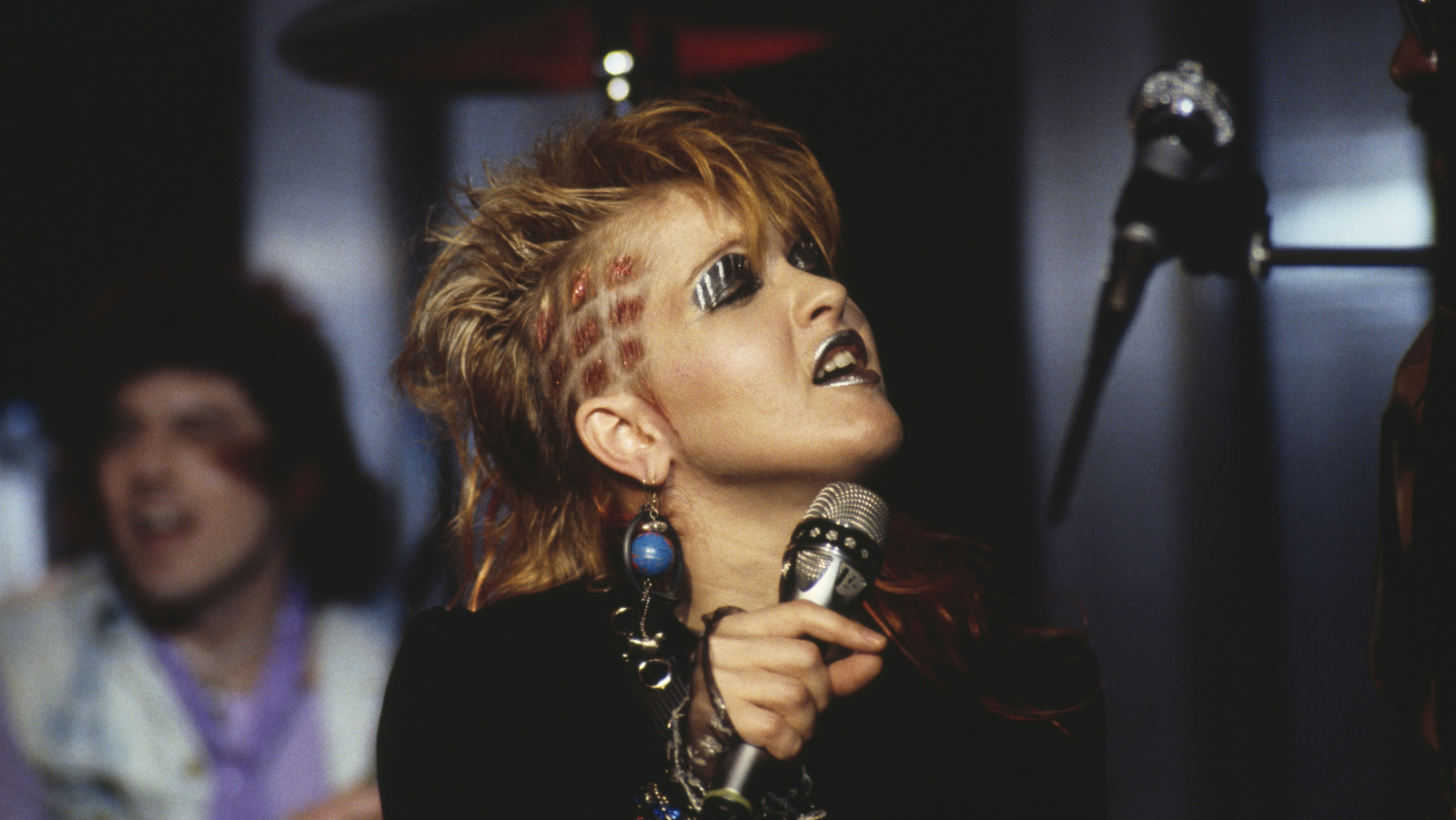
Cyndi Lauper
Pop music can occasionally be dismissed as not as serious or accomplished as other genres, sort of a less-than field where marketing matters more than ability. We cordially invite the haters to take a serious listen to Cyndi Lauper. Lauper, her cool-without-being-cold vibe, and her impressive four-octave vocal range helped make the '80s a decade that people remember fondly, an era of bright colors and even brighter voices — and, of course, girls having fun. Her voice matches her vibe: it's not quite a clean soprano like a Dolly Parton, with a little more grit and color, but it's still impressively agile and confident in the high part of her range.
Lauper had tried to make a go of it as part of a rockabilly band, but only really took off as a solo act with her 1983 album "She's So Unusual," headlined by "Girls Just Wanna Have Fun." Originally written and sung by a man (it's creepy), in Lauper's hands, "Girls Just Wanna Have Fun" emerged as a playlist staple and Grammy nominee because of Lauper's gloriously soaring vocals and winning delivery. She makes it sound easy ... until you try to keep up with her. The song would be her biggest hit, but "All Through the Night" might have showcased her range more, especially in the last minute of the song. She's kept recording, performing, and delighting ever since.