Most people in the UK actively avoid conversations about death and dying. They can be visibly uncomfortable when you raise the subject. When people try to talk about it, it tends to be euphemistically.
This is a mistake, one that can stop you from making important choices for yourself or your loved ones. It can increase fear and misunderstanding about what death can look like, while open conversations can help to ease these feelings and bring a sense of calm, peace and, on occasion, even beauty to the event.
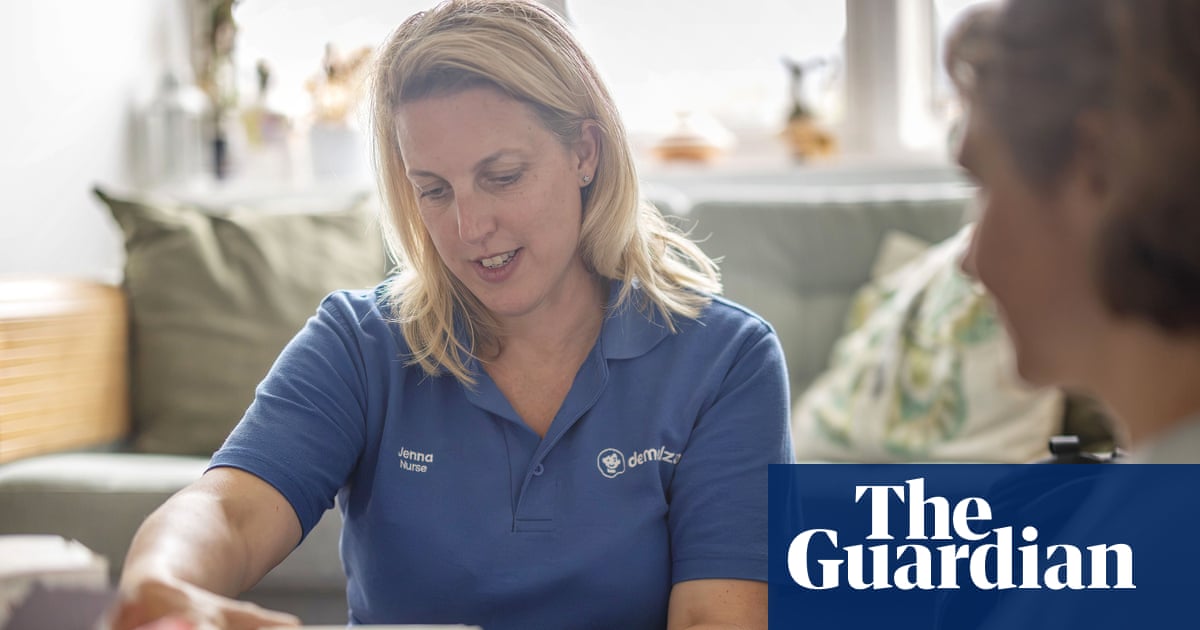
Jenna Heritage: ‘Everyone’s big fear is that they are going to die in pain’
I spent time with hospice care workers from around England, photographing their working days and listening to their personal reflections and experiences of end-of-life care.
They explained how the care at hospices placed a particular importance on comfort – and making the most of whatever life is left – over medical intervention at any cost. They spoke about the emotional and practical challenges families face, and the value of having honest conversations as early as possible.
Together, they show the important role that dignity and choice play in creating meaningful moments during the final stages of life.
There are many myths and misconceptions about hospice care. Most of us have a reasonably good idea of the stages of birth, but death has its own processes too, and most of us are not so familiar with them.
Sarah Wilsher, a community associate clinical nurse specialist at the North London hospice
“Before I worked in palliative care, my nan was in hospital, in intensive care, and she was very unwell,” remembered Sarah Wilsher, a community associate clinical nurse specialist at the North London hospice. “I remember sitting with her, just wanting to shovel food into her mouth.
“Now, as a professional, I see this same desire with relatives who want to feed their loved one, to keep them going. When actually … when the body starts to die, it doesn’t need sustenance, it doesn’t need water. It needs comfort and pleasure.”
Corinne Collier, the head of community supportive care at East Lancashire hospice, felt that misconceptions about death and dying were made worse by the way they were depicted in films and TV dramas.
Corinne Collier, the head of community supportive care at East Lancashire hospice, with Kay, a carer for her husband, Harry
“Overly dramatic and unrealistic, they leave an impression of fear on the viewer,” Collier said. “This can be people’s first and only exposure to death, until they experience the death of a close friend or relative. Subconsciously, that is what they expect to happen.
“In real life, the act of dying is usually a very peaceful transition. It’s true that sometimes things go differently, and then it’s our job to be there, to keep things calm and do the best we can for everyone involved.”
Hospices were not the depressing places that people imagined them to be, said Wendy Freeman, an enhanced care home educator at Isabel hospice in Hertfordshire. “We’re not all wandering around crying,” she said. “We’re not all dressed in black. It’s not all miserable.”
Bathing services are popular, where hospice patients can enjoy a favourite drink amid calming ambient lighting
Several nurses told me that people were often surprised by the number of younger patients that used hospice care. A father in his early 30s explained how he spent six weeks at the East Lancashire hospice to help manage his pain after a terminal diagnosis.
“When I first got there, I didn’t really know what to expect,” he said. “The staff were like: ‘If you have a games console, bring it in. If you’ve got a pet, you can have your pet visit. Rearrange your room however you want it.’”
Many modern hospices, such as East Lancashire hospice, have gardens that patients can easily access
After his stay, the staff managed his transition to being cared for back in his own home. Much hospice care work is community-based, supporting patients living at home with terminal or life-limiting conditions.
To help people understand hospice care, East Lancashire hospice invites primary school children to visit. “This is to allow them a chance to experience the environment and learn about hospice care and support,” said Collier. “These visits are also greatly beneficial for our patients, who get much enjoyment from meeting the children. Hospice patients have also visited the children in their schools.”
A quilt made by patients and the wider community at East Lancashire hospice
Left: a teddy bear, into which messages can be recorded for children to listen to later, at East Lancashire hospice. Right: practice hand and foot castings for memory-making at Demelza children’s hospice, East Sussex
In September this year, education about grief, loss and bereavement became a part of the national curriculum.
Not everyone has the opportunity to choose hospice care. But the nurses encourage individuals and families who do to have difficult and open conversations early on. Patients can discuss where they would like to die, who they would like around them and any last wishes they have.
“The hospice team really opened a lot of doors for me, especially focusing on the children,” said the father in his 30s. “They gave me memory boxes, where I’m going to put letters and birthday cards. They even gave me teddy bears which I can record a voice note into – things I’d never have thought of.”
Corinne Collier on a home visit
Collier said: “It might not be something that we’ve ever done before, but if somebody asks for it, we’ll do our absolute best to make it happen. If that means getting a horse into the hospice or hosting a wedding, if we can do it, we will. Whatever people want.”
For Wilsher, the work has changed how she lives her life. “We are all human, we are all going to die,” she said. “It’s about living those days, having those extra cuddles, staying in bed those extra five minutes if you get them. It’s all those ‘just one more’ [moments], because there will be a time where there isn’t any more.
“The majority of people that have a cancer, for example, will become weaker and spend more time in bed. Their mobility will start to reduce. They might notice food doesn’t taste the same as it did. They might not be eating and drinking quite as much. The weakness just keeps increasing and increasing until they get to a point where they are in bed and can’t open their eyes any more.
“It’s at this time when things that they like – flavoured lip glosses, smells, something that provokes a smile – are all so important.”
Jenna Heritage, right, prepares an end-of-life box at Demelza children’s hospice
Jenna Heritage, a children’s palliative care nurse at Demelza children’s hospice, said: “Everyone’s big fear is that they are going to die in pain. I know that’s often what people will say. They just want it to be as peaceful and calm as it can be. Not everyone will be able to have a ‘good’ death, but where possible, if people engage with and accept what is happening to them … [they] will be able to die peacefully and calmly and try to get as much enjoyment as possible during the end of their lives.”
Collier described it like this: “You’ll see families that are around their loved one that’s in the last minutes of life, with smiles on their faces, because everybody’s happy that the person is where they want to be, and has got what they wanted, has been listened to and been cared for and has had their dignity maintained throughout.
“Those last months, last days, last hours … that’s beautiful to see.”