See more of our coverage in your search results.
Taiwanese voters chose to end the island’s “nuclear-free” status Saturday, a move that along with major election wins for anti-China candidates drew renewed warnings from Beijing.
Faced with surging electricity demand and high fuel costs, more than 7 million people chose to have Taiwan invest in nuclear power, beating out the opposition and exceeding the 25% threshold for the referendum to pass, according to the country’s Central Election Commission.
The vote paves the way for Taiwan to revive its nuclear program after shutting down its last operating reactor last year, with the country’s attitude to atomic energy shifting as it looks for alternative energy to power its booming AI and chip industry.
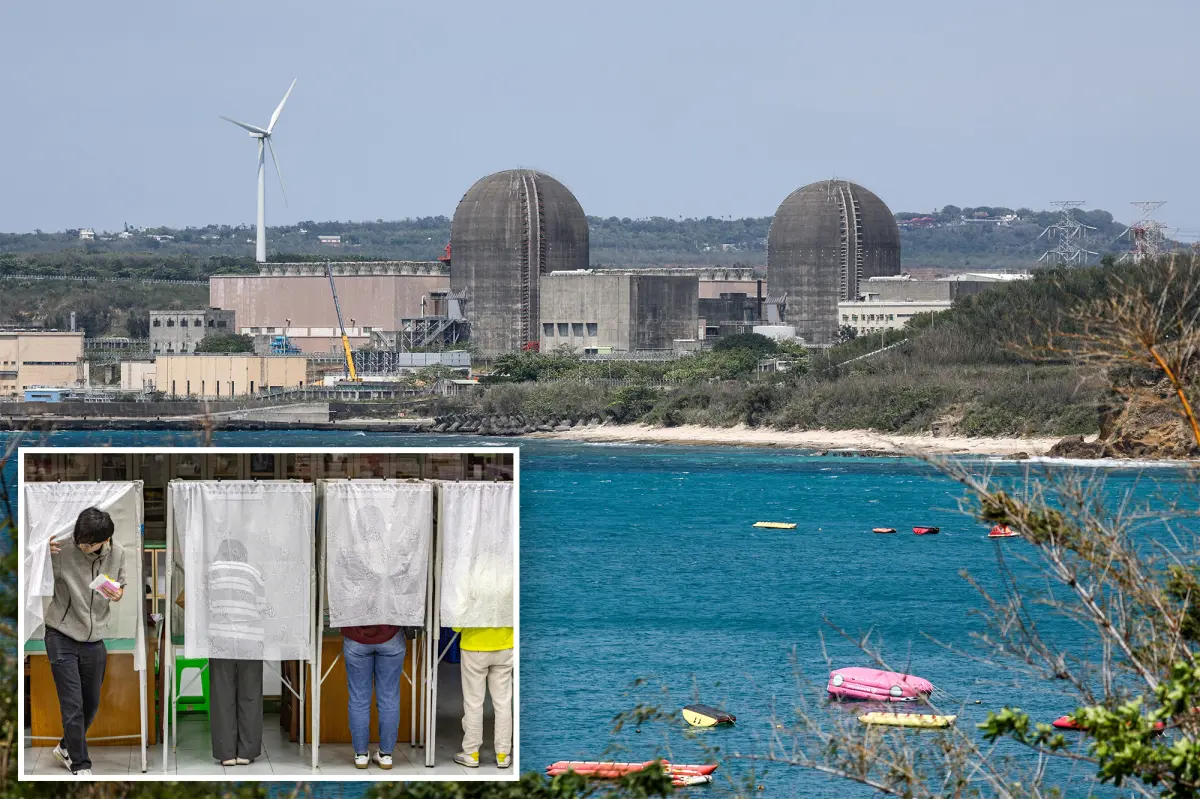
Taiwan’s voters flock to the polls for countrywide elections Saturday. Getty Images
Saturday’s referendum marked the fourth vote on Taiwan’s nuclear power program since 2018, when the country decided to rush ahead with abandoning atomic energy.
The nuclear vote comes as Taiwan’s Democratic Progressive Party, or DPP, made major gains across the country, doubling the number of cities and counties it controls despite losing the Taipei mayoral elections.
The DPP has long maintained Taiwan’s independence from China, with President Lai Ching-te, who also serves as the party chairman, describing himself as a “separatist.”
The election outcome caused Beijing to issue a warning Sunday that “reunification” with the Chinese mainland cannot be stopped.
The Ma’anshan Nuclear Power Plant sits next to the beach in Pingtung, Taiwan, where the island’s last nuclear reactor was turned off last year. AFP via Getty Images
“No matter how Taiwan’s political landscape changes, it cannot alter the direction and trend of cross-Strait relations moving forward, and it cannot stop the historical trend that the motherland must and will inevitably be reunified,” China’s Taiwan Affairs Office said in a statement.
Beijing will continue to “firmly crack down on Taiwan independence separatist forces and oppose external interference” and “advance the great cause of national reunification,” the agency added.
In the run-up to the vote, China notably attacked the DPP’s Taipei candidate, Puma Shen, whom Beijing has sanctioned for “separatism.”
China deployed dozens of aircraft and warships around Taiwan on the day before the elections.
Saturday’s voting could be an indicator as to how Taiwan’s 2028 election plays out, with Lai likely looking to cement his second term in office as he faces no clear challenger from the Kuomintang opposition party, which favors close ties to China.
With Post Wires