The Government is wrong to claim its hands are tied by European human rights law, report says.
22:00, Sun, Nov 29, 2026
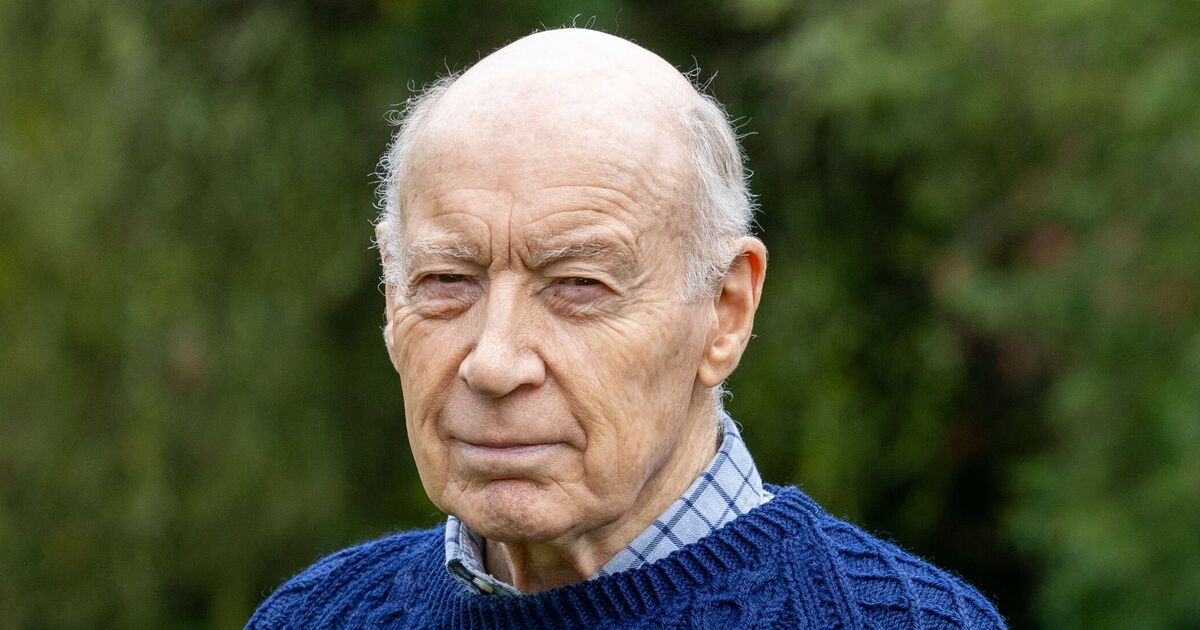
British Army veteran Major General Dair-Farrar-Hockley (Image: Phil Harris)
Labour's controversial Troubles Bill will throw Northern Ireland veterans back in the dock while terrorists keep concessions, a report claims.
Peers are poised to debate legislation which British Army veterans fear could reopen cases closed decades ago and open the floodgates to prosecutions.
New legislation will repeal and replace the Northern Ireland Troubles (Legacy and Reconciliation) Act 2023, after the previous conditional immunity scheme was ruled incompatible with the European Convention on Human Rights, which is incorporated into UK law by the Human Rights Act 1998.
But new analysis by the Policy Exchange think tank suggests human rights law does not force ministers to scrap the Legacy Act and the claim from ministers is "false".
Air Marshal Edward Stringer, former Director General at the Defence Academy of the UK, said: "The UK Government spends a lot to defend the Republic of Ireland with an already stretched defence budget, providing support for the security of territorial waters, undersea infrastructure, airspace, cyber and counter-espionage.
"Meanwhile, it finds itself under constant pressure from the Irish government to put British soldiers in the dock, including a state case against the British government. It is hard to imagine any relationship like this in the world. Meanwhile, the Irish government expects standards of the British government in terms of investigations into the past that they have no interest in fulfilling themselves."
Major General Dair Farrar-Hockley (Image: File)
Major General Dair Farrar-Hockley discuses NI Troubles Bill
Major General Dair Farrar-Hockley discuses NI Troubles Bill
A Policy Exchange paper warns the Troubles Bill, which has its second reading on Wednesday, restores a system of retribution whose burden will fall disproportionately on those who served the state.
It says the Legacy Act applied a “historical model”, aiming to encourage information recovery and reconciliation, but its proposed replacement applies a “retributive model”, which seeks to use the criminal law and adversarial civil litigation to deal with the past. That, experts say, is unlikely to secure peace and reconciliation in Northern Ireland.
Experts say any assertion by the Government that it is bound by European human rights law to repeal the Legacy Act is false, saying “a peaceful resolution and reconciliation in relation to the Northern Ireland conflict is a matter that should be determined by politicians and through political mechanisms, not by lawyers applying a legal analysis.”
There remains concern over the likelihood of finding genuinely "new and compelling evidence" more than 50 years later with veterans’ groups saying efforts should focus on an information and truth-recovery process rather than criminal trials for ageing veterans.
Northern Ireland and Falklands veteran Major General Dair Farrar-Hockley said: “We feel badly let down by the process so far but we are prepared to continue to negotiate.
“The 300,000 British military personnel who served during Operation Banner were prepared to lay down their lives for our country, the United Kingdom: now we find ourselves being used as pawns for political reasons in negotiations with the Republic of Ireland. The law, as currently drafted, is slanted against us.”
George Simm, 72, a Special Forces officer who served in Northern Ireland in the 1970s and 1980s and was involved in hundreds of operations, said: “This independent research exposes how intellectually and technically incoherent the entire Troubles Bill is.
“The current government intends to make the Northern Ireland a legal problem again.
“From my own experience, the government of the Republic of Ireland does not emerge well from the Troubles and the years that have followed, which prompts serious questions about the validity of its involvement in the current process, and also the government’s apparent infatuation with keeping the Republic onside.
“Until such time that the wealth of classified data held by the government relating to the IRA’s direct and indirect involvement in terrorism is revealed, any claim by either government to be acting in good faith and in a fair and balanced manner must be viewed as a deception for purposes that they do not wish to disclose.”
Maj Gen Farrar-Hockley, who will turn 80 on the day of its second reading, was awarded the Military Cross for gallantry in action during the Falklands.
He has led negotiations with the Government on behalf of the Parachute Regimental Association, an apolitical group which recognises that where compelling new evidence exists, certified by a Supreme Court judge, then justice must take its course.
But he and others are convinced the Government is determined to water down protections so repeat investigations can continue to take place, despite soldiers being found not guilty, ensuring the process remains the punishment.
He said: “Those who will appear at inquests will be largely those from the Royal Ulster Constabulary and British Armed Forces. It is very easy for Sinn Fein and others to say ‘look who is in court - we are the victims’. I am sorry but it is grossly untrue.
“We are bemused that a bill that was originally set up to achieve reconciliation is being used to wind back the clock. For the record, only one veteran has been found guilty of a crime associated with The Troubles this century.
“In the Lords there is a great deal of experience and we feel objectivity is much more likely.”
In the Commons, Labour’s bill was backed by 330 MPs with 178 voting against following two days of debate over the details of 156 amendments tabled by Northern Ireland Secretary Sir Chris Bryant.
Sir Chris said: “This bill is about completing the unfinished business of the Good Friday Agreement, getting answers for the many families, including veterans’ families, who lost a loved one. I am confident this legislation will be a significant step towards a more reconciled society.”
Get the day's biggest headlines in UK and World news and more
I would like to receive emails from the Daily Express featuring our latest products, services, offers, and promotions from across the Reach Plc family.
Invalid email
You agree you are 18 or over. We use your sign-up to provide content in ways you've consented to and to improve our understanding of you. This may include adverts from us and third parties based on our knowledge of you. You can unsubscribe at any time. More Info.