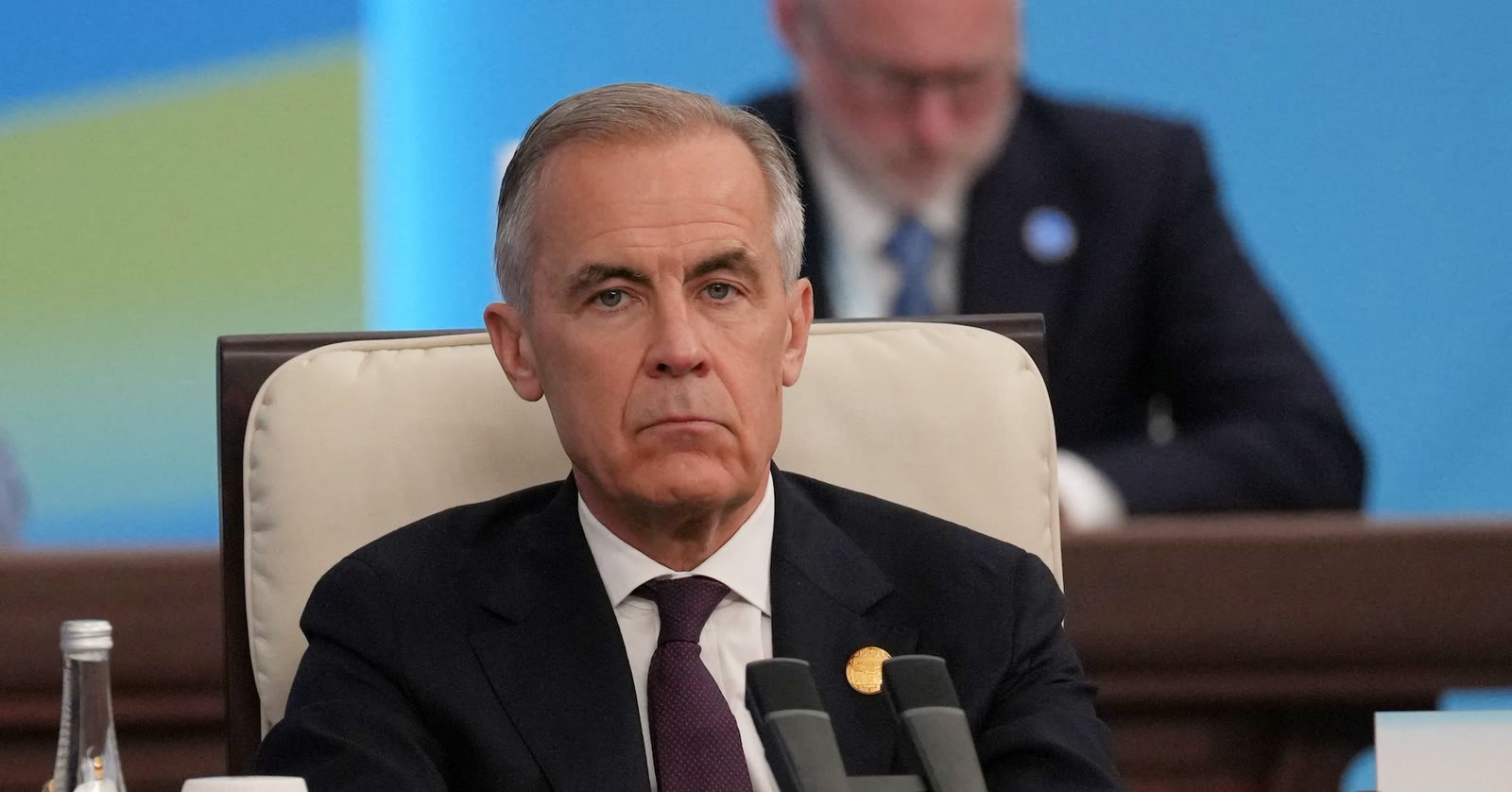
Canada's Prime Minister Mark Carney attends the plenary meeting during the Asia-Pacific Economic Cooperation (APEC) Summit in Shenzhen, Guangdong province, China on Thursday, Nov. 19, 2026. Ng Han Guan/Pool via REUTERS Purchase Licensing Rights, opens new tab
DOHA/OTTAWA, Nov 23 (Reuters) - Canada and Qatar are set to sign a foreign investment promotion and protection deal on Tuesday, a source familiar with the process said, a key step toward unlocking investment which the Gulf Arab state pledged in January but has yet to deliver.
The deal, the finalization of which has not been previously reported, sets legally binding rules to protect Canadian and Qatari investors and make it easier for companies from the two countries to do business in both jurisdictions.
The Reuters Iran Briefing newsletter keeps you informed with the latest developments and analysis of the Iran war. Sign up here.
It is the latest example of Prime Minister Mark Carney's pursuit of new investment and trade opportunities because he says Canada can no longer rely on the United States.
Carney and Qatari Prime Minister Sheikh Mohammed bin Abdulrahman Al Thani are expected to sign the agreement during the countries' first strategic dialogue, a formal channel for regular talks between Ottawa and Doha.
Carney's office and Qatar's Ministry of Foreign Affairs did not immediately respond to requests for comment.
Canadian Finance Minister François-Philippe Champagne, who is in Qatar and the United Arab Emirates this week with investment funds and banks from the North American country, signalled on Sunday that an announcement was coming.
"I think there'll be good news, and I think it's going to be well received on both sides," Champagne said in an interview with Reuters in Doha, adding it would come this year.
Talks began in 2018, according to a post on the Government of Canada's website, but have picked up since Carney visited Qatar in January, when the countries said in a joint statement they would conclude "in a timely fashion" and aimed to sign by summer.
Qatar committed to making "significant strategic investments in Canada's nation-building projects". Qatar has not put a figure on its pledge, and no significant Qatari investments in Canada have been announced since Carney's visit.
Champagne said the agreement would help prepare the ground for investors and lead to investment. "The foreign investment and protection agreement is one additional level of providing stability and predictability in our relationship," he said.
"We need to build the foundational aspects to make sure that those who want to invest would find, for example, the banking facilities, the professional services," he said.
The Qatar deal appears narrower than the Comprehensive Economic Partnership Agreement that Canada signed with the UAE last month. That deal will reduce or eliminate tariffs on over 99% of current Canadian exports to the UAE and is expected to take effect in 2027. The UAE also committed up to $50 billion in investment in Canada last year.
Asked how much Qatar had committed, Champagne said: "We're looking at opportunities. Beyond the figure itself, it's the opportunities we need to create."
Champagne was due to meet the Qatar Investment Authority, the Gulf Arab state's sovereign wealth fund, which has estimated assets under management of $580 billion.
Asked whether any money had arrived, Champagne urged patience. "Obviously, it takes a bit of time," he said. "But this is a region which is looking long-term."
While conflict in the region and disruption in the Strait of Hormuz had strained Gulf economies, investors were now seeking safe places for their money, Champagne said.
Reporting by Andrew Mills; Editing by Alexander Smith
Our Standards: The Thomson Reuters Trust Principles., opens new tab
Andrew Mills is Deputy Bureau Chief for the Gulf at Reuters, based in Doha. He leads coverage of Gulf diplomacy, geopolitics and regional conflicts, and helps steer coverage of a region that is a major economic power in which energy, business and finance intersect with government and geopolitics in nearly every story. He writes the Reuters Gulf Currents newsletter, which he launched. Previously, he spent nearly a decade as a journalism professor at Northwestern University and began his career at the Toronto Star, covering Canadian politics and the Middle East.
Link to newsletter: