By
,
Anne Bryson
November 23, 2026 / 12:07 PM EST
/ CBS News
Add CBS News on Google
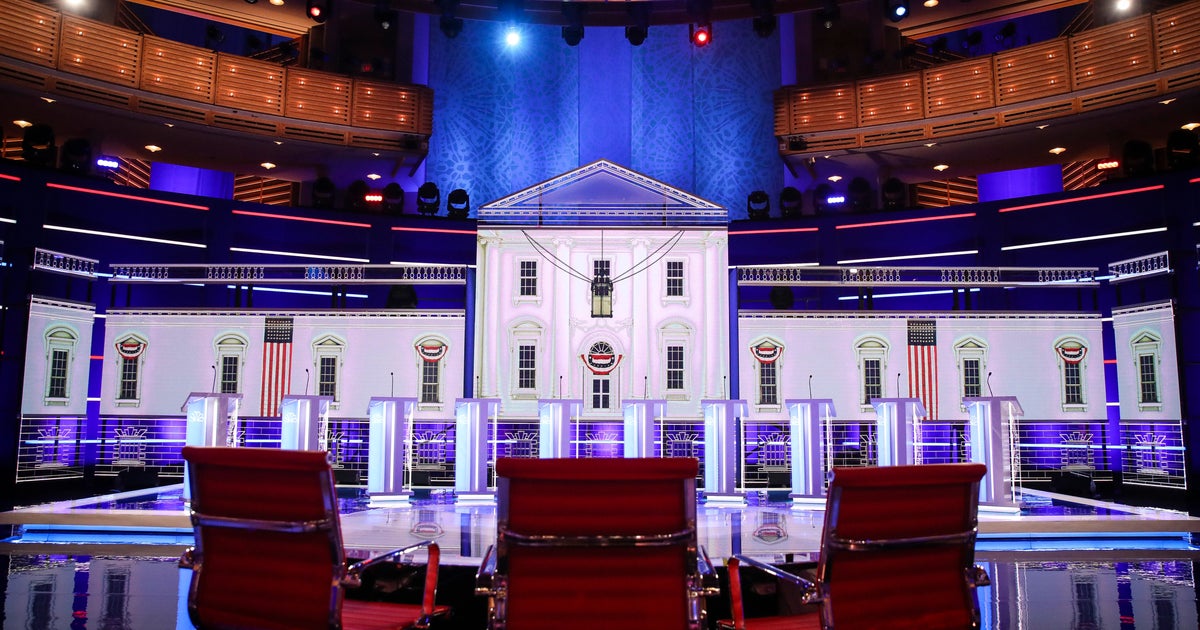
The Democratic National Committee on Monday unveiled a debate plan that includes 12 debates starting in June 2027 and running through early 2028 as the field will narrow from what is now a wide-open race.
There are still no declared Democratic candidates, although several prominent Democrats have declared interest as the behind-the-scenes primary season has been heating up. DNC chair Ken Martin said the number of participants in the debates will be capped at 20, and the party said if a large number of candidates qualify for a debate, it will be split up over two nights with candidates chosen for each night at random.
Martin said the exact dates, media partners and polling and fundraising thresholds would be announced later. Monday's announcement said there will be five debates in 2027 and seven in 2028.
In announcing the debate framework, Martin leaned heavily into one of his signature causes, ending dark money in politics. Candidates are required to sign a pledge to publicly denounce super PAC and dark money flowing into their campaigns, although given federal rules around fundraising, it's unclear how the DNC could enforce this rule.
The debate schedule comes as Democrats are emboldened by big wins in the midterm elections this month. On Sunday, Democrats secured their 258th seat in the House, giving the party its largest majority since 1992. Democrats won 56 seats in the Senate, including wins in red states like Mississippi, Iowa and South Carolina, which is set to hold the first Democratic primary in 2028.
The DNC also held 12 debates starting in June in 2020, the last time the party had a competitive primary. The new plan follows the DNC's decision to change the primary calendar, putting South Carolina first and pushing Iowa's decisive caucuses out of the early window.
The DNC says candidates who benefit from certain advertising expenditures by super PACs and "dark money" nonprofits would be required to publicly denounce that support, though the party acknowledges it cannot prohibit such outside spending. The framework also establishes a complaint and review process through which campaigns can raise alleged violations ahead of debate qualification periods.
While the pledge requires candidates to publicly denounce super PAC and dark money spending in support of their campaigns, the potentially more consequential change is new restrictions on coordination between campaigns and Democratic Party organizations.
The neutrality provisions highlight the party's desire to avoid accusations of favoritism that have dogged Democratic primaries since the 2016 cycle, when critics argued party officials tilted the playing field toward former Secretary of State Hillary Clinton over Sen. Bernie Sanders. And in 2024, former President Joe Biden faced no serious primary challengers and easily clinched the nomination, only to drop out in July after a disastrous debate performance. The party then coalesced behind former Vice President Kamala Harris, despite the concerns of some influential Democrats, who believed an open, albeit truncated, nominating process would be better.
The neutrality provisions also build on a longer-running debate among Democrats over the role of outside money in presidential campaigns. During the 2020 primary, Sanders and Sen. Elizabeth Warren made opposition to super PAC and dark-money spending major themes of their campaigns, helping turn outside spending into a litmus test for candidates.
Under the 2028 framework, presidential campaigns would be barred from entering into joint fundraising agreements with Democratic Party committees during the primary and could not authorize coordinated spending by state or local Democratic parties on their behalf. Candidates would also be required to sign the pledge and comply with DNC rules governing debate participation.
DNC officials say the changes are intended to limit the influence of dark money and maintain party neutrality during a competitive primary. But because the rules do not prevent outside groups from spending on behalf of candidates, the realistic effect is likely to be greater scrutiny of those expenditures rather than a reduction of the amount of outside money flowing into the race. The DNC said that its effort to limit the role of dark money in the primary has received support from progressives including Reps. Greg Casar and Jason Crow, Sens. Andy Kim, Sanders and Warren and former DNC Chair Jaime Harrison.
Still, the new rules stop well short of preventing outside groups from participating in the primary. Candidates are only required to disavow a super PAC or nonprofit once, even if that group's spending continues. And because campaigns can file complaints against rivals ahead of debate qualification periods, disputes over compliance could become a recurring feature of the debate process.
In:
Democrats
DNC Chair Ken Martin on the midterms, uncalled races
06:22
DNC Chair Ken Martin on the midterms, uncalled races
(06:22)