Have you spent years fruitlessly looking for love?
If so, a new study suggests your fundamental personality could be to blame.
Scientists have uncovered the key personality traits that make it harder to find love.
According to the researchers, people who are more curious, creative, and have a desire for new experiences are more likely to be single.
What's more, higher levels of psychopathy and certain forms of narcissism are associated with a greater likelihood of being single.
'The impulsivity, low empathy, and lack of remorse that define psychopathy are precisely the qualities most damaging to long-term partnership formation and maintenance,' the researchers explained in their study, published in the Journal of Personality.
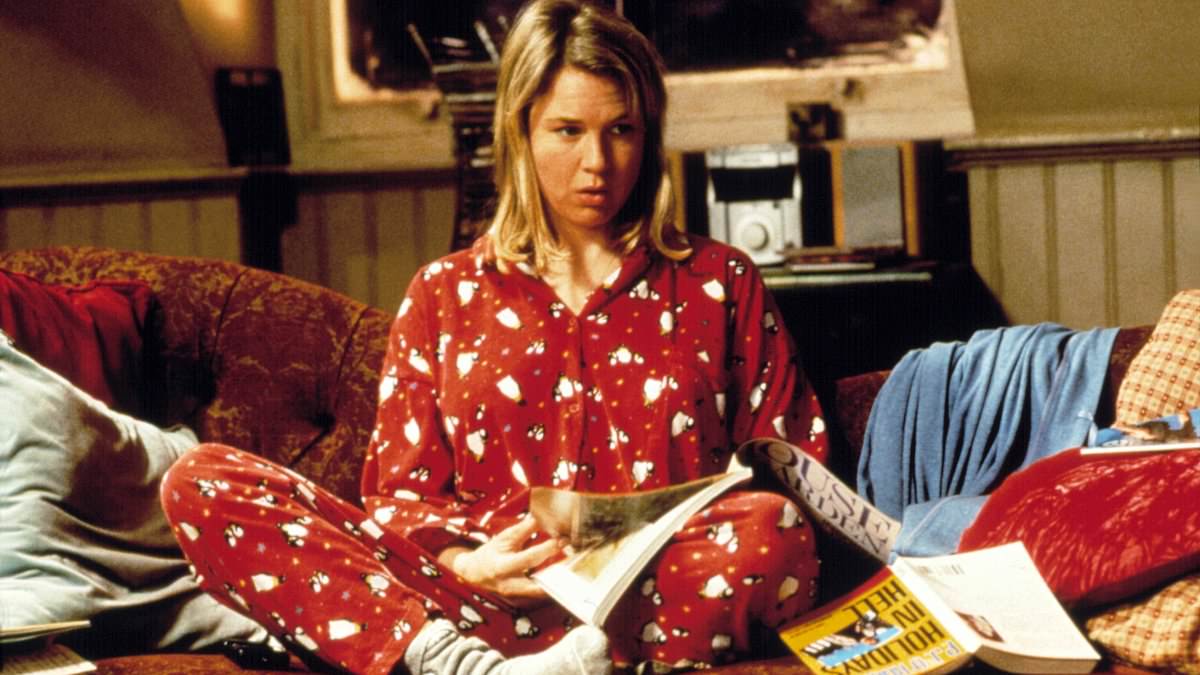
Have you spent years fruitlessly looking for love? If so, a new study suggests your fundamental personality could be to blame. Pictured: Bridget Jones's Diary
The key personality traits of singletonsMore open to experienceMore introvertedLess conscientiousLess agreeableHigher levels of psychopathyHigher levels of narcissismLower levels of Machiavellianism
According to recent figures released by the Office for National Statistics, more and more Brits are remaining single.
The data reveals that the majority of adults aged 30-34 are now unmarried, rising from 49.2 per cent in 2011 to 58.9 per cent in 2021.
Despite these growing figures, there has been little research into the personality traits that potentially increase your risk of remaining single.
'Personality traits are particularly plausible predictors because they influence behavior across the three critical phases of partnership: attraction, formation, and maintenance,' the researchers from the University of Nicosia explained.
In their study, the team analysed data from 14 waves of a large-scale longitudinal study in Germany.
The participants completed surveys to assess their levels of the 'Big Five' traits (Openness, Extraversion, Neuroticism, Conscientiousness, and Agreeableness), as well as the 'Dark Triad' traits (Narcissism, Machiavellianism, and Psychopathy).
In addition, the respondents were asked about their relationship status.
The results revealed a clear link between personality and romantic relationship status over time.
People who scored highly in openness to experience – a trait associated with curiosity, creativity and a desire for new experiences – were more likely to be single.
This association was particularly strong among women.
According to recent figures released by the Office for National Statistics, more and more Brits are remaining single. The data reveals that the majority of adults aged 30–34 are now unmarried, rising from 49.2 per cent in 2011 to 58.9 per cent in 2021
In contrast, people who scored highly in extraversion, conscientiousness and agreeableness were less likely to be single.
Extraversion – a trait associated with sociability and outgoing behaviour – showed a particularly strong association among men.
In terms of the Dark Triad traits, higher levels of psychopathy and certain forms of narcissism were associated with being single.
Meanwhile, people who scored higher for Machiavellianism were less likely to be single.
As for why this is the case, the researchers suggest that different traits operate through different pathways.
'Openness may reduce motivation to commit, Conscientiousness may enhance maintenance-relevant skills, and the Dark Triad traits may support short-term attraction skills while undermining long-term motivation or skills,' they explained.
However, the experts admit that singlehood is not a one-size-fits-all experience.
'We often assume that single people are all in the same situation, but the reality is much more complex,' said lead author, Professor Elyakim Kislev.
'Personality may help explain why some people are more likely to be single, but it does not tell us whether they are happy.
'To understand that, we also need to consider how people experience singlehood and the expectations society places on them.'