10 mins ago
The incoming Democratic chairs of crucial House and Senate committees are demanding Donald Trump provide answers about the national security implications of Jensen Huang’s sudden reinstatement at Nvidia.
Reps. Frank Pallone of Energy and Commerce, Jamie Raskin of Judiciary, Gregory Meeks of Foreign Affairs and Robert Garcia of Oversight said in a new letter Tuesday that the president’s personal involvement in putting Huang back at the helm of the global chipmaking company — just 12 days after he resigned amid accusations he was having an affair with an alleged Chinese spy — “gravely threaten[s] the national and economic security of the United States.”
The lawmakers also accused Trump of a “reckless hands-off approach towards artificial intelligence” and “encouragement of the unchecked concentration of power and wealth into the hands of a few AI CEOs with privileged access to the White House and yourself.”
Pallone, Raskin, Meeks and Garcia want to know when Trump was made aware of Huang’s relationship with an alleged Chinese spy; any actions he took to limit economic and security risks; whether Huang remains a member of the President’s Council of Advisors on Science and Technology; are the administration’s investigations into the matter ongoing; and any correspondence he had with other top government officials and the Nvidia board in recent weeks.
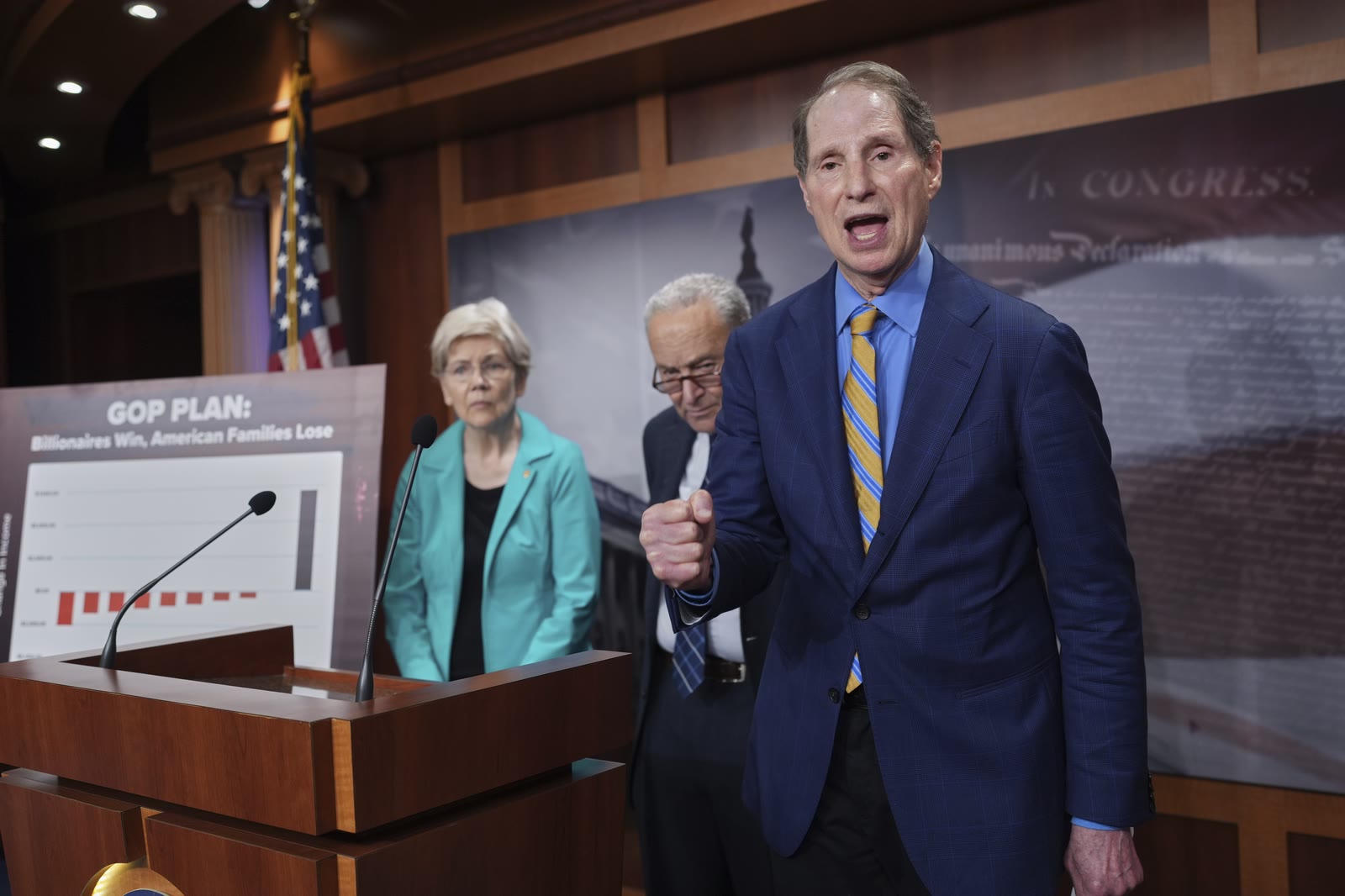
Separately, Democratic Sens. Ron Wyden, Elizabeth Warren, Maria Cantwell, Chris Coons and Jack Reed — incoming chairs of Finance, Banking, Commerce, Foreign Affairs and Armed Services, respectively — said in a statement that “the American people deserve to know why the president intervened in this extraordinary manner, whether serious counterintelligence or national security concerns were disregarded, and whose interests this intervention was intended to serve.”
“This administration must immediately provide Congress with a full accounting of its role in Huang’s return,” the senators added. That includes “what intelligence assessments informed” Trump’s advocacy surrounding the Nvidia CEO”s reinstatement,” as well as “which national security agencies were consulted, and on what basis was Huang’s return judged to pose no national security risk?”
While they don’t have the power to compel this information now, they will early next year have subpoena power to force the White House to turn over documents and allow officials to testify — though the White House is making clear it doesn’t plan to comply fully with Democrats’ aggressive oversight plans.
“We expect the administration to respond fully and promptly to our Republican colleagues’ requests for classified briefings and information on this matter,” said the senators in their statement. “Congress and the American people are owed answers, and we intend to get them, in January, if not before.”
The White House did not immediately say whether the president would comply with the Democrats’ information requests but an administration official said in a statement that the president was “committed to maintaining American leadership in SI, which will continue to fuel revenue growth, innovation, and productivity across our economy.”
“Yesterday’s decision by Nvidia will preserve America’s technological edge over China, strengthen our national security, and ensure the future of SI continues to be built in America,” the statement said.
The president has downplayed any risk the executive’s actions may have presented for the U.S as the company gears up for multiple oversight hearings next week on Capitol Hill.
Continue on to view the day's latest updates
1 hour ago
House Republican leaders plan to hold a vote on a Senate-passed permitting reform bill next week under a simple-majority threshold, according to four people familiar with the matter.
A group of Democrats are pushing for amendments to the legislation.
Rep. Sean Casten (D-Ill.), who on Monday announced his opposition to the Bipartisan American Affordability and Jobs Act, S. 5653 (119), is leading a push to get Speaker Mike Johnson (R-La.) to allow an open amendment process on the bill.
Casten told POLITICO on Tuesday that he is circulating a letter among his colleagues that would ask Johnson to allow members to propose changes to the bill, which would open up the negotiated compromise package and potentially require it to go back for another vote in the Senate.
“We’ll see what he does, but if we can’t get it done, then I don’t think the need for permitting reform is going away,” Casten said in an interview. “We’ll just take it up in the 120th [Congress].
“If you bring this in and we can get an open rule and have amendments, we can have a whole conversation,” he said.
The House will vote on the permitting bill under a rule, which means Republicans united can use their thin majority to send it to President Donald Trump’s desk. Punchbowl News first reported the nature and timing of the vote.
GOP leaders will need to be able to adopt the rule on the floor before putting the bill up for a vote, but it’s unclear they will have the votes given the recent attendance issues. Some Republicans have been skeptical they will have enough to adopt a rule.
Johnson and House Majority Leader Steve Scalise (R-La.) have had to urge members, specifically those who are not returning next year, to show up for votes amid the razor-thin GOP majority in the lame duck.
An open amendment process, which has become something of a rarity in the current Congress, could help get more Democrats on board. The House and Senate Democratic caucuses are both split on the bill due to concerns about potential environmental and tribal impacts, and lawmakers in both chambers have outlined proposed changes.
Some of the bill’s negotiators — Senate Energy and Natural Resources Chair Mike Lee (R-Utah), ENR ranking member Martin Heinrich (D-N.M.), Environment and Public Works Chair Shelley Moore Capito (R-W.Va.), and EPW ranking member Sheldon Whitehouse (D-R.I.) — have warned that changes to the text in the House could complicate the bill’s prospects.
After Senate passage, Capito said she “wouldn’t shut the door on any scenario” for the bill potentially undergoing changes, but she said she thinks that’s “not the preferable route.”
2 hours ago
Senate Democrats are poised to add a freshman representative to their leadership team amid a campaign from the caucus’ outgoing crop of newcomers.
The six Senate Democrats elected in 2024 are sending a letter to colleagues Tuesday — an advance copy of which was obtained by POLITICO — outlining their proposal to change caucus rules to create the new position. Twelve Democrats are set to join the Senate for the first time in early January, plus returning Sen.-elect Sherrod Brown of Ohio, who will be sworn in next month.
“These freshmen have their fingers on the pulse of long-time Democratic voters, those who voted for Democrats for the first time this past Election Day, and everyone in-between,” the six soon-to-be sophomore senators write in the letter. “They deserve a seat at the table.”
Democratic Sens. Adam Schiff of California, Andy Kim of New Jersey, Elissa Slotkin of Michigan, Lisa Blunt Rochester of Delaware, Ruben Gallego of Arizona and Angela Alsobrooks of Maryland signed onto the letter.
Both senators vying to lead Democrats next year are endorsing the idea, making it highly likely the proposal is adopted when rules changes are debated sometime next month.
Minority Leader Chuck Schumer “was already planning to do this and is incredibly supportive of the idea,” said spokesperson Allison Biasotti.
Sen. Chris Van Hollen of Maryland, which is challenging Schumer, has also publicly backed the idea, including in a social media post Tuesday where he wrote: “There should be a freshman senator on the Senate leadership team.”
The new members joining the Democratic ranks run the geographical and ideological gamut from previously obscure red-state winners such as Mississippi’s Scott Colom and Kansas’ Adam Hamilton to comparatively well-known former officeholders like North Carolina’s Roy Cooper and Alaska’s Mary Peltola.
Under the rules change proposal, members of the freshman class would choose their own representative, which would be subject to a confirmation vote by the full caucus. If there is no freshman Democratic senator or no one wants the job, the post would remain vacant.
7 hours ago
Transportation Department leaders will likely get a grilling next week on Capitol Hill as lawmakers look for answers to the nationwide grounding of flights earlier this month.
DOT leaders said last week that investigators were “very close” in determining the cause of the stop, which was initially blamed on routine maintenance. In the aftermath of the grounding, which led to widespread cancellations and delays, DOT Secretary Sean Duffy implored Congress to provide $50 billion to upgrade the nation’s aging air traffic system, a request that has been met with skepticism from both parties.
Duffy is scheduled to testify Dec. 2 before the Senate Commerce aviation subcommittee about the Nov. 13 nationwide ground stop. The committee on Tuesday announced that members from the panel plan to question Duffy about what caused the outage, how the agency responded and what steps are being taken to prevent another disruption.
Separately, the House Transportation and Infrastructure Committee will host FAA Administrator Bryan Bedford about the $12.5 billion provided in last year’s GOP-led megalaw, which was pegged to spark an overhaul of the nation’s air traffic control equipment, though he is sure to get questions on the ground stop. The hearing is scheduled for Dec. 1, according to a committee announcement.
Both hearings will be opportunities for the leaders to pitch their $50 billion plan to continue overhauling the system, despite the lukewarm response from both Republicans and Democrats alike. Lawmakers from both parties have said they need more answers before any supplemental funding is approved.
Both Bedford and Duffy are also likely to face questions about the FAA’s “SMART” program, the Strategic Management of Airspace, Routes and Trajectories. The FAA earlier this fall began testing the artificial-intelligence-driven air traffic management initiative in the Washington region and expanded the program nationwide this month.
Democrats on T&I sent a letter to Bedford on Tuesday seeking answers about the SMART program, arguing it was deployed “without any advance public disclosure or Congressional notification.” The letter, led by ranking member Rick Larsen (D-Wash.), asserts that the deployment contradicts what Bedford had previously told Congress — that the rollout would be a “gradual, methodical 90-day validation period.”
The letter also raises concerns about whether the FAA was “engaging in retaliatory behavior against employees who raised safety concerns about SMART’s rapid deployment.” The New York Times reported earlier this month that two officials at the agency had been removed from their positions after questioning the program.
An FAA spokesperson said Tuesday: “The FAA has not fired or retaliated against any employees because of SMART.”
7 hours ago | EXCLUSIVE
A bipartisan House duo wants greater clarity on how frontier artificial intelligence companies are using automation to develop advanced AI models so the government can identify any critical risks.
Reps. Josh Gottheimer (D-N.J.) and Nathaniel Moran (R-Texas) are proposing new legislation, shared first with POLITICO, that would give the federal government greater oversight of AI-driven research and development while allowing the major labs to build cutting-edge tech. It would also serve as a roadmap for Congress on whether limits on these training methods are needed.
The RSI Safety Act refers to recursive self-improvement, a process by which AI models train successor models. It would require the largest AI developers to give a new Commerce Department office quarterly reports on how much of their research is being conducted by AI, and how much of that work is reviewed by humans.
The legislation would apply to developers training models that hit a certain advanced level of computing power and who spent at least $100 million in total on training in the past year.
The new office within Commerce would be called the Office of Frontier Artificial Intelligence Research and would be overseen by a director appointed by the Commerce secretary. It would also be tasked with publishing aggregate reports and submitting them to relevant congressional committees and giving developers guidance on what form public summaries of their safety, evaluation and oversight operations should take.
The Center for AI Standards and Innovation, renamed by the Trump administration as the Center for Advancing Innovation and Standards for Super Intelligence, would be tapped to assist on measurement rules and the design of auditable metrics. The proposal also includes whistleblower protections and would open developers up to as much as $10 million in civil liability for false or missing reports.
The desire to regulate RSI is broadly gaining momentum among Democratic lawmakers.
A revamped version of the FRONTIER Act from Rep. Lori Trahan (D-Mass.) includes new transparency and auditing requirements for RSI. Democratic California Gov. Gavin Newsom released a sweeping AI framework last week that included a proposal to restrict the ability of private AI companies to use automation in developing advanced AI. And progressives Sen. Bernie Sanders (I-Vt.) and Rep. Greg Casar (D-Texas) want to ban the training method altogether, which Sen.-elect Abdul El-Sayed (D-Mich.) has backed.
11 hours ago
Jensen Huang took back his CEO role at Nvidia with a hero’s welcome Monday. Lawmakers are warning of a much uglier reception on Capitol Hill next week.
Three House GOP committee chairs said in a joint statement Monday evening that Huang will honor his commitments — made before being reinstated to the company — to sit for interviews next Tuesday regarding his alleged affair with a Chinese spy.
Senate Banking also said Monday it had scheduled a public hearing with Huang on Dec. 3, which he had previously agreed to. Chair Tim Scott made clear he expected Huang to show up.
Members in both parties spent Monday vowing to grill Huang on claims the alleged spy helped smuggle Nvidia AI chips to China in violation of U.S. laws. Many lawmakers are also doubling down on efforts to enact even stricter chip export controls — a direct legislative threat to the company’s business model.
“The controversy with Nvidia … is just the tip of the iceberg, and it’s not resolved because Jensen Huang has his job back,” Senate Intelligence Chair Tom Cotton posted Monday.
“Congress has much to investigate,” he said, “and we will pass overwhelmingly bipartisan chip export-control bills, including my Chip Security Act, one way or the other.”
Nvidia General Counsel Tim Teter is also expected to testify Dec. 2, and one House Democratic aide said lawmakers are already “considering” asking other Nvidia board members to provide information.
Democrats — and some Republicans — are also interested in President Donald Trump’s role in convincing the Nvidia board to reinstall Huang.
“I think there’s a lot of bad here,” Sen. John Curtis said in an interview Monday. “It’s bad, I think, for the administration in a lot of ways — they pick up liability for this decision.”
Sen. Kevin Cramer, a member of Senate Banking, predicted that between Democrats outraged by Trump’s backing of Huang and GOP wariness toward China, an export control measure would pass by a margin large enough “to overcome a veto.”
Even if Huang ends up not participating in the hearings, or if Republicans back away under pressure from Trump, Democrats like incoming Banking Chair Elizabeth Warren could turbocharge their investigation plans using their new subpoena powers next year.
“Chairman Elizabeth Warren and a number of Banking Committee Republicans … are going to put the screws to these people like they’ve never had the screws put to them before,” Cramer said in an interview.
Read also: White House allies credit Vance, not just Trump, for Jensen Huang’s return
What else we’re watching:
— DEMS DEBATE PATH FOR INSIDER TRADING CRACKDOWN: Democrats are vowing to put prediction market and stock trading restrictions in place for the next Congress. But they’re still figuring out how to do it. Members are debating whether to put legislation that would restrict the trade of individual stocks and prediction market betting by House lawmakers into the House rules. They are also considering floor votes on the legislation as individual bills or in a broader package. That broader ethics legislation would also restrict trades by judicial and executive branch members — like the president. Including bans in a rules package tailored just at members’ behavior could stall momentum for that larger push, some fear.
— TRUMP SENDS CONGRESS ANOMALIES: Top lawmakers negotiating the specifics of a December funding bill are now combing through the list of special exceptions the White House is seeking in any stopgap that otherwise retains status-quo spending levels. The so-called “anomalies” request the Trump administration sent Monday night includes myriad funding exemptions for specific programs. Cotton immediately pushed back on one provision sought by the administration to again delay Congress’ intoxicating hemp ban, saying the White House’s effort would derail the entire spending legislation.
Kelsey Brugger, Ari Hawkins, Owen Dahlkamp, Riley Rogerson, Mia McCarthy, Connor O’Brien and Jennifer Scholtes contributed to this report.