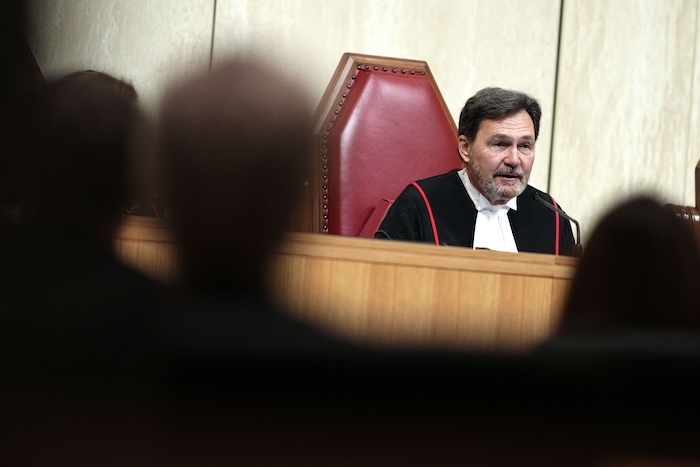
OTTAWA — The Supreme Court of Canada upheld most of the province of Quebec’s controversial law banning public servants from wearing religious symbols at work.
In a decision that will shape future court battles across the country, Canada’s top court on Friday upheld Quebec’s use of the so-called notwithstanding clause which allows federal or provincial governments to shield laws from challenges involving rights protected by the Canadian Charter of Rights and Freedoms.
The ruling did not extend beyond the Quebec case to address the trend of provinces using the so-called notwithstanding clause to pass laws that otherwise violate Charter rights. That means the recent use of the clause by Alberta, Ontario and Saskatchewan will be a matter for future court battles.
The landmark ruling from Canada’s highest court centers on a controversial Quebec law that bars public servants, including teachers, police and lawmakers, from wearing religious symbols — such as a hijab or a cross — while on the job. The case is a reminder that the culture wars bedeviling western democracies are playing out in Canada, too.