A HARROWING case of dozens of foetal remains being found buried in an alleged “Body Snatcher” doctor’s garden has plunged a sleepy village into the midst of a macabre investigation.
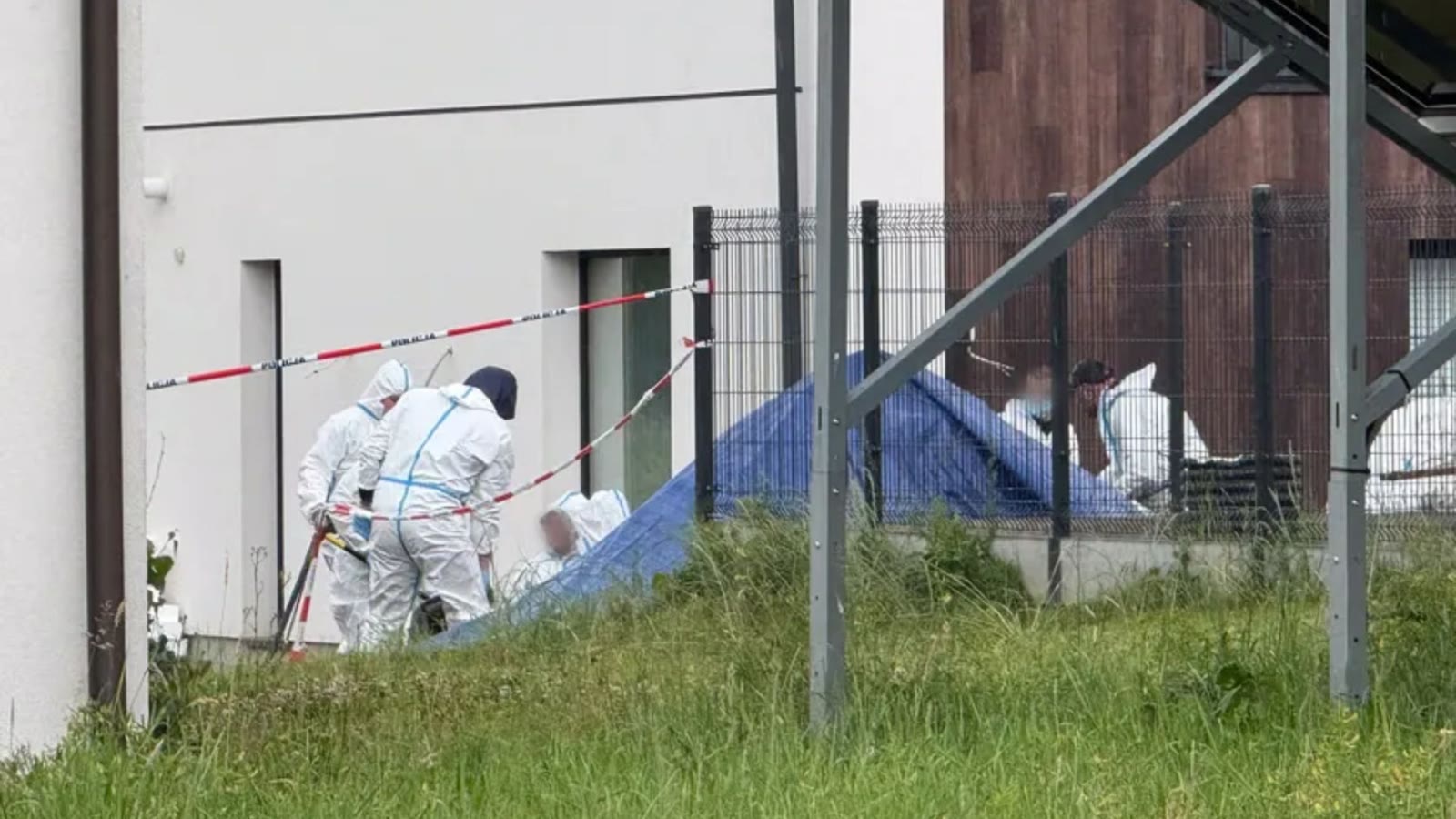
Forensic experts have completed their examinations of the gruesome scene in south-eastern Poland, where in June police unearthed 34 discarded foetuses among a mountain of medical waste including human tissue.
Forensic teams trawl through the grounds of the pathologist’s former property Source: Laskar Media
Pathologist Magdanela H., 57, was arrested at a hotel in Zamość in the early hours of Friday Source: X
Now investigators are scrutinising hospital records and questioning former colleagues of Magdalena H., the 57-year-old pathologist at the centre of the investigation.
They aim to establish just how human remains and thousands of medical specimens ended up buried beneath an ordinary home, amid suggestions she may have been carrying out unknown experiments.
And five months after the shocking find, specialists are investigating whether the buried medical waste contaminated the surrounding land, while prosecutors question former colleagues of the doctor accused of disposing of it.
Prosecutor Krzysztof Ciechanowski declared: “At this stage of the investigation, we have ruled out the possibility that the biological material and human foetuses recovered could have come from illegal abortions.”
The nightmare unfolded in Lutoryż, a quiet village near Rzeszów, in Poland’s picturesque south-eastern region of Subcarpathia.
As one of Poland’s most unspoilt regions, it is known for its quiet beauty, and is loved for everything from its rolling green hills to its lush farmland. It is also rich with wooded valleys and the stunning Carpathian Mountains to the south.
And yet it was beneath these idyllic surroundings amongst these quaint traditional villages that on June 10th, builders excavating at the doctor’s former property in Lutoryż, stumbled upon buried human remains.
When the police were called, it soon became clear that it was not just a few remains, rather around 34 foetuses or foetal fragments.
And this was amongst thousands of other grisly medical specimens, microscope slides and wax blocks containing preserved human tissue.
Dozens of unborn babies have been discovered at the family home Source: Polsat News
Magdalena H., a specialist in examining tissue for signs of disease, was arrested just two days later.
The case is reminiscent of the horror tale of The Body Snatcher, a Victorian Gothic short story by Robert Louis Stevenson that follows two medical students who receive bodies for dissection from grave robbers.
The dark discovery horrified the local community, and the entire south-eastern region of Subcarpathia.
Yet its impact has been felt at the opposite end of Poland, more than 500 miles away, in the north-western city of Szczecin, near the German border.
There, medical student Emilia Jodko, 21, has been left deeply disturbed by allegations involving a member of the profession she hopes to join.
Both Emilia’s parents are practising hospital doctors in Poland, and she has decided to follow in their footsteps.
She is studying medicine in English at an international medical school in Rome, maintaining close connections with Poland’s healthcare system through her family.
Speaking to The Sun, Emilia, said the sheer scale of the disturbing discovery made it extremely difficult to process.
“I was just generally shocked by what I read.
“It is a national scandal. I found it deeply disturbing. It was really disgusting and difficult for me to believe that something like this could have happened.
The quiet Polish neighbourhood is now crawling with police and investigators Source: Laskar Media
Unofficial reports claim at least 50 foetuses may be hidden on the land Source: Laskar Media
“I believe the most important question is why the doctor allegedly took and kept these human remains in the first place.
“If they were intended for scientific research, investigators should establish exactly what kind of research was being conducted and whether there was any legitimate medical or scientific justification for it.”
But there are many other key questions she says the medical community across the country are desperate to have answered.
And this includes establishing whether the pathologist acted alone or whether other medical staff knew what was happening.
Despite her horror, which Emilia said is still felt deeply within Poland’s medical community, she says all this must not be allowed to destroy public confidence in Poland’s medical profession.
“We should not judge an entire profession based on the actions of one individual, no matter how shocking or disturbing those actions may be,” she said.
Polish newspaper Gazeta Wyborcza reported on November 6 that prosecutors now knew where the remains originated, although the details have not been publicly disclosed.
Prosecutors said Magdanela H. acknowledged transporting and burying the material herself.
But she stopped at formally admitting guilt when the charges were presented.
Her lawyer, Patrycja Chobel, subsequently insisted that the suspect had contracts with hospitals, which allowed her to receive medical specimens for examination at her private surgery.
And the defence fiercely challenged suggestions that she had simply removed the material without authorisation.
Meanwhile, there is no established evidence that any hospital or its employees committed an offence.
Shockingly, Chobel also tried to present her client as a form of victim, stressed how she had supposedly suffered illness during the Covid pandemic, leaving her unable to work and facing mounting financial difficulties.
Having secured records from medical institutions where the doctor worked, investigators are now continuing to question witnesses who knew her personally or professionally.
Prosecutor Krzysztof Ciechanowski said: “The post-mortem examinations have been completed and a written opinion has been obtained. We are currently analysing that opinion.”
Meanwhile, specialists are also examining samples of soil and buried medical waste to determine whether the burial caused environmental contamination.
Magdalena H., who has not been convicted, remains in pre-trial detention, with her current detention order running until December 9.
She faces up to 12 years in prison if convicted.