IntelliNews summary:
The government must report on the programme by January 15, 2027, and once a year after that.
Kuzbass wants to sink data centres into worked-out open-pit coal mines 300 metres deep and cool them with groundwater.
Yakutia's first AI data centre is planned at 1.4MW, rising to 4.2MW; Novatek is looking at a 200MW project there.
About 55% of Russia's commercial data-centre capacity sits in and around Moscow, where grid connections are scarce and drones have hit sites.
____________________
President Vladimir Putin has told the government to approve a programme by the end of 2026 to build data centres in Russia's coal-mining regions, starting with Kuzbass and Yakutia.
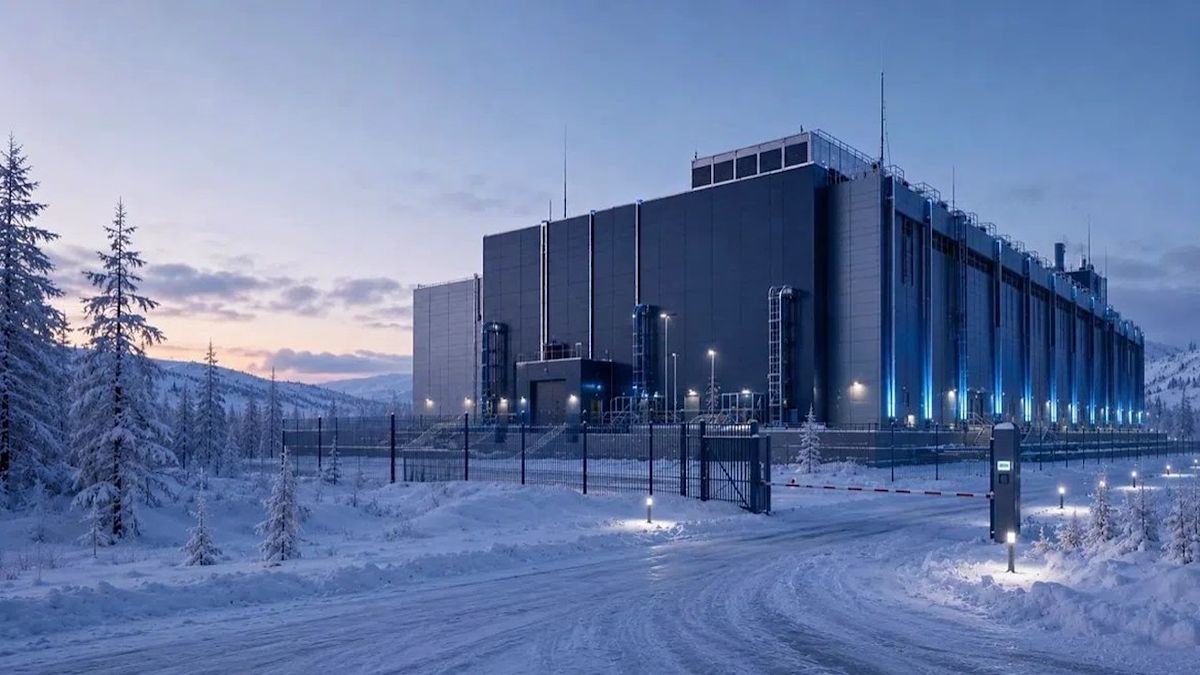
Siberia's frost does much of the cooling work that data centres elsewhere pay for. Illustrative image.
The order is item 1(z) of a list of 47 instructions the Kremlin published on November 24 after Putin's trip to Vladivostok for the Eastern Economic Forum in September. It tells the government to 'approve by the end of 2026 a programme for building data processing centres in the regions of the Russian Federation where coal mining is developed, first of all the Kemerovo Region-Kuzbass and the Republic of Sakha (Yakutia), and to ensure the programme is carried out'. Prime Minister Mikhail Mishustin is responsible and must report by January 15, 2027, and once a year after that.
Kuzbass Governor Ilya Seredyuk welcomed the order on his Telegram channel, saying the region had 'concrete proposals' that he presented at Russian Energy Week in October and had already held talks with leading IT companies, including Sber and Yandex. At that forum on October 15 he suggested sinking data centres into worked-out open-pit coal mines, which reach 300 metres deep, and cooling them with groundwater, the trade journal SOK reported. A State Duma deputy had floated the same 'doomsday data centre' idea the same week as a way to put servers out of reach of drones. On November 19 Seredyuk said the region had picked sites and tied them to plans for new high-efficiency coal-fired combined heat and power plants, as 'data centres need a lot of energy, which new CHPs can provide'. Telecoms operator TTK has also been in the talks, he said.
Yakutia is further along. Its first site, an artificial-intelligence data centre for the Far East, is planned at 1.4MW, with the option to grow to 4.2MW, serving large companies, universities, technology parks and regional governments, CNews reported on November 5, citing the republic's government. Regional digital minister Pyotr Nikolaev said Putin was interested in the project. Yakutia's pitch is cold air, which allows free cooling without compressors, and stranded gas fields too far from pipelines to sell their output. Governor Aisen Nikolaev told TASS in May that Novatek was working on a much bigger Yakut data centre, starting at 200MW of power capacity with scope to reach 2GW.
Servers turn almost all the power they draw into heat, and cooling is one of a data centre's biggest running costs. Yakutia's cold climate can let outside air do much of that work. Power is the other half of the case. Siberia's grid leans on the giant hydropower dams on the Angara and Yenisei rivers, and hydro helped make Irkutsk Russia's main crypto-mining hub until the region banned mining. Kuzbass sits in the same Siberian grid but generates mostly from coal, which it has in surplus while export markets shrink.
Russia's data-centre industry is short of exactly what the coal regions can offer. About 55% of commercial capacity is concentrated in Moscow and the surrounding region, according to MegaResearch, where new sites have struggled to get grid connections, and the government has even looked at building AI data centres in Kazakhstan and Belarus for want of power at home. Data centres' share of national power consumption rose from 1.4% in 2022 to 2.2% in 2025, according to the System Operator, which runs the grid.
Concentration has also become a security risk. Ukrainian drones knocked out three Yandex data centres in October and hit a Sberbank site in Balakovo, part of a wider campaign in which each side is now targeting the other's civilian economy. Insurance against sabotage and drone attack for data centres has since risen more than 100-fold.
New sites will pay for grid capacity, however. The same Kremlin list tells the government to apply a 'take or pay' principle to grid charges from January 1, 2027, starting with newly connected consumers, who will pay for the capacity they reserve rather than the power they use. The Energy Ministry has said data centres and crypto miners are among the targets.