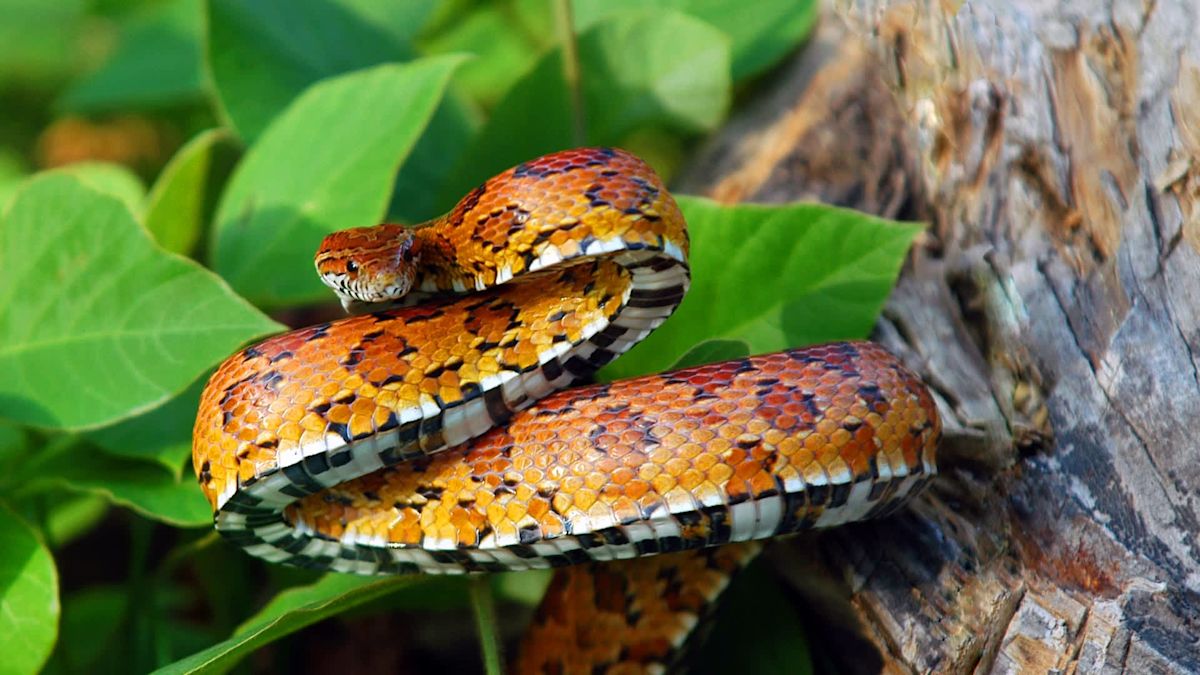
An American corn snake measuring 4.6 feet (1.4 meters) long was found on a street in Brittany, raising concerns about how escaped or abandoned pets could affect France's native wildlife.
Here's what to know
The corn snake, Pantherophis guttatus, is native to the United States but has become widely kept by exotic pet owners in Europe. Sightings in France have prompted concern about possible harm to local ecosystems, The Connexion reported.
Although a corn snake's bite can break skin, the species is nonvenomous and rarely bites. Adults grow to roughly two to 5.9 feet (61 centimeters to 1.8 meters). Reptile lovers value the snakes for their size and colorful patterns.
Escaped corn snakes could put further pressure on France's native wildlife by eating bird eggs, leaving fewer young birds to hatch. Their diet also includes rodents and birds.
More background
Wild corn snakes live roughly half as long as those in captivity, which can survive for 15 to 20 years, according to The Connexion. Over time, long-term care can become too expensive or demanding for some owners. When pet owners release no-longer-wanted snakes into the wild, it puts both the animals and surrounding ecosystems at risk.
Besides the danger to birds, local predators may gain a new food source when corn snakes enter the wild, which can change the whole balance of an ecosystem. Captive-raised snakes can be vulnerable prey because they may lack the defensive skills needed to survive outdoors.
What can be done?
Keeping corn snakes securely contained can help prevent them from entering the wild, since some are escapees, not just deliberate releases.
In captivity, corn snakes require sophisticated enclosures that give them access to at least two temperature zones, one that ranges from 87.8 to 95 degrees Fahrenheit (31-35 degrees Celsius) and another that is between 69.8 and 78.8 degrees Fahrenheit (21-26 degrees Celsius).
For food, owners generally buy frozen mice from specialist retailers or pet stores to meet the snakes' need for a steady supply.
French law allows penalties of a €45,000 (US$49,250) fine and three years in prison for abandoning an animal that is domestic, tamed, or kept in captivity. Those penalties apply whether or not the species is native to France.
Where can I learn more?
Pet snakes have turned up in unexpected places in France and beyond.
• In France, a motorist changing a battery discovered a 1.5-meter boa constrictor under the hood.
• In Wales, an escaped kingsnake and Britain's largest native snake appeared hours apart.
• In Hawaii, officials captured a ball python on O'ahu, where snakes could bring $200,000 fines.
• In Japan, police urged residents to watch for an escaped pet milk snake.
• In England, a baby corn snake appeared in a bread aisle amid rising exotic pet abandonment.
Get TCD's free newsletters for easy tips, smart advice, and a chance to earn $5,000 toward home upgrades. To see more stories like this one, change your Google preferences here.