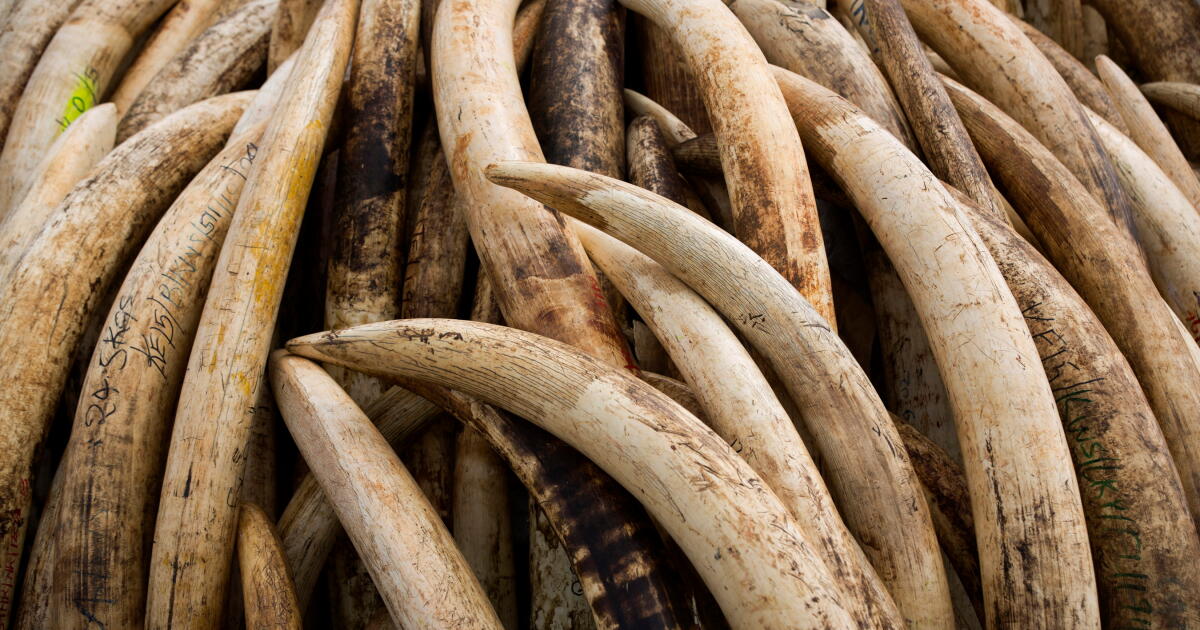
Elephant tusks are displayed in Kenya’s Nairobi National Park in 2016.
(Ben Curtis / Associated Press)
Click here to listen to this article Kenyan investigators arrested Ol Pejeta Conservancy Chief Executive Justin Heath after finding two elephant tusks, a lion skin and ammunition during a search, authorities said.The tusks and lion skin were found in the conservancy’s armory; seven undeclared firearms were recovered from a vehicle at Heath’s residence.Ol Pejeta is known for protecting endangered rhinos, including the world’s last northern white rhinos and 178 eastern black rhinos.
NAIROBI — Kenyan criminal investigators have arrested a wildlife conservancy chief executive after recovering two elephant tusks, a lion skin and ammunition during a search operation, authorities said Sunday.
Ol Pejeta Conservancy Chief Executive Justin Heath was arrested on suspicion of unlawful possession of wildlife trophies and ammunition, the Directorate of Criminal Investigations said in a statement.
The conservancy is located in Laikipia County, near a military barracks where British troops train under a defense agreement with the Kenyan government. It is home to the world’s last northern white rhinos, attracting thousands of tourists annually.
Investigators also recovered two Winchester rifles along with five other weapons: a Lawn & Holder, a Cooswel & Horizon, a W. Meadows, a Benelli and a Ferlach. The firearms were found in the trunk of a vehicle at the CEO’s residence and hadn’t been declared.
The elephant tusks, weighing 68 pounds and 61 pounds, were found in the conservancy’s armory along with the lion skin. Under Kenyan wildlife regulations, conservancies are required to notify the Kenya Wildlife Service of wildlife deaths and surrender any recovered trophies within 72 hours.
Ol Pejeta has yet to comment on the arrest, and Heath wasn’t immediately available for comment.
The conservancy is known for its rhino conservation work and is home to 178 eastern black rhinos. The population has grown at an annual rate of 5.5% since 2007, putting pressure on available habitat and prompting plans to relocate some of the animals.
On Nov. 12, Ol Pejeta announced that 17 rhinos had died of natural causes this year and that their horns had been handed over to the Kenya Wildlife Service. The conservancy also raised concerns about the decline of whistling thorn acacia, a key food source for the rhinos.
Musambi writes for the Associated Press.
More to Read
Sign up for Essential California
The most important California stories and recommendations in your inbox every morning.
By continuing, you agree to our Terms of Service, which include arbitration and a class action waiver. You agree that we and our third-party vendors may collect and use your information, including through cookies, pixels and similar technologies, for the purposes set forth in our Privacy Policy such as personalizing your experience and ads.
More From the Los Angeles Times
Podcasts
Most Read in World & Nation