Prison works. This was the slogan used by then home secretary Michael Howard in 1993 as he unveiled a raft of tougher sentencing and prison-building measures. That mantra was embraced by Kemi Badenoch and Nick Timothy yesterday as they pledged to end Labour’s early release of prisoners.
In a venue with low, polyester ceiling tiles resembling an HMP visitation room, the Leader of the Opposition sought to channel her inner Michael Howard. Branding early release as an insult to the law-abiding majority and taking credit for campaigns to overturn the release of PC Harper’s killers and a category of sex offenders, Badenoch reiterated the Tory pledge to build 50,000 new prison places, should they form the next government.
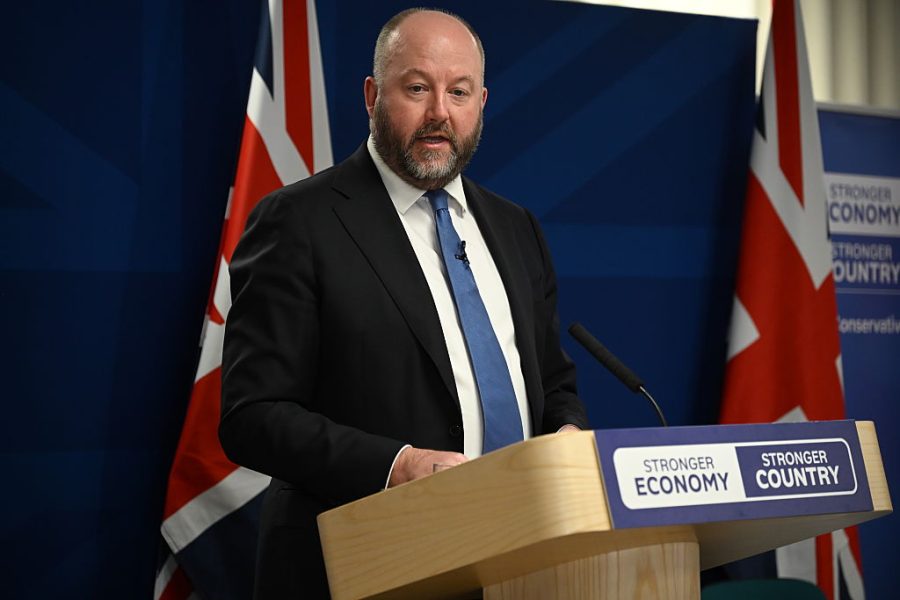
How will they do it? To answer that, the Tories are launching a prison commission to look into the issue. Badenoch then ceded the stage to her shadow justice secretary to provide some more detail.
Prolific shoplifters rarely face prison despite being responsible for up to 70 per cent of all related offences
Nick Timothy first gave a candid assessment of the prison capacity crisis, not without some contrition. While it is true that both Labour prime ministers since 2024 have presided over the mass release of prisoners, the Tories failed to build prison spaces to keep up with demand and slashed Ministry of Justice budgets for the recruitment and maintenance of staff and cells. Rishi Sunak knew without doubt that he would be handing Keir Starmer the PR disaster of early releases when he called the last general election.
Missteps aside, Timothy railed against what he sees as the liberal progressive consensus on crime and justice, which treats the actions of criminals as a social problem and rehabilitation as the only cure.
Most popularWhy women’s football will never take off
Taking aim at the custodians of this culture – the Prison Reform Trust, the social justice charity Nacro, the prison charity the Howard League, and countless Labour ministers – he proposed a Conservative alternative, based on personal responsibility and culpability, and the use of prison as both a deterrent and a means of incapacitating those who pose a risk to the public.
While the most violent types of crime may be falling, Timothy rightly identified the proliferation of low-level crime and disorder as being downstream of the prison capacity crisis. Prolific shoplifters rarely face prison despite being responsible for up to 70 per cent of all related offences. Non-custodial punishments have no effect if breaching them doesn’t result in time spent behind bars.
This is the basis on which Timothy pledged to enact a 50,000-prison space programme, which he believes can be done over a seven-year period were the Conservatives to enter government. This is to be funded by an extra £2 billion to capital budgets a year, rising to £2.5 billion after five years, taken from cuts to Cabinet Office and DCMS budgets and by slashing foreign aid.
He also pledged to dispose of the costly and outdated Victorian prisons in London, using the estimated proceeds of £1.6 billion to offset some new construction costs, a recommendation I made a few months ago in a report on fixing the capacity crisis.
Timothy also criticised the failings of the existing estate, caused by the heavy hand of Whitehall. Centralised decision-making has created a byzantine system in which individual prison governors face delays to get even basic maintenance and staffing changes approved. He pointed out that due to recruitment rules, governors can be given prison staff they might have previously dismissed for poor performance.
The Tory justice team set out an ambitious plan for prisons, though much of the detail is still to come through the commission. When it comes to reforming existing management, Timothy will no doubt remember the Tories’ aborted attempts at system change in 2016-17, when he served as political advisor to Theresa May in No. 10. Under Liz Truss in her role as justice secretary, the government introduced new partnership agreements for prison governors as well as primary legislation to set a statutory purpose for prisons based on security and accountability.
However, the Prisons and Courts Bill fell when May called her ill-fated snap election that summer. Governors, meanwhile, reeled at the unclear terms of their new agreements, which seemed to demand greater accountability without any of the corresponding autonomy promised.
In the ensuing years, Whitehall quietly recouped any powers ceded and canned trials to give governors more autonomy. Reflecting this, non-operational staff in the prison and probation service has grown by 34.6 per cent since 2018, while the number of prison officers has increased by just 5.6 per cent.
Hopefully Timothy’s prisons commission will look at this period for lessons to learn. They will no doubt also need to look at planning and procurement reform, two major areas that have held up both building new prisons and resourcing the existing estate effectively.
As any YIMBY-progress-optimist will know by now, planning reform is a cross-party policy area in which everything is promised and nothing is delivered once a party enters office. On procurement, prison contractors in off-the-record conversations have barely been able to conceal their contempt at the middling quality of the departmental managers that run up costs and delays through sheer incompetence.
There’s work to be done. But as both Starmer and Andy Burnham have shown, any party that comes to power without a plan for prisons will be forced to spend its first few days exhausting precious political capital releasing thousands of prisoners onto the streets. If the Tories end up back in government after the next election, the same will doubtless be true of them. The test is whether they can break the cycle.